
Government Plans Gradual Phase-Out of Petrol Cars in Indonesia: What’s Behind It?
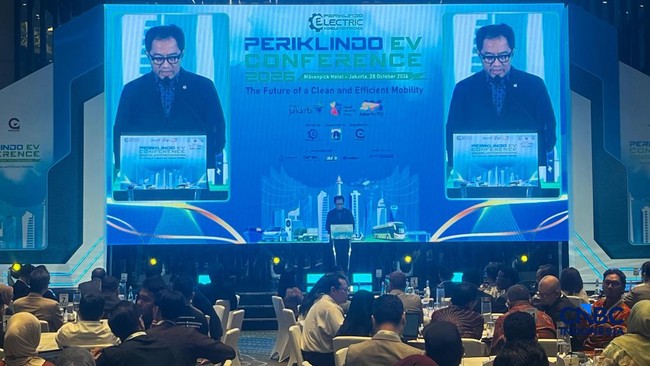
Jakarta, CNBC Indonesia — The government is beginning to prepare a long-term roadmap to replace oil-fuelled vehicles with electric vehicles. The programme will be implemented gradually through to 2060, with motorcycles among the main targets for electrification in its initial phase.
Deputy Industry Minister Faisol Riza said the shift requires cross-sector planning, including readiness in the automotive industry, charging infrastructure and the capacity of the national electricity supply. The government is also preparing stages for introducing electric vehicles based on vehicle type and user needs.
“We are also preparing a roadmap for electric vehicles through to 2060, in which we will gradually replace all the more than 170 million vehicles with electric vehicles produced here in our own country,” Faisol said at the Periklindo Electric Vehicle Conference in Central Jakarta on Wednesday (28 October 2026).
In the first phase, the government will prioritise vehicles used for daily activities and business operations. The use of electric motorcycles will be directed towards groups that travel frequently, allowing electrification to begin with relatively measurable needs.
“Our main target is motorcycles, which are the top priority. From 2027 to 2030, we will focus on electric motorcycles for couriers, ride-hailing drivers, company fleets, official vehicles and people in major cities,” Faisol said.
The programme will be expanded gradually, in line with regional readiness and the supporting ecosystem. The government also needs to ensure product availability, service networks and charging facilities so that electric vehicle use is not concentrated solely in major cities.
“Then, from 2031 to 2035, we will expand it to all provinces across the country,” he said.
Electrification will also target public transport and passenger cars. The government will promote electric buses on routes that are ready, while broadening the range of electric cars produced domestically.
Commercial vehicles and trucks are also part of the plan, for use both on public roads and in dedicated operating areas. This could expand the electric vehicle market while encouraging Indonesia’s automotive industry to develop products suited to domestic needs.
“For passenger cars, we are also preparing to expand the range of domestically produced EV models from 2027 to 2030, particularly family cars and compact vehicles suited to needs in Indonesia,” Faisol said.
Given the size of the vehicle population, electrification cannot happen all at once. Technology readiness, production capacity, consumers’ purchasing power and supporting infrastructure will be important factors in determining the pace of the transition.
“The same applies to commercial vehicles and trucks, both off-road and on-road. We will also ask companies that use them to prepare to make all their transport vehicles electric,” Faisol said.
Source: jawawa.id (https://jawawa.id/newsitem/government-plans-gradual-phase-out-of-petrol-cars-in-indonesia-whats-behind-it-1793166656)
Originally published by CNBC Indonesia (https://www.cnbcindonesia.com/news/20261028111211-4-780130/pelan-pelan-pemerintah-ingin-tak-ada-lagi-mobil-bensin-di-ri-ada-apa), translated from Indonesian