
Government Places IDR 281 Trillion in State Banks, Economists Predict Easing of Interest Rate War
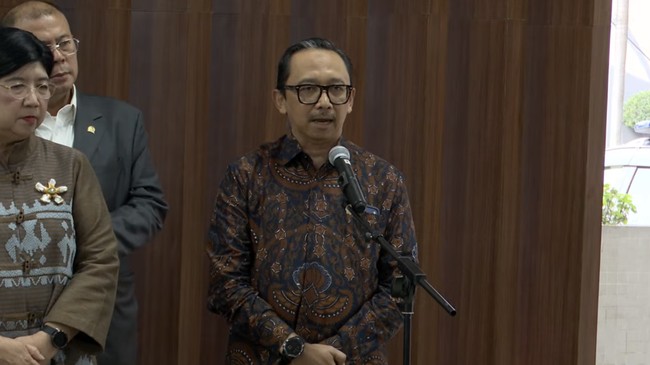
Jakarta, CNBC Indonesia - Economists have responded to the government’s placement of IDR 281 trillion in state-owned banks (Himbara), a policy announced by Deputy Finance Minister Juda Agung at the House of Representatives on Monday (29/6/2026). Several economists assess that the re-placement of government funds in Himbara banks can ease the ‘interest rate war’ between banks that occurred due to the recent liquidity drought.
BCA Chief Economist David E. Sumual stated that the direct impact of placing government funds back into Himbara banks could lower interbank interest rates, creating potential transmission to other rates. However, he cautioned that this transmission usually takes a considerable amount of time. “The direct impact will automatically lower interbank interest rates, so there is potential for transmission to other rates such as deposit rates. However, this transmission usually takes time and is not immediate,” David said when contacted on Monday (29/6/2026). David added that if the government intends to boost high credit growth using these funds, it could drive up the loan-to-deposit ratio (LDR), potentially slowing the decline in interbank rates or causing them to stagnate at current levels.
Maybank Indonesia Economist Myrdal Gunarto explained that channelling government funds from Bank Indonesia back to Himbara creates money supply in the economic system that was previously absorbed through tax instruments or government bond issuance. This step is designed to flood the banking system to suppress the cost of funds. “The hope is that market lending rates will adjust downwards, which will not only stimulate undisbursed loans to become disbursed but also improve economic sentiment in the eyes of foreign investors—a crucial catalyst to prevent capital outflow and maintain rupiah depreciation stability,” Myrdal said. He also reminded that the government’s policy of placing State General Cash funds in Himbara banks is purely a cash management instrument, not a state capital injection or subsidy. This money is liquidity that was cyclically absorbed from the economy and is now being returned to prevent stagnation in the financial cycle. Nonetheless, the Ministry of Finance has provided firm forward guidance that banks must not make this a structural dependency. However, he also warned that the flexibility of government fund withdrawals poses a funding risk that must be mitigated by each bank’s treasury management. “The banking industry must remain aggressive in mobilising core third-party funds and not use these government funds as a substitute for the traditional intermediation function,” he said.
Previously, the Deposit Insurance Corporation (LPS) decided to increase the deposit guarantee interest rate to 3.75% for commercial bank deposits and 6.25% for People’s Credit Banks (BPR). This decision was taken at the June 2026 Board of Commissioners Meeting and is valid for the period 1 July to 1 September 2026. LPS maintained the foreign currency deposit guarantee rate at 2.00%. LPS Board of Commissioners Member for the Deposit Guarantee Programme and Bank Resolution, Doddy Zulverdi, revealed that the decision was based on the tendency for rupiah deposit interest rates across all bank groups to continue rising. He stated this condition is the banking industry’s response to policy rate developments and financial market conditions, both globally and domestically. He noted that while rupiah deposit growth performance has been relatively high so far, there is potential for this growth to slow down, whereas foreign currency deposit growth is expected to increase. Another factor is banking liquidity conditions, which are still maintained across all bank groups, but there are indications of increased interest rate competition among various bank groups. The level of deposit insurance coverage also remains above the statutory minimum of 90%, but with current developments, there is a slight downward trend that LPS needs to anticipate to prevent it from continuing.