
Government Partners with Industry, Cooperatives and Informal Workers to Promote Inclusive Circular Economy
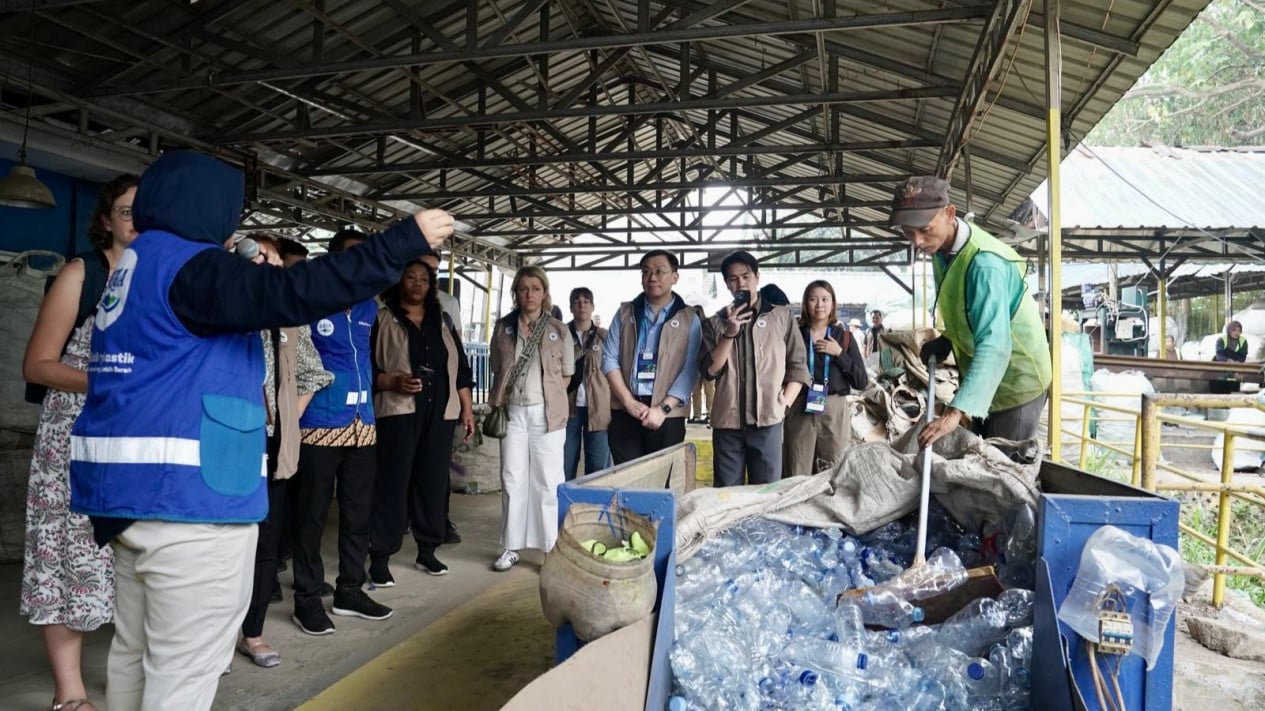
The Indonesian and Norwegian governments held the Jakarta Informal Consultation Meeting of the Intergovernmental Negotiating Committee on Plastic Pollution on 13–14 October 2026.
The forum sought to foster collaboration between government, industry, cooperatives and informal workers to strengthen recycling value chains and support a transition to an inclusive circular economy.
It also provided an opportunity to exchange lessons on tackling plastic pollution, including the importance of ensuring a just transition. In Indonesia, informal workers have long played a role in collecting and recovering materials and are part of the circular economy already in operation; their contribution needs to be taken into account during the transition.
A just transition does not simply mean replacing the informal sector with formal systems. It means creating pathways to better working conditions, occupational health and safety protections, stronger organisations or cooperatives, access to infrastructure and markets, improved economic opportunities and more resilient livelihoods.
Agus Rusly, Director of Waste Reduction and Circular Economy Development at the Ministry of Environment, said stronger collection systems were needed to improve national waste management.
“In line with global efforts, Indonesia continues to strengthen its waste-reduction policies, including by refining Environment and Forestry Ministerial Regulation No. P.75/2019 on the Road Map for Waste Reduction by Producers,” Agus said in a statement on Friday, 16 October 2026.
He stressed that strengthening producer responsibility was important to reduce waste at source and increase responsibility for products and packaging after use. Implementation would need support from adequate infrastructure, business capacity, local government involvement and cooperation with the informal sector, so that waste-reduction systems become more integrated and responsive to national needs.
Delegates from 13 countries attending the forum visited the Berdaya Waste Picker Cooperative in Serpong, South Tangerang, Banten, to learn about a plastic-waste management model linking collection and recycling with the empowerment of informal-sector workers.
“The visit demonstrates good collaboration between industry and the informal sector in the recycling chain,” he said.
Source: jawawa.id (https://jawawa.id/newsitem/government-partners-with-industry-cooperatives-and-informal-workers-to-promote-inclusive-circular-economy-1792320624)
Originally published by VIVA.co.id (https://www.viva.co.id/bisnis/1936775-dorong-ekonomi-sirkular-yang-inklusif-pemerintah-gandeng-industri-koperasi-hingga-pelaku-informal), translated from Indonesian