
Government Optimises Weather Modification Operations to Tackle Kalimantan Forest Fires
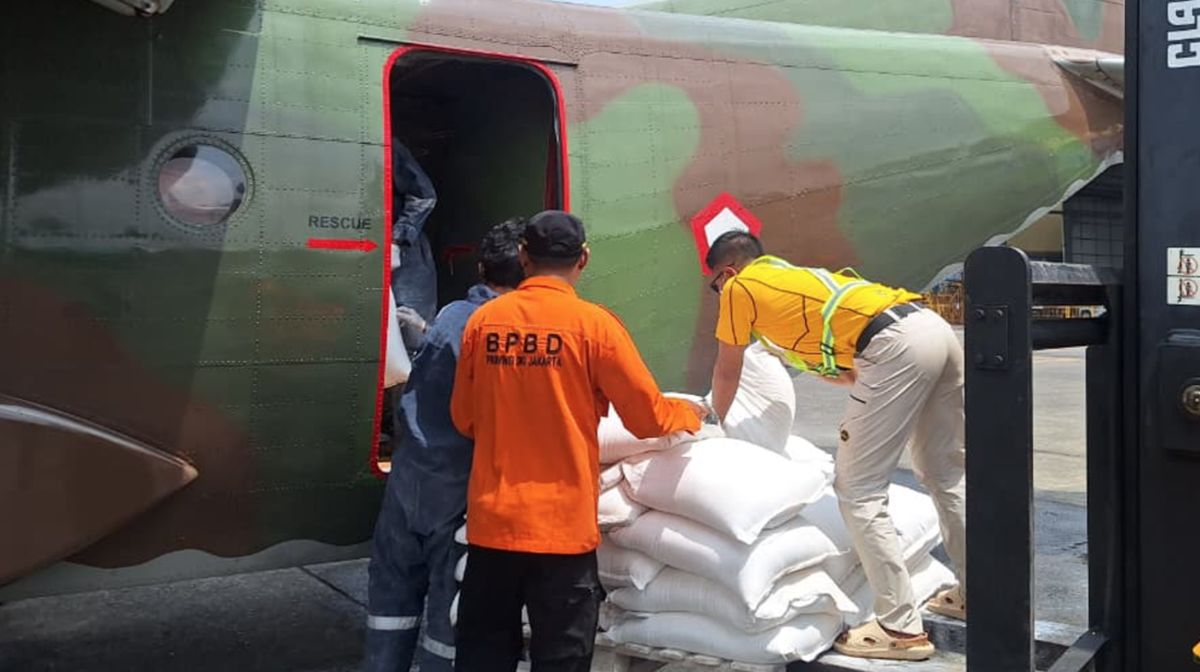
The government continues to optimise Weather Modification Operations (OMC) as part of efforts to control forest and land fires (karhutla) in several areas of Kalimantan.
The operations are aimed at increasing the likelihood of rainfall so that fire-prone areas can be doused.
Head of the Public Relations and Foreign Cooperation Bureau at the Ministry of Forestry, Ristianto Pribadi, said OMC remains part of integrated handling together with various parties on the ground.
“Its implementation is still supported by ground firefighting, patrols, early detection, and cross-ministerial/institutional and local government coordination,” Ristianto said in a written statement quoted on Friday (21/8).
In West Kalimantan, OMC was previously held on 13–17 August 2026 through the Pontianak Command Post. During the operation, nine flight sorties were carried out with an estimated rainfall volume in the seeding area reaching 10.92 million cubic metres.
The opportunity to carry out OMC is open again on 23–27 August 2026 based on the latest weather forecast. The Meteorology, Climatology and Geophysics Agency (BMKG) is currently coordinating with relevant parties to prepare for operations during that period.
Meanwhile in Central Kalimantan, OMC has been carried out in two stages, namely on 27 July–4 August and 11–15 August 2026. In total there were 13 flight sorties with an estimated rainfall volume in the seeding area of around 4.8 million cubic metres.
“However, until the end of August 2026, weather conditions in Central Kalimantan are forecast to remain dominated by dry conditions with limited growth of rain clouds,” Ristianto said.
Given these conditions, the opportunity to carry out OMC in the near future in Central Kalimantan is expected to be small. Nevertheless, monitoring of atmospheric conditions continues to be carried out to see the possibility of clouds emerging that can be seeded.
As for South Kalimantan, the government continues to monitor weather developments, hotspots, and forest and land fire conditions. OMC implementation will be adjusted to the presence of potential clouds and the needs of handling on the ground.
“Given that OMC is highly dependent on atmospheric conditions, operations can only be carried out if clouds are available that meet the technical requirements for seeding,” he said.
The government emphasised that OMC is not the only method for dealing with forest and land fires. Ground-based firefighting, integrated patrols, cooling of locations, and strengthening of personnel and equipment remain the main part of handling in the three provinces.
“Evaluation of weather conditions and field operations is carried out periodically to ensure that every handling step is implemented quickly, on target, and in a coordinated manner,” Ristianto said.
Air Fleet Increased
In addition to optimising OMC, the government is increasing air fleet support to deal with forest and land fires, especially in Central Kalimantan. A number of patrol helicopters, fixed-wing patrol aircraft, and water bombing helicopters have been deployed to assist operations on the ground.
Ristianto said air operations are needed to support ground task forces, especially when hotspots are in locations that are difficult to reach by land.
Minister of Forestry Raja Juli Antoni has also coordinated directly with the Head of BNPB regarding the addition of air fleets to support water bombing in Central Kalimantan.
“The addition of the fleet is expected to increase the operational range, especially in locations that are difficult to access and require dousing from the air. However, fleet deployment must still consider visibility, smoke conditions, weather, and aviation safety standards,” Ristianto said.
Thick smoke conditions over the past two days have been one of the obstacles in air operations. The situation has mainly occurred around Jabiren and Tanjung Taruna up to the Sebangau National Park area.
Thick smoke has limited pilots’ visibility of targets and flight paths. These conditions mean that helicopter deployment for firefighting must consider safety factors.
“In conditions where visibility does not meet safety standards, helicopters cannot be forced to reach firefighting locations,” he said.
Although air operations are constrained, forest and land fire handling continues. When atmospheric conditions do not yet allow OMC implementation or visibility does not yet meet standards for water bombing, ground task forces continue to carry out firefighting, containment, dousing, cooling, and guarding in vulnerable areas.
“Operational strategy continues to be adjusted based on actual conditions on the ground,” he said.