
Government operates cyclone detection radar on Java's southern coast
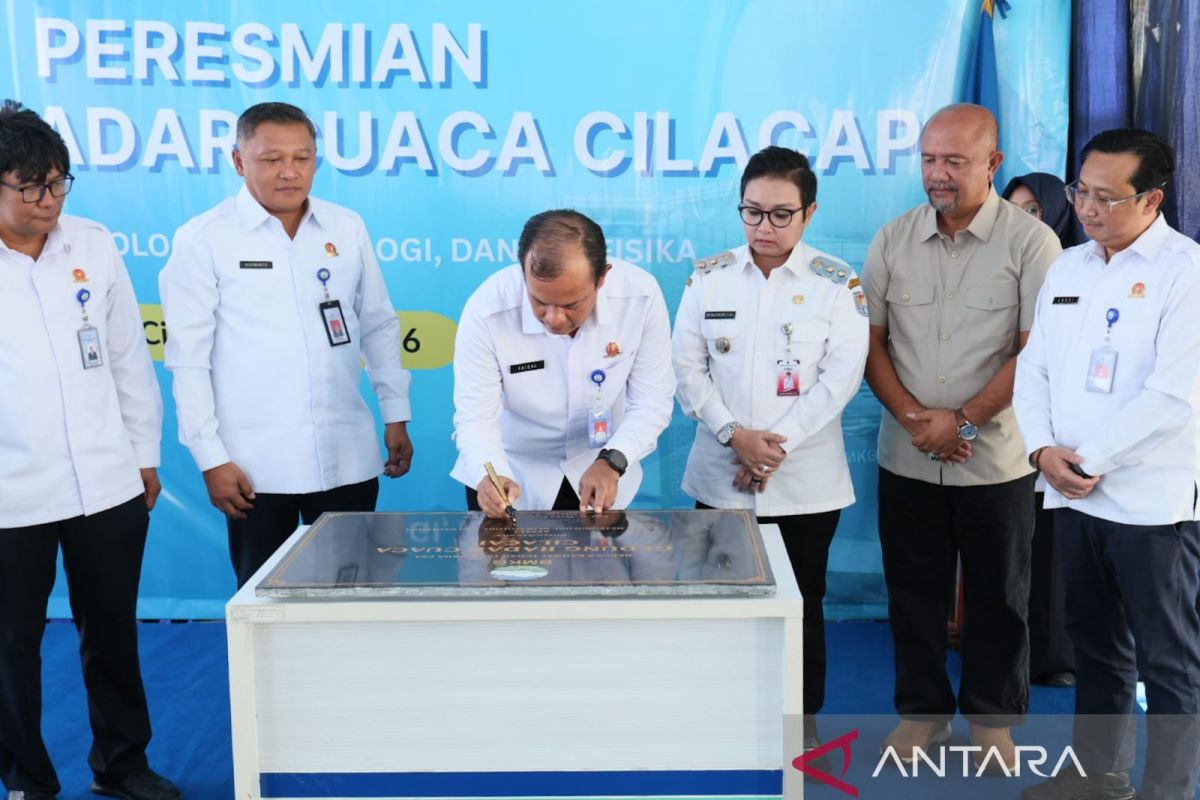
The Government, through the Meteorology, Climatology, and Geophysics Agency (BMKG), has officially commenced operations of a state-of-the-art S-Band Weather Radar facility in Cilacap Regency, Central Java, to strengthen early detection of potential tropical cyclone seeds along the southern coast of Java.
The Head of BMKG, Teuku Faisal Fathani, in a statement confirmed in Jakarta on Wednesday, stated that the presence of this radar serves as a vital defensive bastion, considering the historical records of southern Indonesia being directly impacted by destructive tropical cyclones.
Examples include the Cempaka-Dahlia cyclone south of Yogyakarta in mid-2017, as well as Cyclone Seroja, which caused significant damage in East Nusa Tenggara in 2021.
He explained that the selection of Cilacap as the installation site was based on the coastal region’s position, which faces the Indian Ocean directly and possesses a high density of economic activity.
In addition to detecting cyclone seeds, this new infrastructure functions to monitor rain cloud conditions, rainfall intensity, weather system movements, and the growth of convective clouds that trigger extreme weather, providing rapid and real-time data.
Precise data from this radar is also intended to guide the implementation of Weather Modification Operations (OMC) in vulnerable zones to minimise the impact of hydrometeorological disasters, such as the landslides that affected the area last year.
Faisal added that for the local economic sector, the operation of this radar will have a direct impact on ensuring the operational safety of fishermen at sea and maintaining the productivity stability of the Cilacap fishing industry, which serves as a protein food supplier in Central Java.
The procurement of this facility is part of the strategic Marine Meteorological System Phase II (MMS-2) project, which focuses on strengthening maritime meteorological observations in areas of national priority.
Through the MMS-2 project, BMKG is constructing five new weather radars, including four S-Band Weather Radars in Cilacap, Natuna, Tanjung Pinang, and Saumlaki, as well as the upgrading of one C-Band Weather Radar in Tangerang to optimise coverage for the Greater Jakarta (Jabodetabek) area.
“Nationally, BMKG continues to strive to strengthen the atmospheric observation network across all regions of Indonesia. Out of a total requirement of 70 weather radars to cover the entire Indonesian airspace, BMKG is currently operating 45 units and is committed to increasing this number gradually year by year,” he said.