
Government Needs to Consider Increasing Fuel Prices to Save the State Budget
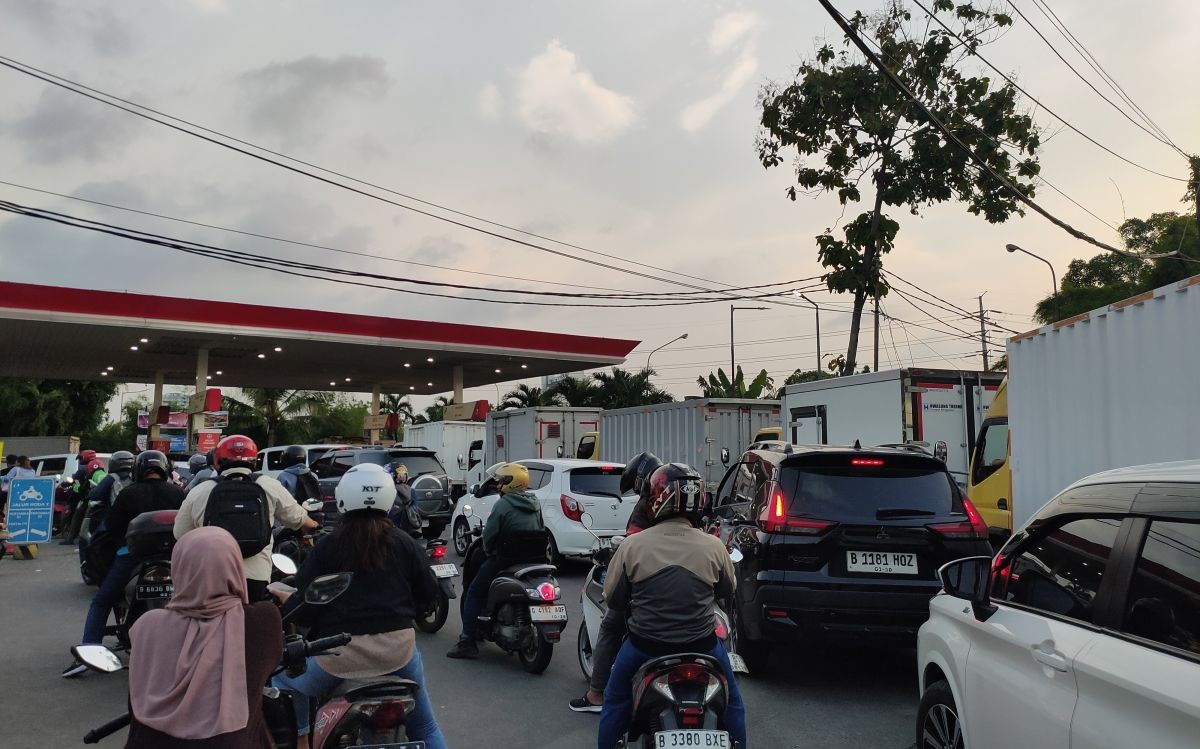
Deputy Chairman of Commission VII of the Indonesian House of Representatives, Lamhot Sinaga, believes the government needs to consider adjusting fuel (BBM) prices to reduce the fiscal burden, which is currently under severe pressure. This comes amid the surge in global oil prices due to the conflict involving Iran, the United States, and Israel.
As reported, global oil prices have reached above US$100 per barrel, even briefly surpassing US$140 per barrel. Meanwhile, the 2026 State Revenue and Expenditure Budget (APBN) has set the global oil price, or Indonesian Crude Price (ICP), at US$70 per barrel.
Lamhot stated that this surge in global oil prices places immense pressure on the APBN. Every US$1 increase per barrel adds a burden of approximately Rp6 trillion. With a rise of US$70 per barrel, he said, the APBN could face a burden of up to Rp420 trillion.
“This is a heavy blow to the state’s finances. Therefore, in the near future, the government must consider adjusting BBM prices in line with the soaring global oil prices, which have now reached around US$140 per barrel,” Lamhot said in a statement received on Sunday (5/4).
According to him, this extreme global oil price surge has a significant impact on the APBN. Therefore, immediate mitigation steps are needed to save the 2026 APBN.
“When global oil prices soar to US$140 per barrel, while the APBN assumption is only US$70, the pressure on the fiscal becomes enormous. This is not a normal situation, but an emergency condition that requires a quick and measured response,” he explained.
The global oil price surge in recent months has been triggered by escalating geopolitical conflicts in the Middle East region, including tensions between Iran, the United States, and Israel. Additionally, the potential closure of strategic energy distribution routes such as the Strait of Hormuz has further worsened the global supply situation.
In such conditions, Lamhot emphasised that adjusting domestic energy prices must be understood as an adaptive policy, not merely a fuel price increase.
“This BBM price adjustment, if carried out by the government, is part of efforts to support the increasingly heavy APBN burden. This is not a populist policy, but a realistic one to maintain national fiscal stability,” he said.
He warned that if the price adjustment is not made, the energy subsidy and compensation burden will swell sharply and could potentially leave the APBN in tatters.
“If this step is not taken, we risk allowing the APBN to be hit very hard by the global oil price surge, especially with the uncertain geopolitical situation and threats of global energy distribution disruptions,” Lamhot said.
On the other hand, he continued, the energy price adjustment policy must be seen as a responsive step by the government in facing global dynamics. He encouraged the government not only to raise prices but to make adjustments so that the national economy remains stable amid very strong external pressures.
Lamhot also invited all stakeholders, including the public and business actors, to understand the global context behind the policy.
“This is a momentum to strengthen collective awareness that national energy resilience cannot be separated from global dynamics. Support from all parties is very much needed so that this policy runs effectively,” he concluded.