
Government Mitigates Industrial Sector Layoffs
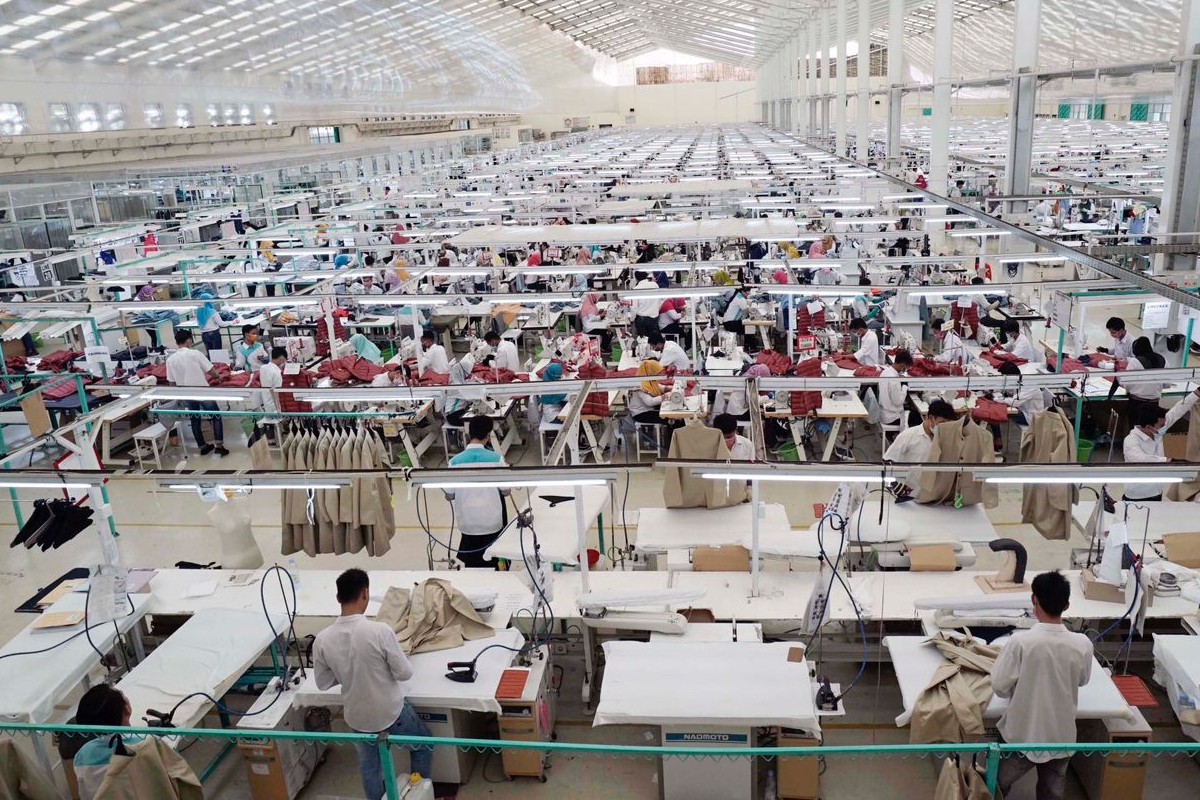
The Special Adviser to the President for Labour and Worker Welfare, Said Iqbal, has emphasised that the government is taking several mitigation steps to suppress the spread of layoffs (PHK) within the industrial sector. These efforts aim to ensure employment stability amidst both global and domestic economic dynamics.
“We are conducting mitigation across various companies so that layoffs can be suppressed as much as possible. Not all circulating information accurately reflects the real conditions on the ground,” Said Iqbal stated in an official briefing in Jakarta on Monday.
Said Iqbal presented several concrete examples of successful mitigation. One such case is the Yazaki Group, which successfully cancelled its production relocation plans to Vietnam through bipartite negotiations. Consequently, workforce reductions were not carried out en masse but were instead managed gradually through the natural expiration of employment contracts.
Furthermore, the government is actively overseeing the resolution of cases in several companies, such as PT Perdapat Pakerin and PT Molex Ayus. This step is taken to ensure that workers’ rights are fulfilled in accordance with applicable regulations, even as these companies face operational challenges.
According to Said, the pressures currently faced by the business world are not singular but a combination of various macro and micro factors. He noted that the issue is far more complex than just energy prices.
Echoing this sentiment, the Executive Director of the ReforMiner Institute, Komaidi Notonegoro, assessed that gas prices are not the sole factor causing decreased competitiveness or the threat of layoffs. Based on 2025 data from the Central Bureau of Statistics (BPS), the portion of fuel costs (including gas, lubricants, and electricity) in the industrial input cost structure averages only about 6.35%.
The largest cost components actually stem from raw materials and auxiliary materials, which range from 64.60% to 96.76%, depending on the industry type. Komaidi detailed the gas cost portion in several specific sectors, stating that national industrial competitiveness is determined by approximately 15 factors. Cost competitiveness through gas prices is only one component; more decisive factors include industrial strategy, market demand, and resource elements.
Komaidi suggested that the government should strengthen overall industrial strategies, maintain supply chain efficiency, and ensure the availability of raw materials, rather than focusing solely on reducing natural gas prices.
Factors such as the global economic slowdown, weakening public purchasing power, high industrial gas prices due to geopolitical conflicts, and production relocation by multinational corporations remain significant pressures. The Indonesian Forum for Decentralisation (Indef) noted that the wave of layoffs in 2026 indicates that pressure on the real sector remains strong due to declining purchasing power and rising production costs.
Meanwhile, the Indonesian Employers Association (Apindo) believes that the increasing threat of layoffs must be addressed at its root. Apindo is currently drafting 12 mitigation guidelines to provide security for both employers and workers, including efficiency measures to be taken before any termination of employment.
The government has allocated Rp6.26 trillion for vocational training and internships for 50,000 layoff victims and high school/vocational school graduates in the second semester of 2026.
Special Adviser Said Iqbal also confirmed that there will be no mass layoffs at PT Feng Tay Bandung, as the company is implementing a rotating suspension system to maintain stability. However, there remains a potential threat of layoffs for approximately 4,000 workers at PT Feng Tay, as well as potential threats to two Japanese automotive component companies in East Java, specifically in Pasuruan and Mojokerto.