
Government Limits Civil Servants' Official Travel by 50 to 70 Percent
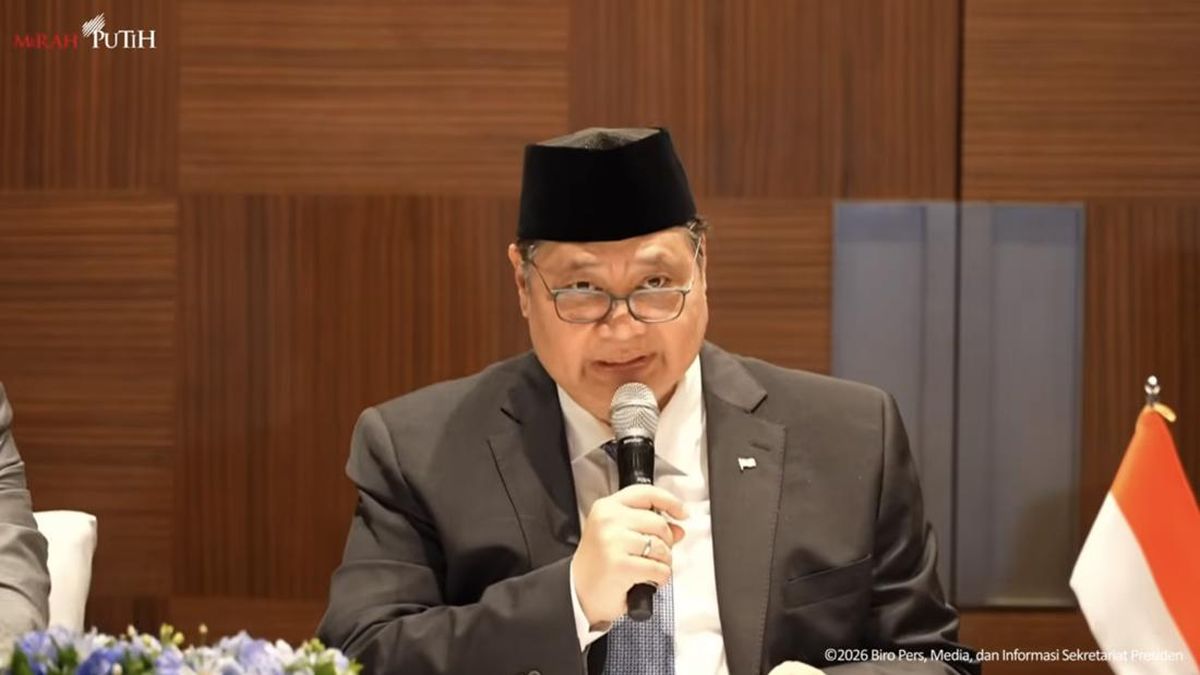
The Indonesian government is limiting official travel for Civil Servants (ASN) to improve energy efficiency in the face of global conflicts. This was stated by Coordinating Minister for the Economy Airlangga Hartarto during a press conference on government policies for mitigating risks and anticipating global dynamics on Tuesday (31/3). “Efficiency of domestic official travel by up to 50 percent, and international by up to 70 percent,” said Airlangga. Airlangga explained that the government is also managing state finances through prioritisation and refocusing of spending by ministries and agencies. The budget reallocation is taken from less priority expenditures, one of which is official travel. He stated that the budget will be redirected to more productive spending that directly impacts society. “The potential for prioritisation and refocusing of ministry and agency budgets is in the range of Rp121.2 trillion to Rp130.2 trillion,” he said. In this press conference, Airlangga also announced the implementation of work-from-home (WFH) for civil servants (ASN) one working day per week, every Friday. “Implementation of WFH for ASN in central and regional offices, one working day per week, namely every Friday, regulated in a Circular from the Minister of State Apparatus Empowerment and Bureaucratic Reform and a Circular from the Minister of Home Affairs,” Airlangga revealed. The government is also limiting the use of official vehicles and encouraging the use of public transport. “Efficient mobility, including a 50 percent restriction on official vehicle use except for operations and electric vehicles, and promoting public transport use,” said Airlangga. However, there are several sectors that do not apply the WFH policy, namely those related to public services and strategic sectors. “There are sectors exempted from WFH and required to work from the office or in the field, namely public service sectors such as health, security, cleanliness, as well as strategic sectors such as industry or production, energy, water, staple goods: food and beverages, trade, transportation, logistics, and finance,” said Airlangga. In the education sector, Airlangga assured that teaching and learning activities will not implement distance learning. “The education sector will continue teaching and learning activities face-to-face, offline as normal, at all levels of basic to secondary education, five days a week,” said Airlangga during the press conference. In addition, Airlangga stated that there are no restrictions on sports events or other extracurricular activities in schools. Meanwhile, for higher education institutions, particularly for the fourth semester and above, Airlangga said the policy will adjust to the Circular from the Ministry of Education, Culture, Research, and Technology. Airlangga stated that this policy will take effect starting 1 April 2026.
Source: jawawa.id (https://jawawa.id/newsitem/government-limits-civil-servants-official-travel-by-50-to-70-percent-1774968666)
Originally published by CNN Indonesia (https://www.cnnindonesia.com/nasional/20260331195524-20-1343084/pemerintah-batasi-perjalanan-dinas-asn-50-hingga-70-persen), translated from Indonesian