
Government Launches ZIS-DSKL One Data to Strengthen Zakat Data Integration
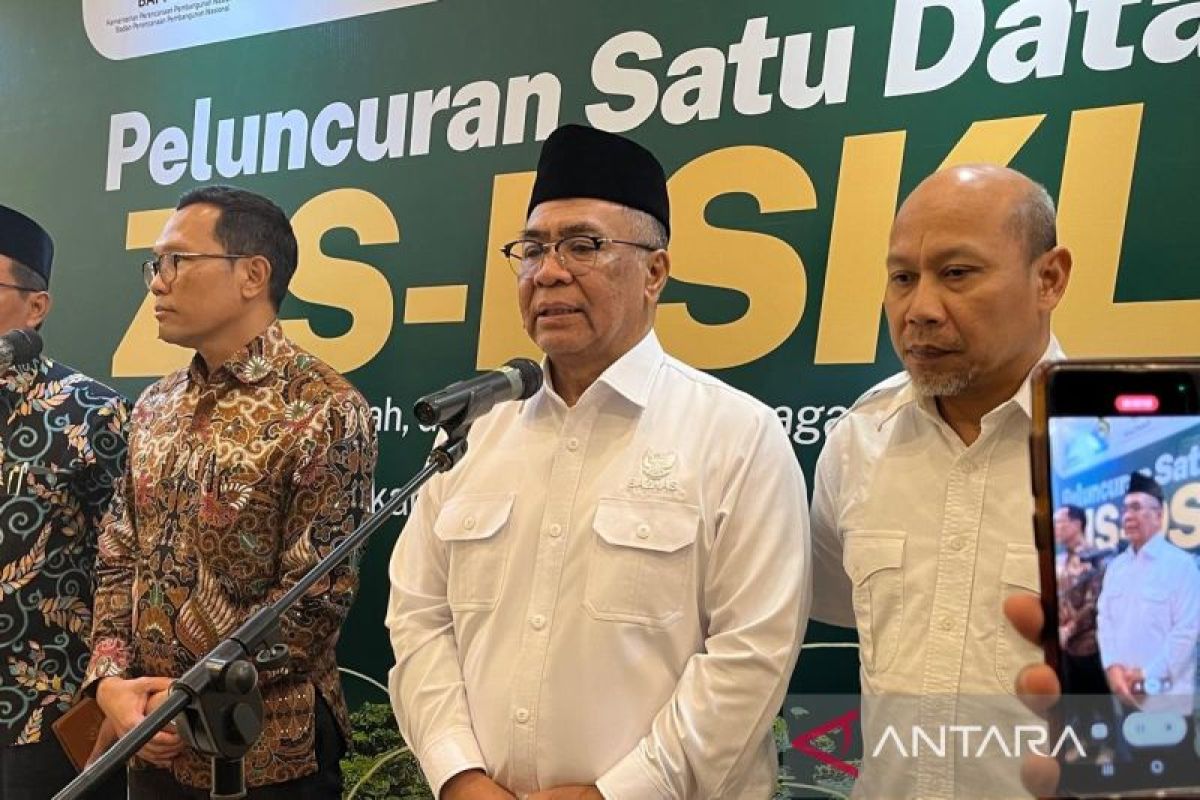
The government, through the Ministry of National Development Planning/National Development Planning Agency (PPN/Bappenas), the Ministry of Religious Affairs, and the National Amil Zakat Agency (Baznas), has launched the One Data for Zakat, Infak, Sedekah, and Other Religious Social Funds (ZIS-DSKL).
Baznas RI Chairman Sodik Mudjahid stated that the management of mustahik (beneficiaries) and muzaki (donors) data has so far faced a lack of integration, potentially causing duplicate data in the distribution and empowerment of ZIS funds.
“With the integration of muzaki and mustahik data, programmes will be more cohesive, more accurate, and more efficient, both in the mobilisation of zakat, infak, sedekah and the empowerment of mustahik,” Sodik said during the launch of Satu Data ZIS-DSKL at the Ministry of PPN/Bappenas office in Jakarta on Thursday.
According to Sodik, Baznas already possesses data on muzaki and mustahik. However, this data has not been fully integrated, leaving room for potential duplication. “With integrated data, God willing, it will be achieved and properly empowered, so that double data no longer occurs, especially in empowerment,” he said.
Meanwhile, Minister of National Development Planning/Head of Bappenas Rachmat Pambudy said the ZIS-DSKL One Data was launched to strengthen the integration of data on zakat recipients and donors so that aid distribution is more targeted, transparent, and sustainable.
“The one data will be utilised by Baznas throughout Indonesia to optimise distribution and utilisation to be more targeted, transparent, and sustainable,” Rachmat Pambudy said.
According to him, the ZIS-DSKL One Data was developed as a strategic instrument to strengthen the collaboration of zakat, infak, sedekah, and other religious social funds programmes in supporting national development and realising the Golden Indonesia 2045 vision.
Rachmat also expressed hope that the system can be utilised by all national stakeholders to strengthen the benefit of zakat and religious social fund management. “Thus, the distribution and utilisation of zakat, infak, sedekah, and other religious social funds can be integrated with the recipients of zakat, particularly the mustahik, with poverty data and single socio-economic data,” he said.
Furthermore, he said the system is expected to accelerate the empowerment of mustahik so that their economic status improves to become munfik (those who give infak and sedekah) or even muzaki.
According to Waryono, the Ministry of Religious Affairs has also issued a Minister of Religious Affairs Decree (KMA) as the basis for implementing the system. Through this mechanism, zakat distributing institutions will obtain recipient data based on region and welfare category so that aid distribution can be aligned with official government data.
He said the system will also minimise beneficiaries receiving aid from various sources simultaneously. “In this way, God willing, it will reduce the accumulation of aid or distribution to individuals,” Waryono said.