
Government Launches 'Sapa UMKM' Platform and Boosts KUR Disbursement to Elevate MSMEs
The Ministry of Micro, Small and Medium Enterprises (MSMEs) has reaffirmed its commitment to advancing the MSME sector by focusing on more integrated governance transformation.
This commitment is being carried out by strengthening synergy between the central and regional governments.
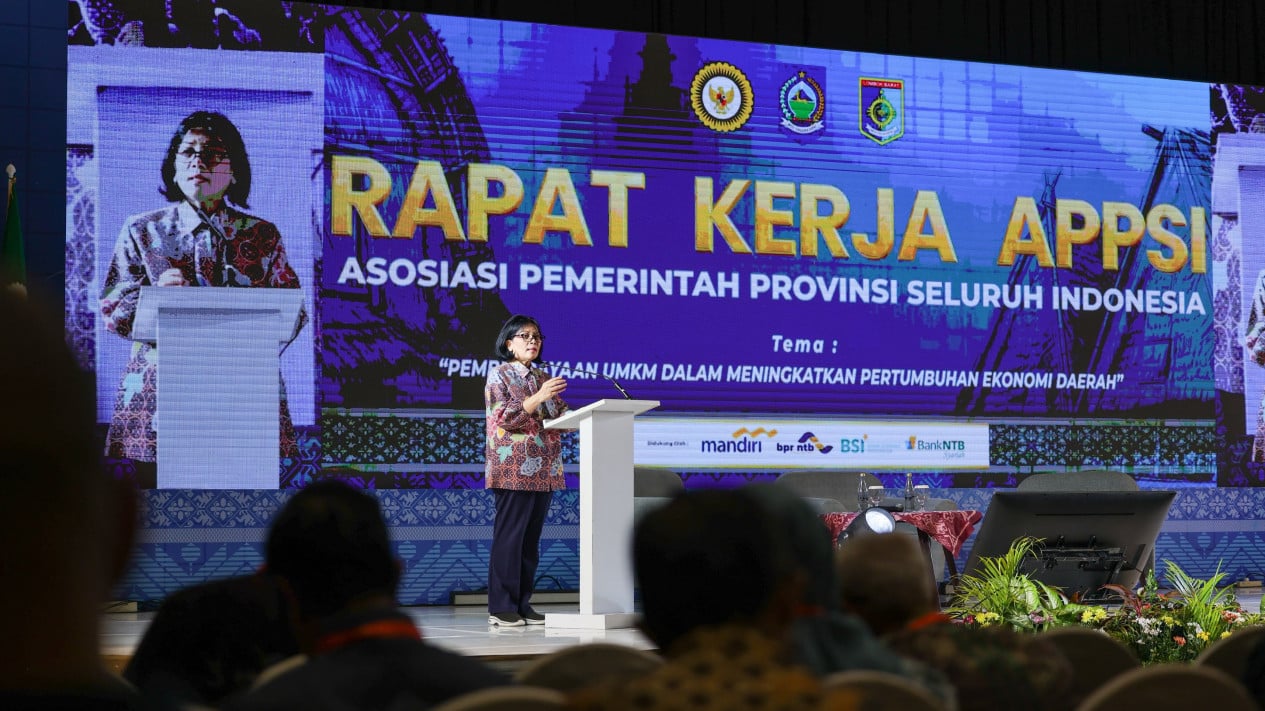
As a concrete step, Secretary-General of the MSME Ministry Loto Srinaita Ginting introduced a platform named SAPA UMKM.
The innovation was presented by Loto while attending the Working Meeting of the Association of Provincial Governments of All Indonesia (APPSI) in West Lombok, West Nusa Tenggara, on Thursday, 16 July 2026.
“SAPA UMKM is a national integrated MSME services ecosystem platform that brings together all government services in a single account and a single platform,” said Loto.
The presence of this digital platform is expected to become a strategic instrument for regional governments. Through SAPA UMKM, regional governments can more easily map leading commodities whilst evaluating mentoring programmes based on accurate data.
“With this data access opened up, regional governments can monitor the development of businesses in their areas in real time,” he said.
The interconnected data will later make it easier to draw up programmes and allocate budgets so that they genuinely match real needs on the ground. In addition, a sound data collection system will prevent waste resulting from duplicated programmes.
“This also minimises overlapping services, so that the focus of MSME mentoring at both the provincial and district/city levels becomes far stronger,” said Loto.
Beyond digital transformation, Loto also highlighted the progress of People’s Business Credit (KUR) disbursement, which serves as the lifeblood of expanding financing access for small business owners. He noted that the trend in financing disbursement has been highly positive.
“Based on data as of 5 July 2026, the quality of KUR disbursement shows an improving trend. Realised KUR disbursement has reached Rp152.8 trillion, or around 52.4 per cent of the total ceiling, distributed to 2.4 million debtors,” he revealed.
Although financing absorption shows healthy figures, the involvement of regional governments in optimising KUR is considered not yet optimal. Loto explained that the opportunity for regional governments to propose potential recipients through the Programme Credit Information System (SIKP) is in fact already wide open.