
Government launches programme to help self-employed workers grow their businesses
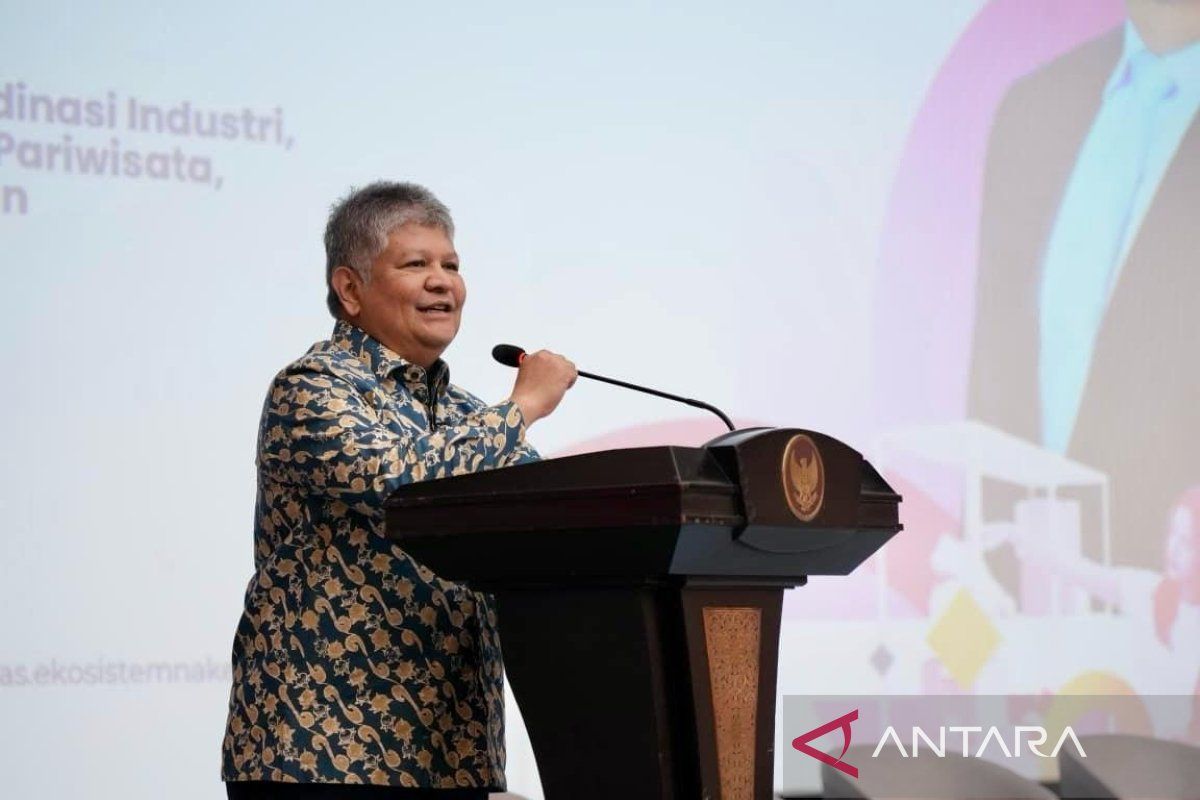
Strengthening self-employed businesses is one way to broaden employment opportunities amid the challenges facing Indonesia’s labour market.
Jakarta (ANTARA) – The government has launched a programme to build the capacity of self-employed workers (TKM), particularly women, helping business owners expand their markets and grow their enterprises into the formal sector.
The programme is a collaboration between the Coordinating Ministry for Economic Affairs, the Ministry of Manpower, local governments and Lazada Indonesia. It focuses on raising productivity and developing a sustainable ecosystem for self-employment.
“Building TKM capacity cannot be achieved through training alone. It also requires an ecosystem that raises productivity, develops businesses and helps owners gradually move up into the formal sector. Through collaboration between the government and the private sector, we are building a sustainable mentoring model, particularly for women, so they can become more economically empowered,” said Dida Gardera, Acting Deputy for Industry, Manpower and Tourism Coordination at the Coordinating Ministry for Economic Affairs, in Jakarta on Monday.
He explained that strengthening self-employed businesses was one way to broaden employment opportunities amid the challenges facing Indonesia’s labour market.
According to May 2026 data from the National Labour Force Survey (Sakernas), Indonesia’s labour force numbered 155.41 million, while the open unemployment rate stood at 4.65 per cent, or around 7.2 million people.
At the same time, 59.30 per cent of workers remained in the informal sector, including the majority of microbusiness owners.
To help business owners improve their capacity, the programme includes training in financial reporting, digital marketing, product photography, and awareness and enrolment in employment social security schemes.
Chairul Saleh, Assistant Deputy for Productivity Improvement and Employment Ecosystem Development at the Coordinating Ministry for Economic Affairs, said private-sector involvement was intended to meet the practical needs of self-employed workers by strengthening their business management skills.
“Through this programme, we hope that TKM workers, especially women, will not only improve their business skills but also gain wider market access, manage their businesses more accountably and obtain employment social security protection. With support from the relevant parties, TKM businesses are expected to develop and move up into the formal sector and become sustainable,” Chairul said.
The programme’s initial pilot is being carried out in three areas: Yogyakarta, Bandung and Medan.
The results of the pilot will be evaluated to determine whether the programme could be expanded to other regions in 2027.