
Government Launches Digital Birth Certificate Service Integrated with Healthcare Facilities
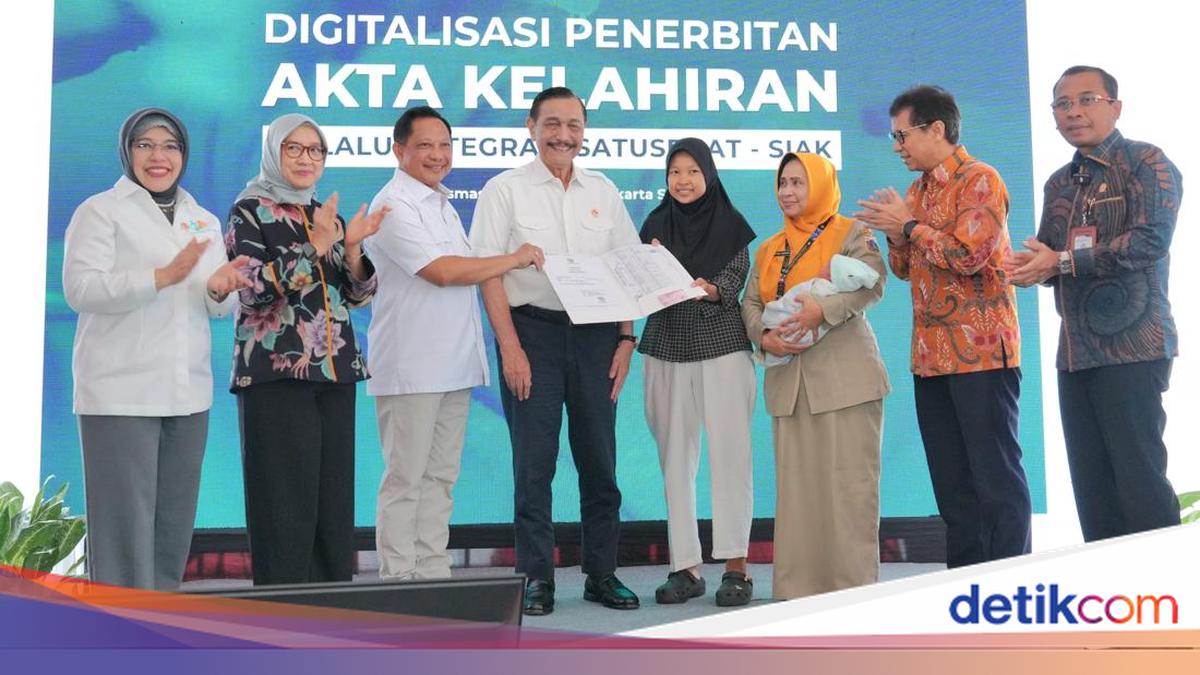
The government has launched the digitalisation of birth certificate issuance, integrated with healthcare service facilities. Through this service, birth data recorded at health facilities can be directly connected to civil administration services.
The launch was carried out symbolically by the Chair of the Government Digital Transformation Acceleration Committee Luhut Binsar Pandjaitan, Minister of Home Affairs Muhammad Tito Karnavian, Minister of Health Budi Gunadi Sadikin, and other officials at the Pasar Minggu Community Health Centre. The presence of this integration is expected to accelerate and simplify the process of issuing birth certificates for the public.
In his remarks, Tito explained that the development of this digital service is part of efforts to strengthen the Electronic-Based Government System (SPBE). According to him, population data is one of the important foundations in the development of digital government services because it is continuously updated based on population events in the regions.
“Districts and cities directly serve the public and they are connected to the Dukcapil server. So there are births, deaths, people moving, people becoming single, new ones and so on. It moves every minute,” said Tito in a written statement on Tuesday (11/8/2026).
Tito added that the utilisation of population data has now developed widely and is used by thousands of users from various government agencies and other sectors. Integration with various data sources can support public services that are easier, more accurate, and better targeted.
One of its uses, said Tito, is to support the distribution of social assistance so that it is better targeted. In this case, population data can be matched with various other data sources so that the government has a more complete picture of the condition of beneficiaries.
“If, for example, it is described by the village head or perhaps by the regent for inclusion as a beneficiary of assistance from the Ministry of Social Affairs, Rp600,000 in cash for PKH, 10 kg of rice, if all of that is connected, it will be known,” he said.
The experience in integrating this data then became one of the foundations for the development of civil administration services connected to the health sector. Tito also welcomed the Ministry of Health’s initiative to integrate SATUSEHAT with the Population Administration Information System (SIAK), particularly in the issuance of birth certificates.
Through this integration, the administrative process that previously required parents to manage documents in stages, from the neighbourhood level to the civil administration service office, can be shortened. Birth data recorded at health facilities can be directly connected to the civil administration system.
“Directly connected, on the day of birth we immediately issue the birth certificate,” he stressed.
Tito added that digitally issued birth certificates can be delivered to parents through the health facility where the child was born or through available communication channels.
On the other hand, this digitalisation does not only target births that take place at health facilities. The government will also strengthen the reporting mechanism for births that take place outside health facilities so that they can still be recorded in civil administration.
For information, also present at the event were Minister for Administrative and Bureaucratic Reform Rini Widyantini, Head of Statistics Indonesia Amalia Adininggar Widyasanti, President Director of BPJS Kesehatan Prihati Pujowaskito, and other relevant officials.