
Government Launches B50 Mandate, Affirms Energy Sovereignty
Jakarta, CNBC Indonesia — The increased use of biodiesel forms part of Indonesia’s strategic steps to optimise palm oil-based biofuel as a domestic energy source. Through the implementation of the Mandatory B50 Biodiesel Programme, the government continues to promote renewable energy whilst strengthening the role of domestic resources in the national energy mix.
Minister of Energy and Mineral Resources Bahlil Lahadalia affirmed that the implementation of B50 is not merely about raising the biodiesel blend in diesel fuel. According to him, the policy reflects the government’s commitment to diversifying energy sources, thereby adding value to the national economy whilst reinforcing the independence of the energy sector.
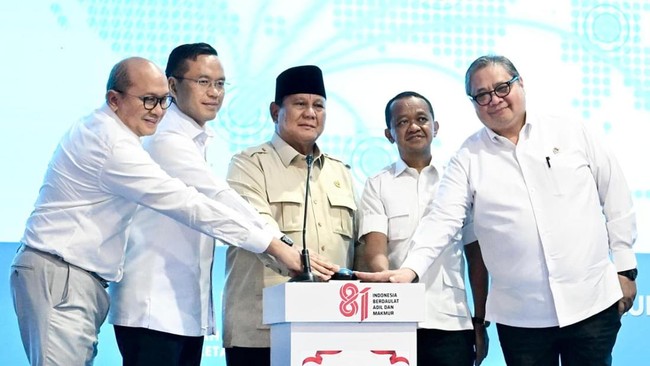
“The launch of the Mandatory B50 Programme is not simply the launch of a policy, but a historic milestone marking Indonesia’s concrete step towards strengthening the independence, resilience and sovereignty of national energy,” said Bahlil whilst accompanying President Prabowo Subianto at the B50 launch at the KM 57 rest area, Karawang Regency, West Java, quoted on Friday (10/7/2026).
Bahlil explained that Indonesia has great potential to strengthen its energy independence through the use of palm oil-based biodiesel. As the world’s largest producer of crude palm oil (CPO), Indonesia is considered obliged to continue optimising this resource so that it delivers ever greater value to the national economy and public welfare.
“B50 is not merely new energy, but part of an energy transformation that optimises Indonesia’s potential in order to strengthen national energy resilience as the foundation of the nation’s economic development,” he added.
From an economic standpoint, the implementation of Mandatory B50 Biodiesel is projected to deliver tangible benefits compared with B40. According to data from the Ministry of Energy and Mineral Resources, foreign exchange savings are estimated to rise from Rp133.3 trillion under B40 to Rp170 trillion under B50. The added value of the CPO industry is also projected to increase from Rp20.92 trillion to Rp23.49 trillion.
In addition, the B50 programme is expected to absorb around 2.1 million workers. To support its implementation, biodiesel demand is projected to reach 16.7–18 million kilolitres (kL), with CPO requirements of around 15.2–16.3 million tonnes. From an environmental perspective, the use of B50 is estimated to reduce carbon dioxide (CO₂) emissions by up to 44.46 million tonnes, higher than the emissions reduction achieved under B40, which reached 39.66 million tonnes.
Bahlil also assured the technical readiness of B50 implementation. The ministry has carried out extensive testing on motor vehicles, mining heavy equipment, agricultural tools and machinery, railways, maritime transport and power plants.
The test results show that B50 not only meets the technical specifications set by the government, but also satisfies the standards required by vehicle manufacturers. As such, the use of B50 has been declared fit for application across the various transport and industrial sectors that have undergone testing.
This readiness has been further reinforced through implementation trials in various strategic national sectors, including in East Kutai, Semarang, Lempuyangan Station in Yogyakarta, the Energy Ministry’s Geomarin vessel in Cirebon, and PT Pertamina Patra Niaga’s Surabaya installation.
Previously, President Prabowo Subianto stressed that Indonesia’s natural wealth must be processed domestically so that it delivers added value for the nation.
“Indonesia’s natural wealth must no longer flow abroad without providing added value for our own people. We must dare to process it, master its technology, build its industry, and make it a source of energy sovereignty,” the President asserted.
The national biodiesel programme has been developed in stages over nearly two decades as part of efforts to strengthen national energy resilience. Implementation began with B2.5 in 2008, then increased to B10 in 2013, B15 in 2015, B20 in 2018, B30 in 2020, B35 in 2023, B40 in 2025, and finally reaching B50.
Each stage of implementation has been supported by regulatory strengthening, increased industrial capacity, refinement of quality standards, the development of distribution infrastructure and human resource development to ensure optimal execution.
The government views the implementation of Mandatory B50 as a strategic step to further strengthen the foundations of national energy resilience whilst broadening economic benefits. Beyond optimising the use of domestic resources, the programme is expected to raise the value of national commodities, strengthen the competitiveness of domestic industry, support the welfare of oil palm farmers, create jobs, reduce greenhouse gas emissions and curb dependence on imported fuel.
Source: jawawa.id (https://jawawa.id/newsitem/government-launches-b50-mandate-affirms-energy-sovereignty-1783662668)
Originally published by CNBC Indonesia (https://www.cnbcindonesia.com/news/20260710112501-4-749753/luncurkan-mandatori-b50-esdm-tegaskan-penguatan-kedaulatan-energi), translated from Indonesian