
Government Launches 100 GW Solar Power Programme, Experts Offer Strategic Advice
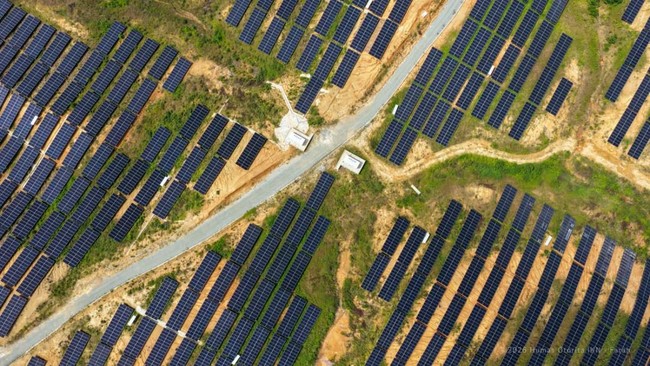
President Prabowo Subiability has initiated an accelerated development project for solar power plants (PLTS) with a capacity of 100 Gigawatts (GW). This programme is expected to strengthen Indonesia’s position in driving clean energy development within the ASEAN region. President Prabowo aims to complete the 100 GW solar programme before 2029, a statement made during the 48th ASEAN Summit in Cebu, Philippines.
The Institute for Essential Services Reform (IESR) maintains that the success of the 100 GW solar programme depends not only on the scale of the target capacity but also on the government’s ability to build a foundation for rapid, measurable, and replicable implementation. During the initial ‘take-off’ period, beyond establishing governance and planning, the government must prioritise ‘quick win’ programmes that can immediately reduce diesel consumption, attract investment, and increase access to clean electricity for the public, thereby building optimism for this ambitious programme.
IESR has identified three priority agendas for the initial implementation of the 100 GW solar programme: first, accelerating diesel reduction (dediesalisation) programmes; second, accelerating rooftop solar and Battery Energy Storage Systems (BESS); and third, developing village-based solar management models through Village Cooperatives or Village-Owned Enterprises (BUMDes).
‘These three agendas are vital as they can serve as early evidence that the 100 GW solar programme is not merely an ambition of capacity, but a real strategy for energy system transformation,’ explained Fabby Tumiwa, CEO of IESR. He noted that diesel reduction is one of the most strategic entry points, as Indonesia still operates thousands of diesel generators, particularly in remote and island regions. According to the 2025-2034 Electricity Supply Business Plan (RUPTL), PLN has identified approximately 3,996 diesel generators in 1,234 remote locations, targeting an 80 per cent reduction in diesel supply by 2030.
However, Tumiwa noted that the procurement process for diesel reduction projects has not been optimal in recent years. Tenders in 2022 saw minimal interest, and subsequent processes involving Letters of Intent (LoI) in 2023 faced tariff approval hurdles. The Ministerial Decree from the Ministry of Energy and Mineral Resources regarding price caps for solar and BESS-based diesel reduction projects has yet to be issued.
IESR suggests the government should review procurement mechanisms to make them more attractive to developers. Project bundling could be implemented selectively in areas with smaller coverage but larger project capacities to reduce logistical complexity and increase bankability. Additionally, IES_R highlighted opportunities for ‘fat burning’—using solar and BESS to reduce fuel consumption in large-scale power systems, which could significantly save costs given that PLN’s fuel consumption reaches approximately 4 million kilolitres per year.
IESR’s strategic recommendations for the 2026-2027 short-term response include: forming a national solar energy task force; establishing a five-year implementation plan with annual targets; accelerating tariff regulations for hybrid solar; increasing procurement transparency; revising rooftop solar regulations to include BESS incentives; and conducting village-based feasibility studies. For the 2027-2030 structural transformation, IESR recommends implementing open auctions for cost efficiency, building a centralised funding platform, developing a national supply chain for parts and maintenance, and expanding solar energy workforce training.