
Government Late to Raise Pertamax Price, Expert Says Adjustment Should Have Started at Beginning of Energy Crisis
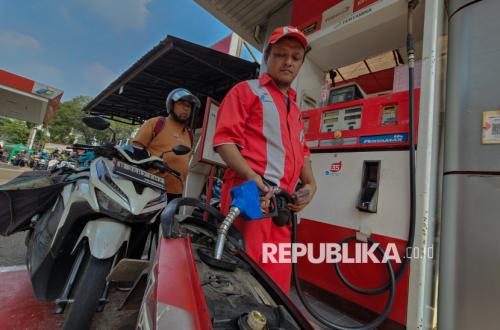
The government’s decision to raise the price of Pertamax to Rp16,250 per litre is seen as an unavoidable step amidst pressure from world oil prices and the weakening of the rupiah exchange rate. Public Policy Observer from Padjadjaran University (Unpad), Bonti Wiradinata, even assessed that the price adjustment was actually already late because global energy turmoil has been ongoing since February 2026. According to Bonti, the government has so far chosen to hold back the increase in non-subsidised fuel prices to maintain public purchasing power and national economic stability. This policy, he said, provided room for the public and business actors to adjust their financial conditions before facing rising energy prices. “Indonesia does tend to have a frequency of adjustments that are more infrequent and gradual. However, this is a deliberate policy choice to maintain a social cushion, not merely unpreparedness in managing prices,” said Bonti. He explained that the price of Pertamax as a non-subsidised fuel basically follows the development of world oil prices and the rupiah exchange rate. When these two factors experience pressure for a sufficiently long time, the government must eventually make adjustments so as not to create a greater fiscal burden. Bonti assessed that the government’s move to hold prices over the past few months should be appreciated because it provided an economic and psychological cushion to the public. However, according to him, the longer the price adjustment is delayed, the greater the pressure that must be borne by the state and energy business entities. “I estimate the urgency of raising this fuel price is related to the government’s strategy in maintaining the rupiah exchange rate against the US dollar and overcoming the state budget (APBN) pressure that occurs as a result of the rupiah’s weakening,” he said. According to him, maintaining non-subsidised fuel prices below the economic price in the long term has the potential to burden cash flow and enlarge energy compensation needs. Therefore, the price adjustment is considered a realistic step to maintain the country’s fiscal health. “By adjusting prices, the government minimises the potential for cost overruns in energy compensation. This is an effort to ensure that the state budget remains focused on other priority financing,” said Bonti. He added that the risk of social turmoil due to the Pertamax increase is relatively more controllable compared to if the government raised subsidised fuel prices. This is because Pertamax users generally come from community groups that have more options in managing their energy consumption patterns. A similar sentiment was conveyed by the Executive Secretary of the Indonesian Consumers Foundation (YLKI), Rio Priambodo. He said his party understands that non-subsidised fuel prices are influenced by the dynamics of world oil prices and the rupiah exchange rate against the United States dollar. Rio also requested that the Pertamax price increase be followed by improvements in service quality that are directly felt by consumers. According to him, the public has the right to obtain product quality and service commensurate with the price paid. Rio emphasised that consumers have the right to obtain guaranteed fuel quality, ease of access, distribution reliability, measurement accuracy, and better service at all petrol stations. “Consumers should not only be asked to accept price increases without obtaining increased benefits and commensurate service quality,” said Rio. Furthermore, Rio also encouraged Pertamina and the government to increase transparency in conveying information regarding fuel price changes. According to him, better public communication will help the public understand the reasons behind the price adjustment policy implemented by the government.