
Government Issues Ultimatum Over Idle State Land in Kemayoran
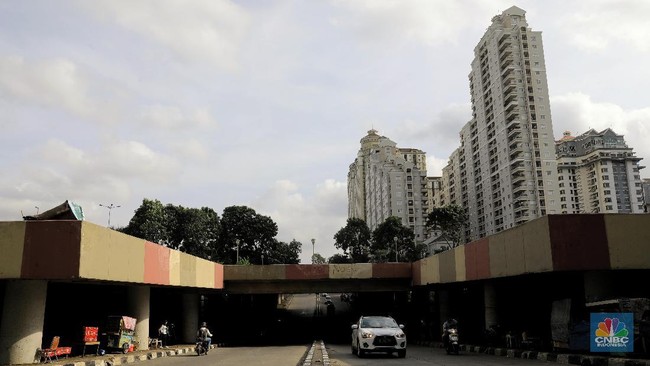
The Deputy Minister of State Secretariat, Juri Ardiendum, has emphasised that the government will evaluate several cooperation agreements regarding the use of state assets in the Kemayoran area after finding land that has not been developed or utilised according to the intended purpose of the agreements. This was stated by Juri during a direct inspection of several locations within the Kemayoran Complex Management Centre (PPK Kemayoran) on Monday (06/07/2026).
“We want to ensure that all state assets are utilised according to their intended purpose and provide real benefits to the state and the community. In reality, there is still land that has been under cooperation for a long time but has not been utilised as it should be. Therefore, all documents and the implementation of these cooperations will be re-examined,” said Juri.
The inspected locations include land in Block B.2 No.2, Block B.3, Block B.7/8, and Block C.7, as well as cooperation land with banks belonging to the State-Owned Banks Association (Himbara) in Block B.15 Kavling No. 6 and Block B.10 No. 5 in the Kemayoran area.
Based on the inspection results, several of these plots have not been developed in accordance with the plans and obligations outlined in the cooperation agreements. This condition has resulted in state assets failing to provide optimal economic, social, or spatial planning benefits.
Juri stated that the evaluation will not only focus on the physical condition of the land but also include the compliance of partners with all contractual obligations. The government will examine construction timelines, fulfilment of financial obligations, land use suitability, and the status of land rights that have been granted.
“The government will investigate whether there are breaches of agreement, including instances where land rights have been granted for long periods but the land remains unbuilt, is not used for its intended purpose, or is left abandoned. The obligations of every partner to PPK Kemayoran must also be met,” he asserted.
If the evaluation finds violations of agreements or statutory regulations, the government will take administrative and legal steps to protect state assets. Such measures may include reviewing the form of cooperation, land use rights, or other legal actions in accordance with applicable provisions.
According to Juri, the management of Kemayoran assets is not solely about resolving contracts and legal issues. The government aims to ensure the Kemayoran area develops according to spatial planning and becomes a productive, orderly, safe, comfortable, and clean area that provides space for both community activities and the business world.
“No party should enjoy benefits from state assets without fulfilling their obligations. State assets must be managed responsibly, and the benefits must return to the state and the community,” Juri added.
The President Director of PPK Kemayoran, Teddy Robinson Siahaan, stated that his organisation has been coordinating with partners to encourage the fulfilment of obligations and the acceleration of development on the cooperated land.
“The visit by the Deputy Minister of State Secretariat strengthens PPK Kemayoran’s steps to resolve asset issues firmly, comprehensively, and strictly based on the law. We will ensure that every cooperation is carried out transparently, accountably, and does not disadvantage the interests of the state,” said Teddy.
PPK Kemayoran has also prepared legal assistance to review agreements, map out problems, and formulate resolution steps for partners who have failed to meet their obligations.
As a Public Service Agency under the Ministry of State Secretariat, PPK Kemayoran manages an area of approximately 450 hectares. The evaluation of cooperation and the regulation of land use are part of the government’s efforts to increase the economic value of the area, strengthen state revenue, and ensure that state assets are not left to lose their function and utility.