
Government issues guidelines for women's credit with flat 8 percent interest
Jakarta (ANTARA) - The government has issued implementing guidelines for the Kredit Perempuan Prasejahtera (KPPS) with a flat interest rate of 8 percent per year.
The guidelines are set out in Coordinating Ministry for Economic Affairs Regulation (Permenko) Number 7 of 2026 concerning Guidelines for the Implementation of Kredit Perempuan Prasejahtera, which was promulgated on 5 August 2026.
The regulation serves as the legal umbrella for KPPS, a programme credit scheme that provides productive financing for women from underprivileged families who are running or about to start a business.
Through KPPS, recipients can obtain financing with a flat interest rate or margin of 8 percent per year, a ceiling of up to Rp15 million per contract, and no additional collateral requirements.
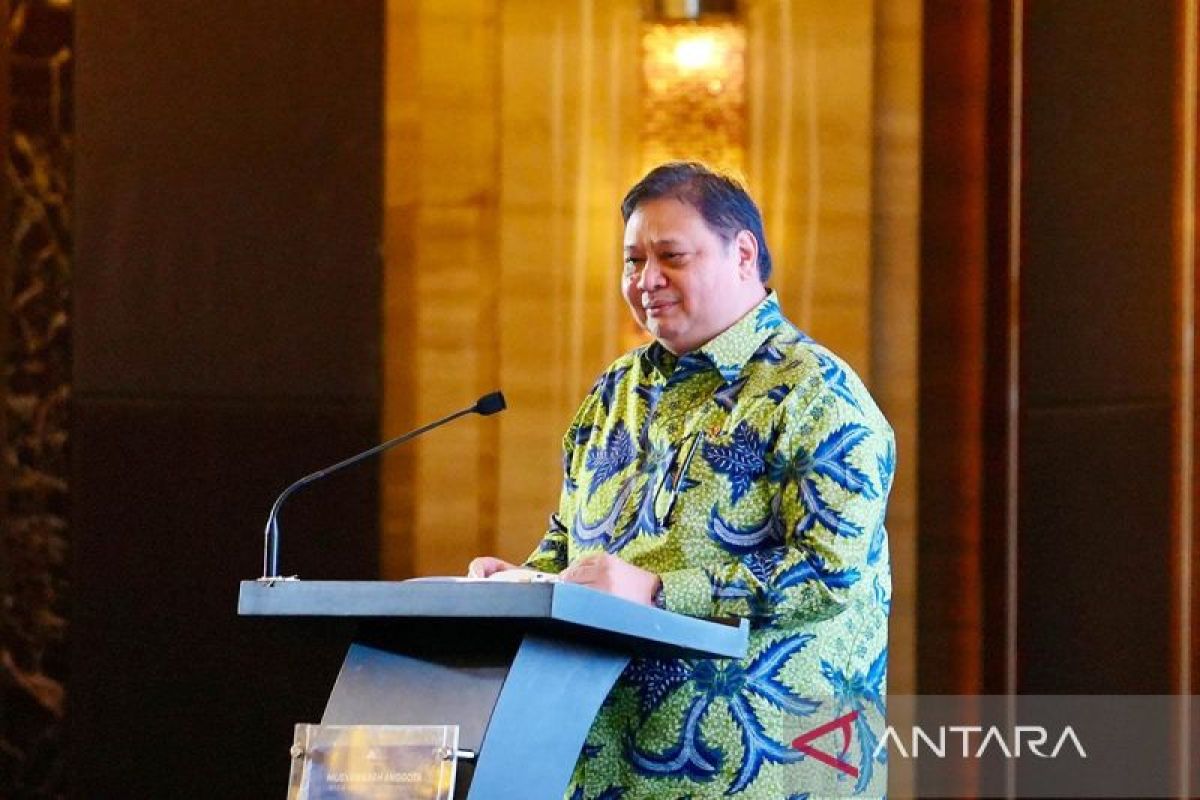
“The issuance of this Permenko is a follow-up to President Prabowo Subianto’s directive that the financing interest burden for the most vulnerable groups be reduced significantly, while also implementing the results of the Coordination Meeting of the Financing Policy Committee for MSMEs on 22 June 2026,” said Coordinating Minister for Economic Affairs Airlangga Hartarto in his statement in Jakarta on Tuesday.
Until now, ultra-micro business actors, particularly women from underprivileged families, have borne financing interest of around 24 percent per year. Through KPPS, this interest burden is cut to 8 percent flat per year through government support in the form of interest subsidies or margin subsidies.
Permenko Number 7 of 2026 sets out a number of programme objectives, including providing access to credit or productive financing for underprivileged women, opening business opportunities, increasing employment, and encouraging economic growth.
KPPS targets women from underprivileged families verified based on the National Single Social and Economic Data (DTSEN) in decile 1 to decile 4. Prospective recipients must also have a Population Identification Number (NIK) and family card (KK) and be part of a group of at least five people in the same neighbourhood.
“So that no prospective beneficiary is left behind, the Permenko also opens room for distributors to assess the eligibility of prospective recipients objectively according to the applicable criteria,” said Airlangga.
In terms of scheme, KPPS is tailored to the characteristics of ultra-micro businesses. The financing ceiling is set at a maximum of Rp15 million per contract for each recipient and can be drawn at once or in stages according to agreement with the distributor.
Recipients can also access KPPS again through multiple contracts without frequency restrictions. Thus, financing can grow in line with business growth.
The financing period is set at a maximum of 24 months and, outside the restructuring scheme, can be extended up to a maximum of 36 months. The payment mechanism is agreed between the recipient and the distributor.
KPPS financing is directed at productive activities, including the agriculture, marine and fisheries, processing industry, construction, tourism, trade, and production services sectors.
In addition to financing, KPPS is equipped with empowerment services that form part of the programme. Distributors are required to provide mentoring, education on household and business financial management, as well as training to improve business capacity and entrepreneurship.
Recipient groups also apply a joint liability mechanism to encourage discipline and solidarity among members. KPPS recipients can become BPJS Ketenagakerjaan participants independently to obtain protection in running their businesses.
The Permenko also provides protection for recipients by prohibiting distributors from requesting additional collateral beyond the business or object being financed.
On the distributor side, KPPS can be channelled through financial institutions or legally incorporated cooperatives that are sound and well-performing and have data systems integrated with the Programme Credit Information System (SIKP).
Supervision of KPPS implementation is carried out through a supervisory coordination forum coordinated by the Financial and Development Supervisory Agency (BPKP) together with relevant ministries/agencies and financial services sector authorities.
In addition, the Financing Policy Committee for MSMEs conducts periodic evaluations to ensure the quality of KPPS implementation and distribution.
The government estimates the potential number of KPPS recipients at 9.16 million women running ultra-micro businesses across Indonesia.