
Government Internship Programme Deemed Ineffective in Tackling Graduate Unemployment
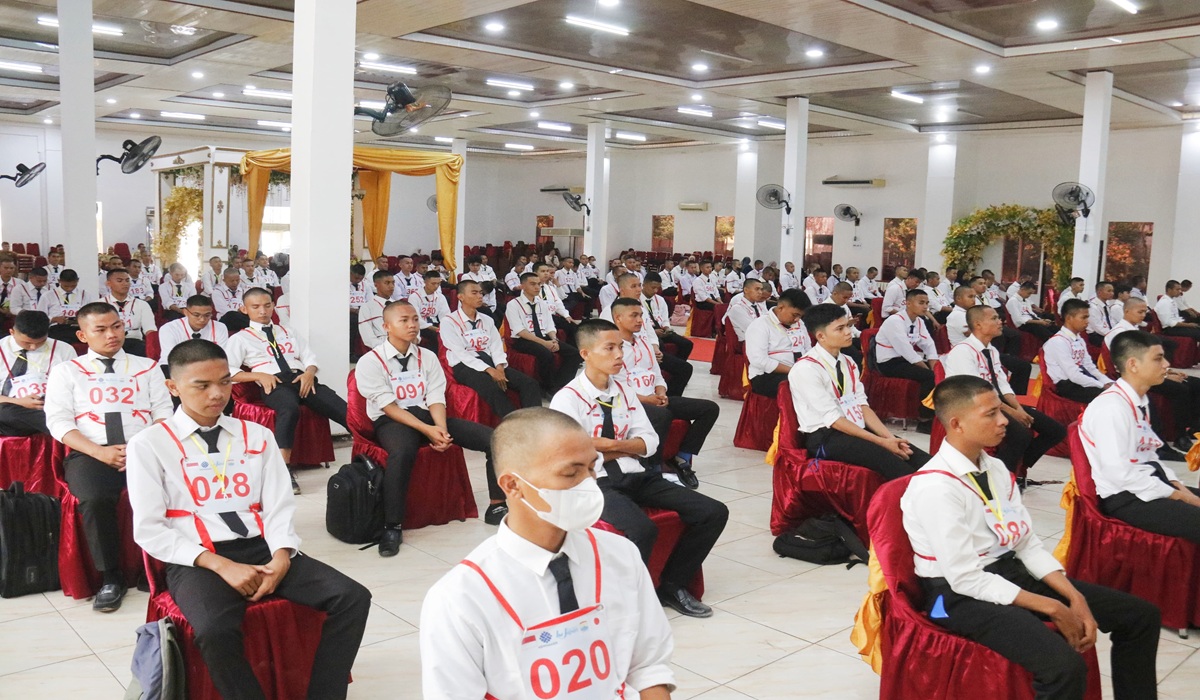
The National Labour Force Survey (Sakernas) in May 2026 recorded that around 14.31 percent, or 1,033,132 people with D-4, S-1, S-2, and S-3 qualifications, remained unemployed. This situation arises as the world of work continues to change, marked by technological developments, new skill demands, and efficiency drives across several industrial sectors. This polemic highlights the growing problem of educated unemployment.
Labour expert and Professor at the Faculty of Social and Political Sciences at Gadjah Mada University (UGM), Tadjuddin Noer Effendi, stated that the rising number of unemployed university graduates is not solely due to limited job opportunities. The mismatch between graduate competencies and the needs of the labour market also contributes to the difficulty graduates face in entering the job market.
Education has tended to provide theoretical knowledge, while the world of work requires people with practical skills. “Education provides a lot of theory, whereas the world of work is looking for people who are already skilled. Generally, graduates come to companies with a diploma, not with skills,” he explained on Tuesday (18/8).
According to him, this condition is becoming more challenging as industry develops with the use of technology, including the emergence of Artificial Intelligence (AI) and robotics. These developments mean industry’s need for labour is no longer based solely on educational background, but also on abilities and skills relevant to technological progress. Meanwhile, these skills are considered not to have been fully acquired by students during their time in higher education.
“A diploma is no longer sufficient grounds for a company to accept a graduate if it is not accompanied by skills. So if a graduate only brings a diploma to look for work, it now seems difficult,” he said.
Beyond the issue of graduate competence, he noted that Indonesia’s economic structure is also not yet capable of creating quality jobs, particularly in the industrial sector. Labour-intensive industries, which have traditionally absorbed workers, are under pressure due to rising costs of imported raw materials and weakening public purchasing power. “This condition encourages companies to make efficiencies, including reducing their workforce,” he said, linking the situation to rising layoffs (PHK).
He said the government internship programme is a fairly good step to help graduates gain work experience and skills. However, the programme’s capacity is still considered far too small compared to the number of educated unemployed. He therefore urged the government to expand modern job training centres oriented towards industry needs. “There should be training centres established that can provide a faster route to improving graduate skills, especially for graduates who have not been absorbed by the job market,” he said.
Professor Tadjuddin criticised the government’s plan to establish the University of the Republic of Indonesia (URI) if its main objective is to address educated unemployment. According to him, establishing a new university requires a long time before it can produce graduates with the quality industry needs. He suggested that the government and universities strengthen vocational training centres tailored to labour market needs. This, he said, could be one solution to educated unemployment. The programme, he said, should target university graduates who have not been absorbed by the job market so they can acquire the practical skills industry needs. “If this can be realised well, it is highly likely that within two to five years it could create perhaps one to two million placements for educated unemployed people,” concluded Tadjuddin.