
Government Injects Rp 400 Trillion Liquidity into State Banks to Boost Lending
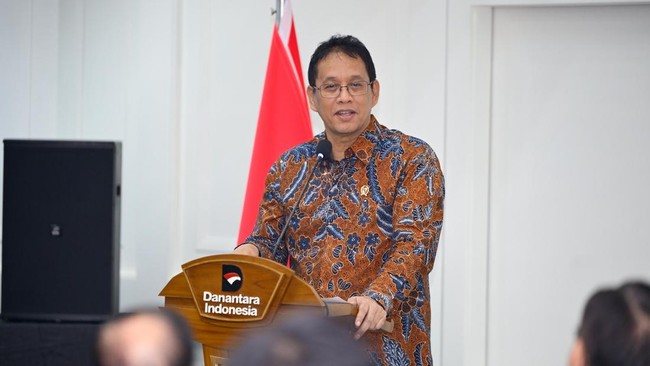
Jakarta - Finance Minister Purbaya Yudhi Sadewa has injected an additional Rp 400 trillion into the nation’s banking sector at the start of the second half of 2026. The fund placement is intended to strengthen bank liquidity.
This injection was decided after Purbaya held a meeting with the heads of the Association of State-Owned Banks (Himbara) in late June. Purbaya stated that the government decided to re-place funds that had been idle at Bank Indonesia (BI) into Himbara banks, including Mandiri, BRI, BNI, BTN, and BSI.
He acknowledged that of the total funds placed last year, approximately Rp 300 trillion, some had been withdrawn in recent months, leaving only Rp 170 trillion in the banks by June. Observing the banking conditions, the government has been re-placing funds in recent months, bringing the total back to Rp 200 trillion, before ultimately providing an additional Rp 100 trillion twice until the end of the year, making the total government placement in Himbara Rp 400 trillion.
“The Rp 170 trillion has been returned to Rp 200 trillion. Then we added a fixed Rp 100 trillion until the end of the year, and a flexible amount of Rp 70 trillion to Rp 100 trillion that we can move in and out,” Purbaya explained.
According to Purbaya, with the total placement of Rp 400 trillion, Himbara banks have expressed confidence regarding their liquidity resilience. “I told them, you can all take tomorrow off. Saturday you can rest again, meaning the conditions are better than they previously expected,” Purbaya said.
Purbaya is confident that credit growth can reach 14-15% this year after the government safeguards bank liquidity adequacy. He noted that the injection of idle funds from Bank Indonesia into Himbara will provide the banking sector with more room to channel credit to the business world.
“So there will be sufficient liquidity in our banking sector. Thus, market interest rates should fall. The economy is ready to run again,” the Finance Minister stated.
Purbaya stressed that the value of funds to be poured into the banking system is a directive from the President to immediately overcome obstacles to economic growth, including the issue of tight liquidity. He believes the additional liquidity will strengthen business confidence, support investment, and bolster national economic strengthening.
“The President wants the economy to keep moving, all disturbances to be removed. If we restore the economic perspective, the economy will run again. People tend to invest in countries whose economies are about to take off,” he explained.
Purbaya assessed that strengthening liquidity will encourage market mechanisms to work optimally, allowing banking intermediation to function more effectively. “So I am forcing the market mechanism to work,” the Finance Minister said.
Based on communication with banks, Purbaya claimed the additional liquidity will provide them with the space to resume credit expansion plans that had previously been held back. “They said if they weren’t helped, credit growth would fall to 8%, 7%, 6%. When we restore it, the credit plans they had been holding due to anticipated liquidity shortages will be executed again. Credit will definitely grow double digits, maybe 13-14%,” he said.
If liquidity conditions remain as designed by the government, the Finance Minister is optimistic that national credit growth can increase even higher to a range of 14-15% this year, far above Bank Indonesia’s forecast of only 8-12% throughout 2026.
“If the money is managed sufficiently as we designed, my guess is credit growth this year could be 14-15%,” he stated.
Bank Mandiri’s Director of Finance & Strategy, Novita Widya Anggraini, revealed that the presence of government funds has a measurable positive impact on the funding structure, including cost of funds efficiency that directly expands lending capacity. Bank Mandiri’s future focus remains on solid third-party fund growth, supported by sustainable low-cost fund accumulation through ecosystem strengthening and digital acceleration. This strategy serves as a strong foundation for Bank Mandiri’s resilient funding structure.
In terms of lending, Bank Mandiri projects growth in line with the industry pace until the end of the year. The company will continue to optimise the intermediation function selectively while prioritising prudential principles and disciplined risk management. “As a strategic partner of the government and a driver of the people’s economy, Bank Mandiri’s lending is focused on the MSME segment, which plays a major role in driving the national economy. By prioritising prudential principles and maintaining asset quality with discipline, Bank Mandiri is ready to make a positive contribution in supporting the government’s priority agendas,” Novita concluded.