
Government Implements Accelerated Planting Strategy to Face Dry Season
Jakarta (ANTARA) - The government is implementing various strategies to face the dry season expected in 2026, ranging from water-saving technologies, the use of short-duration varieties, and more efficient planting patterns to maintain productivity, to the acceleration of planting following harvests.
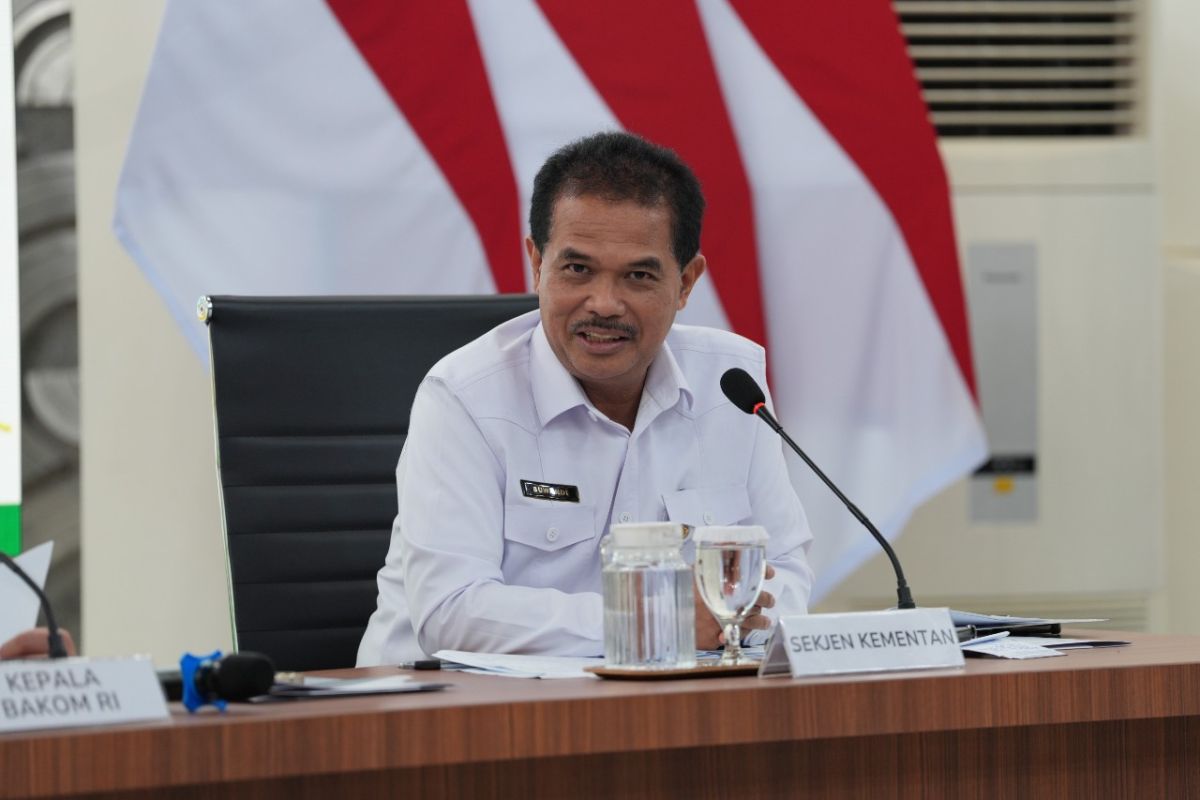
The Secretary-General of the Ministry of Agriculture, Suwandi, explained that the government continues to encourage an increase in the planting index through accelerated planting. The interval between harvest and replanting is being targeted to be no more than 14 days so that planting frequency can increase.
“If previously planting occurred twice a year, we are pushing for three times. What was previously once, we are pushing to become twice. With the same land area, production can increase because the planting frequency increases,” said Suwandi during a press conference in Jakarta on Wednesday.
Additionally, farmers are being encouraged to utilise land more optimally through intercropping with commodities such as peanuts, mung beans, and vegetables to increase productivity and income.
According to Suwandi, the dry season is not always synonymous with a decrease in production. With proper water management, the dry season can actually serve as a momentum for increasing productivity due to the high intensity of sunlight which supports the plant photosynthesis process.
“During the dry season, sunlight is very good, so plant productivity can increase. This is actually an opportunity to boost production if managed with the right technology,” he said.
As a mitigation step, the government is strengthening the development of pump-based irrigation, which is one of the main strategies for facing climate change. In 2026, the government is preparing additional pumps capable of serving approximately one million hectares of agricultural land.
This programme complements the pumping system that previously supported the irrigation of around two million hectares of land across various regions.
“Our main strength in facing the dry season is the pumping system, the management of water sources from reservoirs, small dams, rivers, or wells connected with adequate technology and energy,” Suwandi said.
The Ministry of Agriculture is also strengthening synergy with the Ministry of Public Works, PLN (the state electricity company), and the Ministry of Energy and Mineral Resources to ensure the availability of water and energy for pump operations in the field.
In addition to maintaining production, the government is also providing protection to farmers through the Rice Crop Insurance (AUTP) programme, with coverage values of up to Rp6 million per hectare for land that suffers harvest failure due to disasters.
Farmers affected by drought will also receive free seeds, production facilities, support for agricultural tools and machinery, as well as assistance for accelerated replanting.
To strengthen national preparedness, the government has allocated approximately 57,000 water pump units and various other agricultural machinery in 2026 to support the sustainability of food production throughout Indonesia.
With these various steps, the Ministry of Agriculture is optimistic that national food production will remain stable and the target for food self-sufficiency can continue to be strengthened despite the challenges of the dry season.
Source: jawawa.id (https://jawawa.id/newsitem/government-implements-accelerated-planting-strategy-to-face-dry-season-1781704520)
Originally published by Antara (Indonesian) (https://www.antaranews.com/berita/5611743/pemerintah-terapkan-strategi-percepatan-tanam-guna-hadapi-kemarau), translated from Indonesian