
Government Holds Pertalite Price Steady to Protect Purchasing Power Amid Global Oil Turmoil
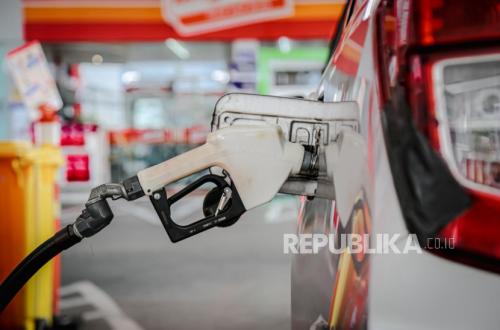
JAKARTA – The government is maintaining the price of Pertalite amid rising global oil prices that have breached US$100 per barrel. The policy is one of the measures taken to protect people’s purchasing power and dampen inflationary pressure, although at the same time it carries implications for the state’s fiscal burden.
Robert R. Winerungan, an economist at Manado State University (Unima), said the government’s decision to keep Pertalite at Rp10,000 per litre can help maintain price stability amid global energy pressure.
“I think that is a very wise decision by the government. Because if the government also raised the price of Pertalite, inflation could spiral out of control,” Robert said on Tuesday (15/9/2026).
According to Robert, fuel price increases have a knock-on effect on the economy. A rise in fuel prices can push up transport costs, which in turn drives up the prices of various goods and services consumed by the public.
For that reason, he said, the government cannot entirely leave the price of Pertalite to market mechanisms. Pertalite has a broad level of consumption, so changes in its price can directly affect household spending.
“Even without fuel prices going up, prices are already rising, let alone if fuel goes up. In other words, the government simply cannot throw the price of Pertalite to the market, because that would potentially burden the public,” he said.
Robert acknowledged that the decision to hold the Pertalite price has consequences for the state budget. When global oil prices rise while domestic fuel prices are held down, the gap between the economic price and the price paid by the public must be borne by the government through subsidy and compensation policies.
“Subsidies may indeed balloon. But the benefit is that our inflation is not too high and people’s purchasing power can, to some extent, be maintained,” he said.
He said this burden must be viewed alongside the economic costs that could arise if fuel prices were raised. According to him, a Pertalite price increase would add pressure on low- and middle-income groups, as transport and daily living costs would rise accordingly.
“If Pertalite goes up, the middle class will come under even more pressure. Those worse off would be the lower class, because transport costs will rise and so on. There are many knock-on effects if the Pertalite price rises,” he said.
Fuel price pressure, Robert said, is also starting to influence consumer behaviour. Some people who previously used higher-octane fuel have begun considering cheaper fuel to reduce their spending.
Meanwhile, Bonti Wiradinata, a public policy expert at Padjadjaran University (Unpad), said fuel pricing policy must take into account more than mere economic calculations. The government must also weigh economic and social stability when deciding on a commodity with such wide-ranging effects on society.
“We have to look at it in its structure, not only from the economic aspect, but also geopolitical stability, and economic and social stability,” Bonti said.
According to Bonti, holding the Pertalite price does have consequences for the budget’s posture. However, under conditions of global energy price pressure, the government needs to safeguard stability so that a fuel price increase does not create further pressure on the economy.
“I think this policy is right. Although of course this correct policy will carry risks for the budget posture,” he said.
Even so, Bonti said energy subsidy policy should not become a permanent arrangement. Once geopolitical pressure and global energy prices begin to ease, the government can reassess the level of subsidies to preserve fiscal health.
He said shifts in the global energy landscape could also give the government room to reduce pressure on the budget should global oil supply become more stable again.
“In other words, next year fuel conditions may become more stable, because America now has new oil sources, so a crisis like the current one could diminish,” Bonti said.
As such, the policy of holding the Pertalite price can serve as a short-term instrument to protect purchasing power and price stability, while the government still needs to prepare a strategy for gradually reducing subsidies once energy market conditions have become more stable.
Balancing public protection with fiscal sustainability remains the government’s challenge in determining future energy pricing policy.
Source: jawawa.id (https://jawawa.id/newsitem/government-holds-pertalite-price-steady-to-protect-purchasing-power-amid-global-oil-turmoil-1789465998)
Originally published by Republika (https://ekonomi.republika.co.id/berita/tldxnf522/pemerintah-tahan-harga-pertalite-jaga-daya-beli-di-tengah-gejolak-minyak-dunia), translated from Indonesian