
Government Forms Energy Transition Task Force, Focusing on Solar Power Plants to Electric Motorcycle Conversion
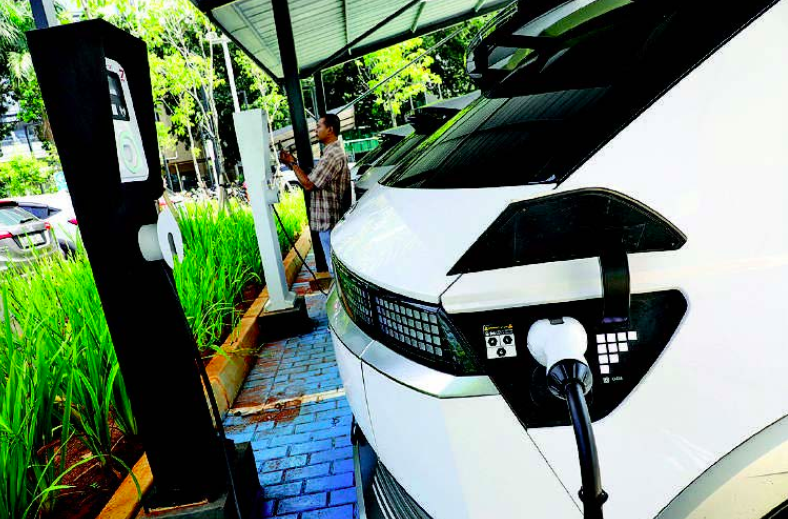
The government is preparing more structured measures to address global energy dynamics through the formation of an energy transition task force. This effort is aimed at responding to the potential rise in fuel prices and energy import challenges.
Secretary of the Directorate General of New, Renewable Energy, and Energy Conservation (EBTKE) of the Ministry of Energy and Mineral Resources (ESDM), Harris, revealed that the establishment of the task force is a direct instruction from the President to strengthen national energy resilience.
“The President has instructed the formation of an energy transition task force, which is expected to respond more structuredly to the current global conditions, where fuel prices are projected to rise and there are challenges in imports,” he stated at the Denpasar 12 Discussion Forum held online on Wednesday (1/4).
He added that the task force, chaired by Minister of ESDM Bahlil Lahadalia, will focus on three main programmes.
First, accelerating the development of solar power plants (PLTS) with a target capacity of up to 100 gigawatts. Currently, the government is conducting intensive discussions to realise this programme.
“How we can enhance this 100 GW PLTS programme to be completed; it is currently in process and under discussion,” Harris explained.
Second, the government will promote the conversion of two-wheeled vehicles based on fuel oil to electric vehicles. This step is deemed crucial given the high fuel consumption from the transportation sector, particularly motorcycles.
“If we note, there are currently around 140 million fuel-based motorcycles in Indonesia. Their consumption is very large, so efforts are needed to reduce that dependency,” he said.
Third, strengthening biofuel programmes, including the implementation of B50 biodiesel for diesel and the development of ethanol blends such as E10 for petrol. In addition, the utilisation of sustainable environmentally friendly fuels is also being continuously promoted.
“For biofuels, we are heading towards B50 for diesel, then E10 for petrol, as well as sustainable efficient fuel whose utilisation is continuously increased. Commercially, this has been implemented before and technically runs safely,” he explained.
According to Harris, the combination of these policies is expected to optimise the utilisation of domestic energy while reducing dependence on fossil fuel oil amid global uncertainties.