
Government Extends Civil Servant Flexible Working Policy, Claims Rp 1.95 Trillion Savings on Official Travel
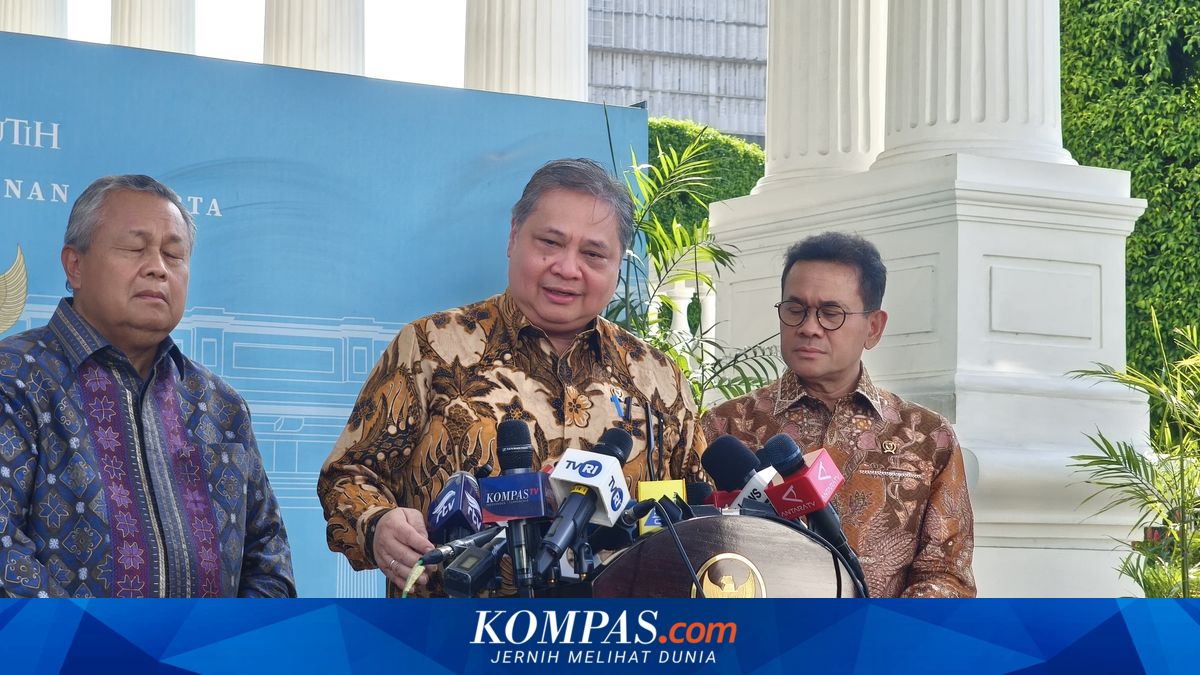
JAKARTA - The government has decided to extend the flexible working policy for civil servants (ASN) after evaluations showed the arrangement saved Rp 1.95 trillion on official travel expenses without compromising public service quality.
The decision was announced by Coordinating Minister for Economic Affairs Airlangga Hartarto following a review of ASN flexible work implementation in April 2026.
‘Based on the two-month evaluation of ASN work-from-home arrangements, the government has decided to extend the policy through new circulars issued by the Minister of Public Administration and Bureaucratic Reform (PANRB) for central government institutions and the Minister of Home Affairs for local governments,’ Hartarto said during a limited coordination meeting on Work Culture Transformation Policy Evaluation in Jakarta on Tuesday, 26 May 2026.
The government will also urge civil servants to maintain productivity, discipline, and service quality as part of the extended policy.
Minister of Public Administration and Bureaucratic Reform (PANRB) Rini Widyantini emphasised that flexible working is not merely about changing work locations but part of a broader government system transformation adapting to technological advancements and public needs.
‘Efficiency does not mean reduced services. Today’s efficiency means changing how the nation works. Flexible working is the gateway, with digital government transformation being the main change,’ she said.
The evaluation noted several efficiency gains from the flexible work policy. In addition to the Rp 1.95 trillion saved on official travel, utility costs were reduced by Rp 65.6 billion. National use of electronic signatures (TTE) increased by 100,817 documents, indicating accelerated digitalisation of bureaucratic processes.
Widyantini stated that the government’s work culture transformation has not diminished public service quality. Evaluation data shows 95% of public services remained stable or improved during the flexible work period. Public satisfaction levels were maintained, with all complaints handled through official government channels.
According to Widyantini, ASN work culture transformation must be supported by building Digital Public Infrastructure (DPI), including digital identities, inter-agency data exchange systems, and government digital payments. She deemed these foundations vital for creating a more integrated, adaptive bureaucracy that operates cohesively across institutions.
‘Work culture transformation must drive civil servants to work more effectively, agilely, and results-oriented. Flexible working does not mean lower service quality; it should strengthen professionalism and performance accountability,’ she said.
However, the government still faces challenges in implementing flexible work, including strengthening digital work culture and adjusting coordination patterns between units and institutions. Therefore, each institution is required to ensure optimal public service delivery despite flexible work arrangements.
‘Moving forward, flexible working must be more mature in implementation. It should not only be flexible in location but also stronger in governance, coordination, and organisational performance outcomes,’ Widyantini said.