
Government Expert: Presidential Insult Article Not a Threat to Free Expression
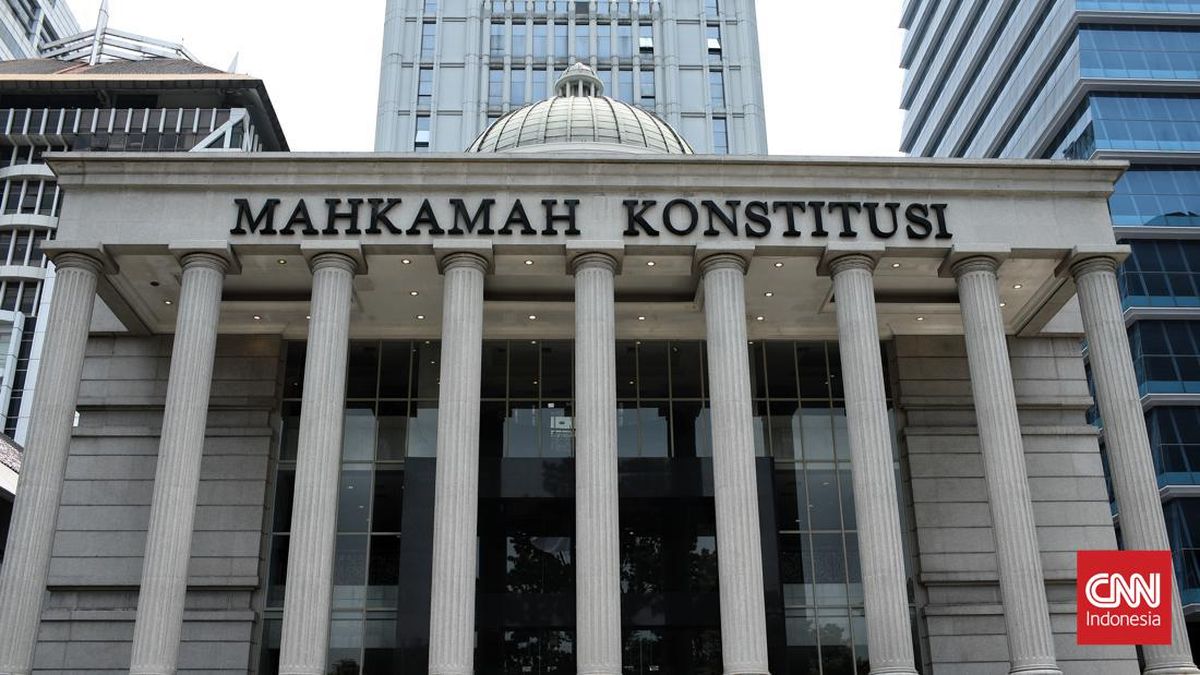
A legal expert representing Indonesian President Prabowo Subianto has asserted that the article on attacks on the honour of the president in Law 1/2023 on the Criminal Code (KUHP) does not pose a threat to freedom of expression. The statement was made by the expert presented by the president during a judicial review hearing at the Constitutional Court (MK) in Jakarta on Tuesday (9/6). The Constitutional Court held a continuation of the material review of the Criminal Code, filed through several case petitions, namely Petition Number 275/PUU-XXIII/2025, 280/PUU-XXIII/2025, 282/PUU-XXIII/2025, 26/PUU-XXIV/2026, 27/PUU-XXIV/2026, and 26/PUU-XXIV/2026. Criminal law expert Albert Aries, presented by the president, addressed concerns that Article 218 of the KUHP concerning the criminal offence of attacking the honour or dignity of the president and/or vice president could criminalise critics of the authorities. “One of the things that needs to be straightened out in this judicial review is whether it is true that there is a ‘chilling effect’ suggesting that the existence of Article 218 of the KUHP will criminalise criticism or even become a threat to freedom of expression and differing opinions on the policies of the president and/or vice president, even though since it came into effect on 2 January 2026, there has not been a single complaint made using the article a quo,” Albert said, as quoted from the Constitutional Court’s website. He stated that the elucidation of Article 218 already emphasises that criticism containing disagreement with the actions, policies, or conduct of the president and/or vice president is not a criminal act. In simple terms, the unlawful act punishable under Article 218 is one that attacks the honour or dignity of the president and/or vice president by degrading or damaging their reputation or self-esteem, including defamation. “For instance, with the word ‘zoo’ or by slandering,” Albert said. He explained the meaning of the phrase ‘diri’ (self) of the president and/or vice president in the article, noting that while the object is similar, it differs from prohibited acts in Chapter XVII of the KUHP on Defamation Offences, particularly Article 433, Article 434, and Article 436. “Thus, the subjective feelings of the insulted person can always be objectively tested by giving that person the opportunity to prove the truth of the allegation (Article 434 of the New Criminal Code),” Albert stated. Albert also explained the different legal construction between Article 218 of the new KUHP and Article 134 of the old KUHP, stressing that the new KUHP makes attacks on the honour of the president/vice president an absolute complaint offence. “This means that even if someone defames or slanders the president and/or vice president, and it constitutes an unlawful act, there will never be any legal process if the president and/or vice president does not file a complaint,” he said. “Moreover, the president and/or vice president in this article is also not ‘obligated’ to use their right to complain, as per the Latin postulate ‘juro suo uti nemo cogitur’,” Albert added. He explained that under Article 218 paragraph 2 of the new KUHP, an act does not constitute an attack on honour or dignity as referred to in paragraph (1) if it is carried out in the public interest or for self-defence. He added that the elucidation clearly distinguishes between ‘criticism’ and ‘offence’ (defamation or slander). “This is in line with Article 19 paragraph (3) of the ICCPR, which Indonesia has ratified via Law Number 12 of 2005, stipulating that the right to freedom of opinion may be restricted to respect the rights or reputations of others, and to protect public order or morals,” he said. He stated that if the president and/or vice president were easily offended and filed a complaint, investigators and public prosecutors would follow it up, but the judicial authority under the Supreme Court would make the final legal decision. “But this is where we must trust that the Supreme Court, as a holder of judicial power, retains the authority to assess whether the act constitutes an insult, and to examine the grounds for specific criminal exclusions under Article 218 paragraph (2) of the New KUHP,” Albert concluded. The challenge against the article on attacks on the presidential honour in the new KUHP was filed by several parties, including students. The students who filed Petition Number 275/PUU-XXIII/2025 included Afifah Nabila Fitri, Dimas Fathan Yuda Armansyah, Farhan Dwi Saputra, and Feony Gita Safitri. The Petitioners are reviewing Article 218 paragraphs (1) and (2), Article 219, and Article 220 of Law 1 of 2023 on the Criminal Code. They consider these provisions to contradict the Indonesian constitution, particularly regarding the guarantee of free expression, equality before the law, and legal certainty. The Petitioners stated that Article 218, which prohibits “attacking the honour or dignity of the President or Vice President,” risks limiting freedom of speech and expression as guaranteed by Article 28E paragraphs (2) and (3), and Article 28F of the 1945 Constitution. “In our view, this provision creates a fear effect in society, deterring citizens from voicing criticism, opinions, or expressions in the public sphere,” the Petitioners stated. They argued that the regulation creates unequal legal treatment by granting special criminal protection to the President and/or Vice President, contravening the principle of equality before the law as set out in Article 27 paragraph (1) of the 1945 Constitution.