
Government Expert: PPIU Regulations Do Not Restrict Independent Umrah Worship
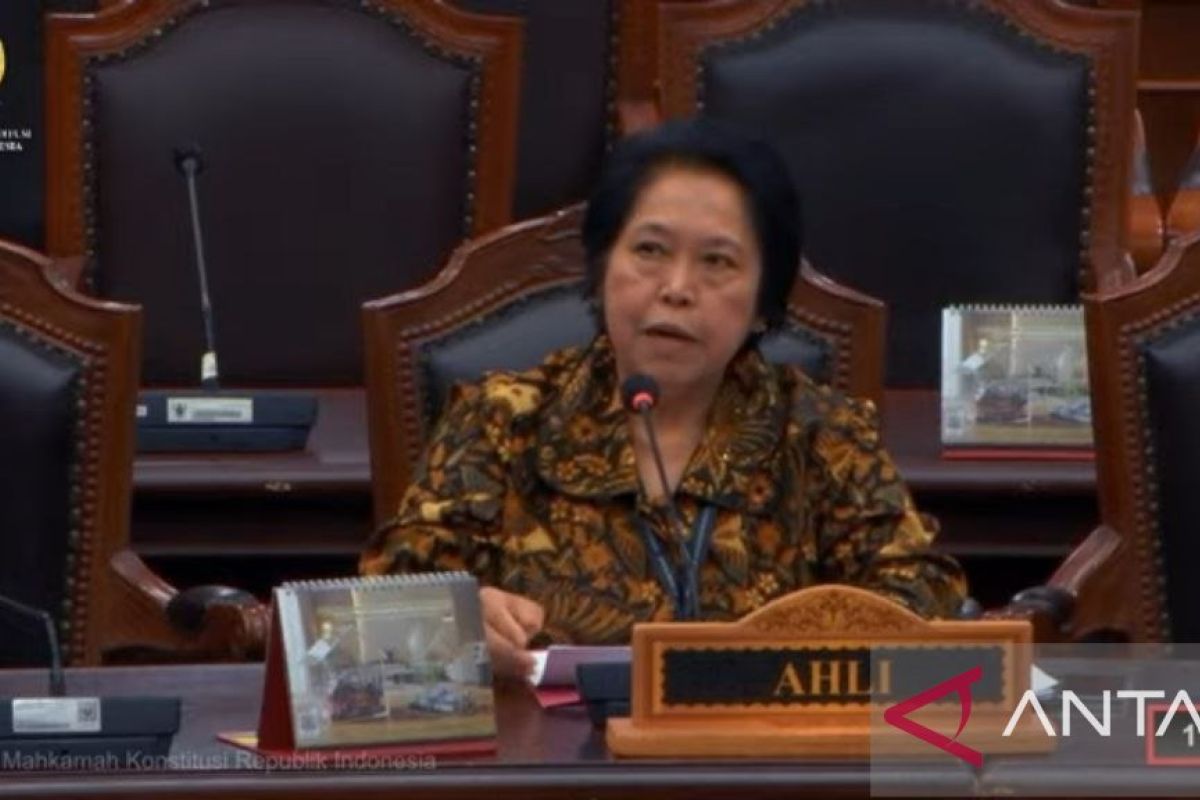
Jakarta (ANTARA) - Government-appointed expert Harkristuti Harkrisnow0adnowo has stated that Articles 115 and 122 of the Law on the Implementation of Hajj and Umrah remain constitutional, as they aim to protect pilgrims rather than restrict the performance of Umrah worship.
Harkristuti expressed this opinion during a follow-up hearing for the judicial review of Articles 115 and 122 of Law Number 8 of 2019 concerning the Implementation of Hajj and Umrah, as most recently amended by Law Number 14 of 2025, at the Constitutional Court (MK) in Jakarta on Tuesday.
“I am of the opinion that Articles 115 and 122 are not instruments intended solely to limit worship, but are instruments to protect pilgrims and ensure that the organisation of pilgrimage travel is conducted by parties who possess legitimacy and responsibility,” said Harkristuti.
The criminal law and human rights expert explained that the criminal sanctions within Articles 115 and 122 are, in principle, legitimate to maintain because they protect fundamental legal interests, specifically the rights, safety, dignity, and honour of pilgrims.
According to her, the organisation of Hajj and Umrah possesses a unique character that cannot be reduced merely to a commercial service relationship.
From a human rights perspective, she assessed that the matter is not a choice between the freedom to practice worship and state regulation.
The state, she noted, must not obstruct the public from performing worship, but it must also not allow pilgrims to remain vulnerable to parties organising pilgrimage travel without legal rights or accountability.
Nevertheless, Harkristitu warned that the application of these norms must have clear boundaries so they are not used to criminalise individuals who are simply assisting family members in performing independent Umrah.
“Certainly, what needs to be guarded is the boundary line; the norm must not be used to criminalise those who are merely performing or assisting family in conducting independent Umrah,” she said.
On this basis, Harkristuti argued that Articles 115 and 122 remain constitutional, and therefore the petitioner’s application should be rejected.
The judicial review of Articles 115 and 122 was filed by Febriansyah Ramadhan, a lecturer at the Faculty of Law, Universitas Pendidikan Nasional Bali, in Case Number 239/PUU-XXIV/2026.
The petitioner questioned the potential for legal uncertainty arising from these two norms, as they are deemed capable of being used as a basis to criminalise individuals coordinating independent Umrah trips for family or relatives.
Article 115 prohibits any person from acting without authorisation as an Umrah Pilgrimage Travel Organiser (PPIU) by collecting and/or departing Umrah pilgrims.
The panel of judges stated that Tuesday’s session was the final hearing in the examination of the case.
The Court has granted the petitioner, the House of Representatives (DPR), and the President the opportunity to submit their conclusions no later than seven working days from the final hearing, or until Wednesday (9/9).