
Government Expands KUR Access to Boost MSMEs and Farmers
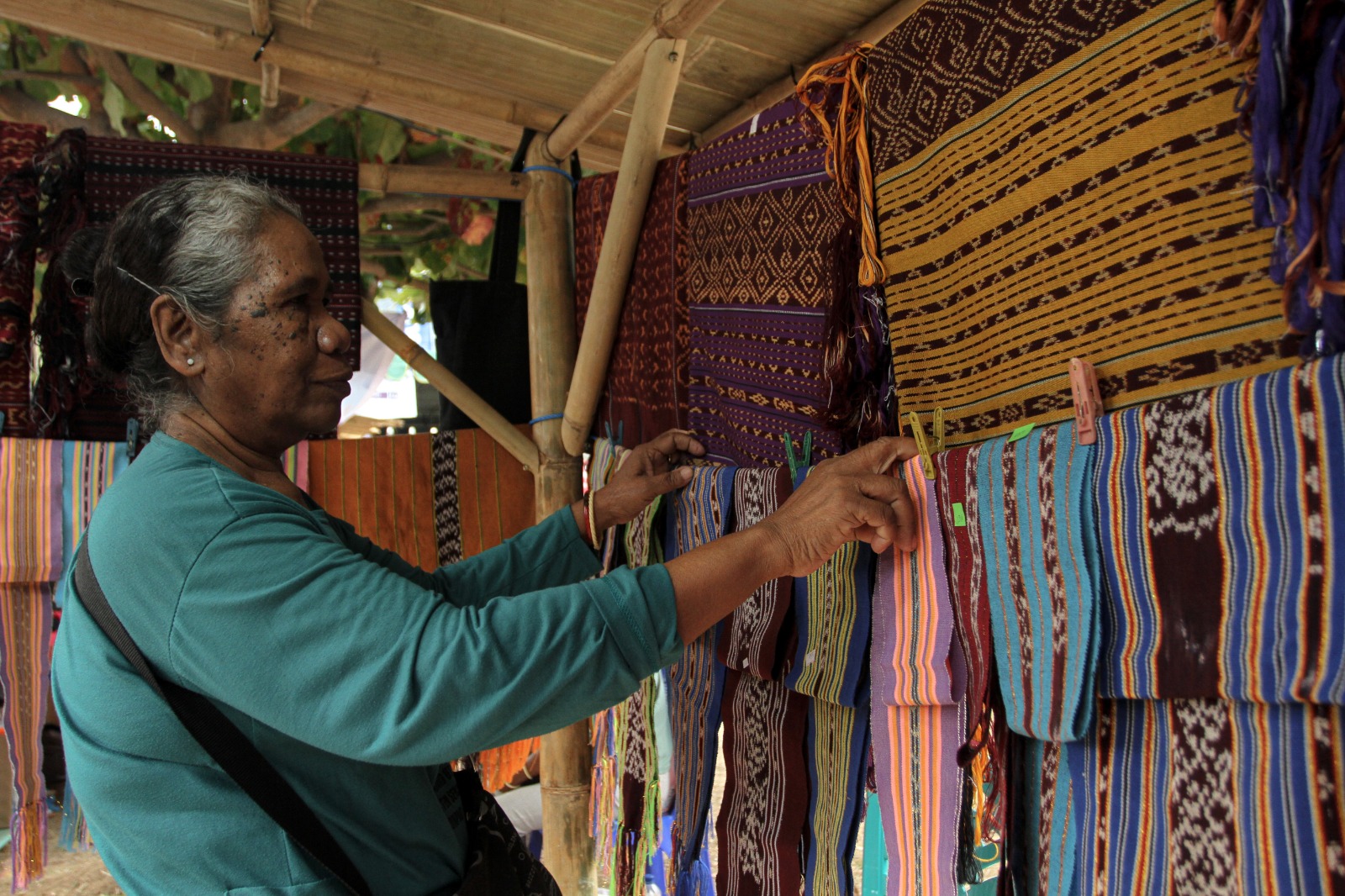
The government is continuing to expand access to People’s Business Credit (KUR) financing for micro, small, and medium enterprises (MSMEs), including farmers and business operators in eastern Indonesia. At the same time, it has stressed the importance of maintaining governance in the distribution of KUR to ensure the subsidised financing programme is precisely targeted and free from irregularities.
The Ministry of MSMEs has confirmed that KUR applications with a ceiling of up to Rp100 million do not require any additional collateral. The public has also been asked to report any requests for extra collateral, fees, or brokerage practices during the KUR application process.
Deputy for Entrepreneurship at the Ministry of MSMEs and ministry spokesperson Riza Damanik stated that this provision is regulated in the KUR Implementation Guidelines, as stipulated in Coordinating Ministry for Economic Affairs Regulation No. 1/2026. “In accordance with the KUR Implementation Guidelines, loans up to Rp100 million are not subject to any additional collateral whatsoever, without exception,” he said.
Riza explained that there are two types of collateral in the KUR scheme: primary collateral and additional collateral. Primary collateral consists of the business or object being financed through KUR, as well as the debtor’s ability to repay the loan. Additional collateral may include land certificates, vehicle registration documents, or other personal assets. Under the provisions, distributing institutions are not permitted to request additional collateral for financing up to Rp100 million. Additional collateral may only be applied for loans above that amount, with certain exceptions for smallholder sugarcane farmers and recipients of special agricultural sector KUR who cooperate with credit guarantee institutions. “Prospective KUR recipients of up to Rp100 million only need to use primary collateral, namely the business being financed through KUR,” he said.
This easier access to financing is also directed at strengthening the agricultural sector as a backbone of the economy while supporting national food security. During a symbolic maize planting event in partnership with Universitas Kebangsaan Republik Indonesia in Jember, East Java, Riza stated that increased food production must go hand in hand with improved farmer welfare. “Food production will run well and sustainably if farmers are prosperous. Therefore, various affirmative government policies must be optimally utilised to increase both productivity and farmer welfare,” he said.
According to Riza, KUR is one of the government’s affirmative instruments to help farmers increase their business capacity. In addition to receiving interest subsidies, farmers can access KUR of up to Rp100 million without additional collateral in accordance with the provisions.
Expanding KUR access is also a government focus in eastern Indonesia. Deputy Minister of MSMEs Helvi Moraza said the region still has significant room to increase formal financing access for MSME players. While leading a KUR Regional Coordination Meeting for Eastern Indonesia in Ternate, North Maluku, Helvi noted that the number of KUR debtors in almost all provinces in the region is still relatively small compared to the total MSME population. “Almost all provinces in eastern Indonesia still have a relatively small number of debtors compared to the total MSME population. This means many business operators are still not connected to formal financing,” she said.
As of the meeting, KUR distribution in eastern Indonesia had reached Rp16.5 trillion to 255,979 MSME debtors. South Sulawesi was the province with the largest realisation at Rp8.18 trillion, followed by Southeast Sulawesi at Rp2.03 trillion and Central Sulawesi at Rp1.90 trillion. North Maluku recorded a distribution of Rp315 billion. Of the total debtors, around 24,000 are new debtors and 18,000 have graduated to a higher level. The portion of KUR distribution to the production sector in eastern Indonesia has also reached 68.2 percent, exceeding the national target of 65 percent.
The government believes this distribution still needs to be expanded and its quality improved. Of the ten KUR distributing institutions in eastern Indonesia, only two have met the minimum target for distribution to the production sector, namely BRI and the Regional Development Bank of South Sulawesi and West Sulawesi. Helvi encouraged distributing institutions to be more proactive in reaching MSMEs in the agriculture, fisheries, processing industry, creative economy, and other leading sectors with significant growth potential. “We invite all distributing institutions to be more active in assisting and expanding financing access for MSMEs in productive sectors that have great potential to grow and move up in class,” she said.