
Government Expands Housing Finance Access for Informal Workers
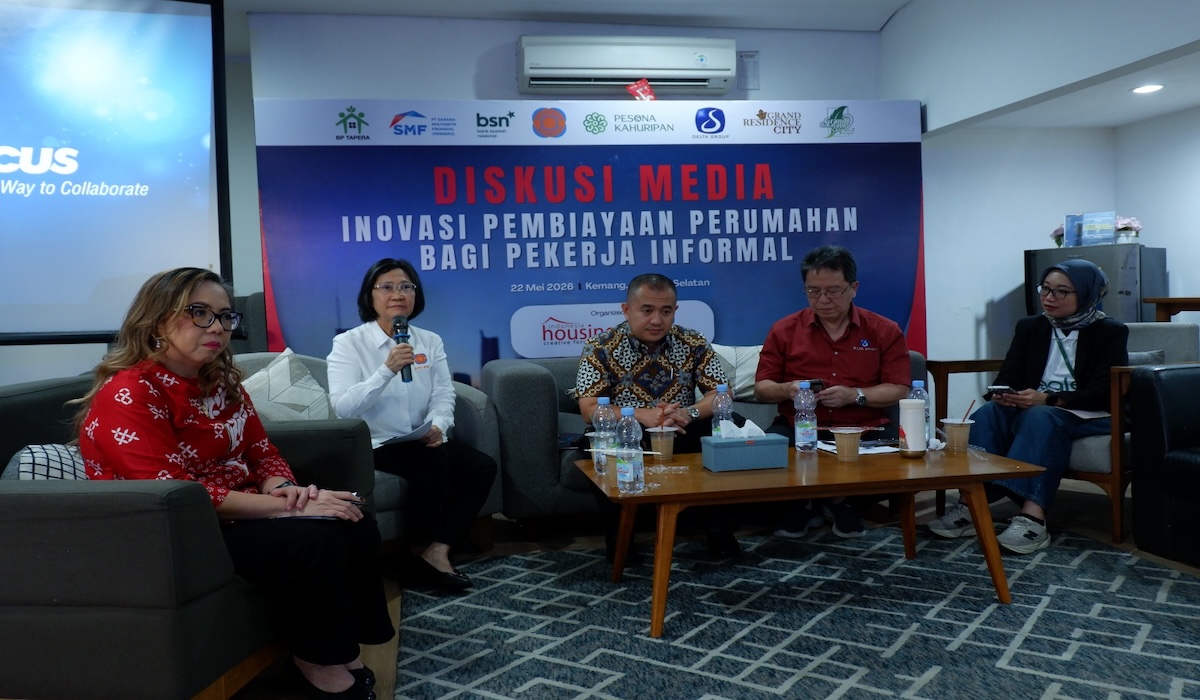
The government is expanding access to housing finance for informal workers by increasing the allocation of Housing Financing Liquidity Facility (FLPP) mortgages. This policy targets approximately 86 million informal workers, representing about 60% of Indonesia’s total workforce.
Alfian Arif, Director of Cooperation and Financing Policy at BP Tapera, stated that since 2024, the government has mandated all executing banks to allocate at least 15% of their FLPP mortgage quota to informal workers. This policy has driven the realisation of financing for the non-fixed income segment up from 13.1% in 2023 to 18.4% as of May 2026. “If distributing banks do not meet the 15% target, they will not be permitted to increase their FLPP quota. This is proof of the government’s commitment to ensuring justice so all Indonesians can own a home,” said Alfian.
By 2027, BP Tapera aims to increase the FLPP allocation for informal workers to 25% per distributing bank. BP Tapera is also encouraging developers to accommodate 0% down payment schemes for online motorcycle taxi drivers through marketing cost substitution.
Putri Alfarista Lufianingarrum, Mortgage Financing Division Head of Bank Syariah Nasional, noted that while 63% of their subsidized mortgage portfolio consists of formal workers, 11% comprises informal workers, primarily entrepreneurs, with good financing quality. The bank offers several schemes for non-fixed income segments, including Sharia Musyarakah Mutanaqisah (MMQ), Step-Up Installments, and a ‘Saving Plan’ where customers save for six consecutive months to build a financial profile.
Furthermore, the government is refining the ‘Rent to Own’ (RTO) scheme. Harry Endang Kawidjaja, an expert from the Ministry of Housing and Settlement Areas, explained that RTO is designed to assist those with credit history issues (SLIK OJK) and informal workers without payslips. The scheme involves an incubation period, which has been shortened from 12 months to six months, to prove repayment capability before transitioning to a formal mortgage.
Property observer Marine Novita noted that the primary challenge for informal workers is not the ability to pay, but the ability to prove payment capacity within conventional systems. She believes the RTO and saving schemes provide the necessary time to build credit profiles. Meanwhile, Nelly Suryani, Vice Chairperson of Real Estate Indonesia, suggested that extending mortgage tenures up to 40 years and implementing 0% down payments would further increase affordability for the informal sector.