
Government Expands Healthcare Access by Revitalising Regional Hospitals and Community Health Centres
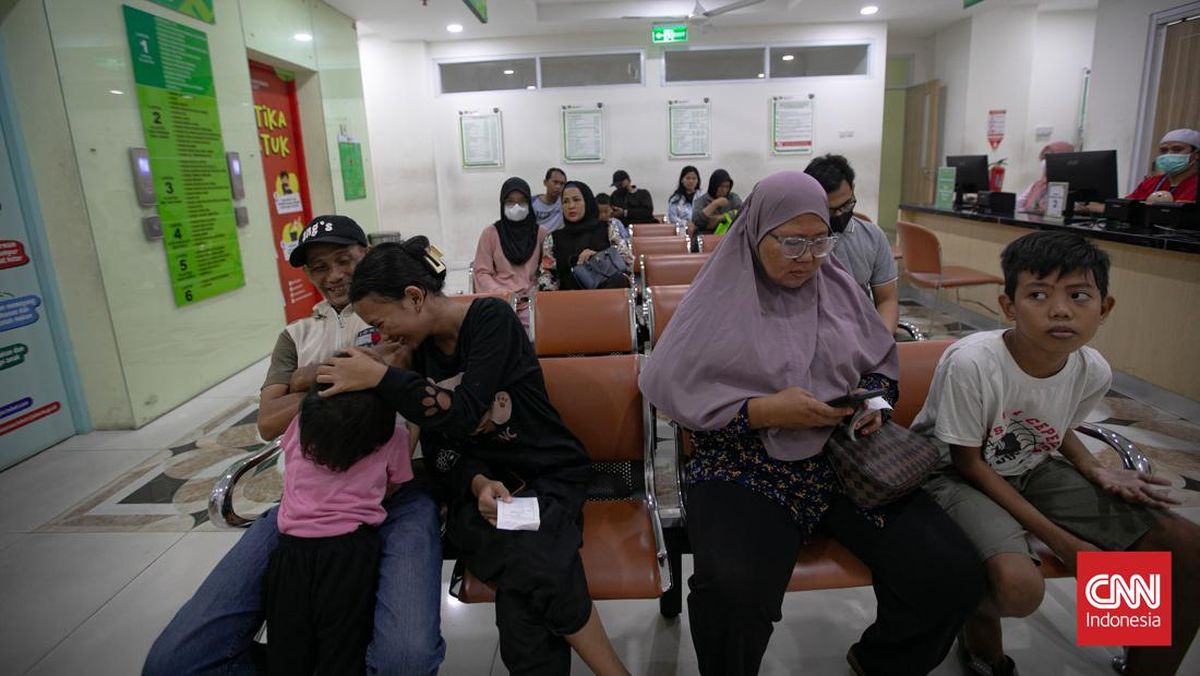
The government is strengthening public access to healthcare through a programme to upgrade 66 regional public hospitals (RSUDs) from class D or D Pratama to class C.
The programme, being implemented in stages from 2025 to 2027, is part of President Prabowo Subianto’s efforts to increase healthcare capacity in the regions during his first two years in office.
Health Ministry data as of September 2026 show that 21 of the 22 RSUDs targeted for the programme in 2025 had been completed, with 18 already operating.
Of the 20 RSUDs targeted for 2026, construction had begun at 18. The 24 hospitals scheduled for upgrading in 2027 were still at the planning stage.
Health Minister Budi Gunadi Sadikin said the development of regional hospitals was intended to ensure that people could receive adequate healthcare without always having to be referred to major cities.
“Our strategy is to ensure that every regency and city can treat and cure patients with these diseases without the need for referral to a major city,” he said in a written statement on Sunday (18 October).
Budi said the equitable distribution of healthcare services was also in line with President Prabowo’s directive that all Indonesians should have equal access to healthcare, regardless of where they live. The President, he said, had stressed that healthcare must not be available only to people on Java.
The RSUD upgrading programme covers regions across Indonesia, including islands and the east of the country. Locations include Southwest Sumba, Raja Ampat, the Anambas Islands, the Aru Islands, Nias and several regencies in Papua.
Deputy Health Minister Dante Saksono Harbuwono said the RSUD revitalisation programme was part of efforts to extend access to healthcare of equal quality throughout Indonesia.
“This is an acceleration of our efforts to guarantee healthcare services from Sabang to Merauke, in every village and city, with the same quality. Doctors will later be deployed by the Health Ministry to these areas,” he said.
For infrastructure improvements to deliver tangible benefits, stronger regional hospitals must be matched by adequate facilities, healthcare workers and service systems. Hospital construction should therefore go beyond completing the physical buildings and support more accessible healthcare provision.
Revitalising community health centres
Alongside strengthening regional hospitals, the government is promoting the revitalisation of Puskesmas, or community health centres, as part of its transformation of primary healthcare.
The aim is to bring services closer to communities, strengthen disease prevention and improve early detection before health conditions require more advanced treatment.
The Health Ministry is transforming primary care through Integrated Primary Healthcare Services (ILP). Under this approach, Puskesmas services are organised around stages of life—from infancy and childhood through adolescence and working age to old age—rather than focusing solely on types of illness.
This approach is intended to address people’s health needs more comprehensively and continuously. A total of 9,000 Puskesmas across Indonesia have implemented ILP.
Implementation is supported by efforts to strengthen the capacity of community health workers so that services at community level can operate more effectively. A further 7,508 Puskesmas have been designated as Regional Public Service Agencies (BLUDs).
Revitalisation also covers facilities and infrastructure, medical equipment, healthcare workers and the digitalisation of services.
The Health Ministry said it had distributed around 300,000 anthropometric devices to integrated health posts (Posyandu) and 10,000 ultrasound machines to Puskesmas. The government will also equip 10,000 Puskesmas with X-ray devices to support tuberculosis (TB) screening, as well as molecular diagnostic technology.
The ministry is also targeting the construction of 1,988 new Puskesmas from 2027 to 2029, partly to ease pressure on services in densely populated areas.
Strengthening primary care complements the expansion of RSUD capacity. Puskesmas provide health education, disease prevention, screening and initial treatment, while hospitals deliver more advanced services in line with their capacity.
By strengthening both levels of care, the government aims to build a more integrated health system and broaden access to healthcare across Indonesia.
Source: jawawa.id (https://jawawa.id/newsitem/government-expands-healthcare-access-by-revitalising-regional-hospitals-and-community-health-centres-1792731132)
Originally published by CNN Indonesia (https://www.cnnindonesia.com/nasional/20261023082337-25-1418658/pemerintah-perkuat-akses-kesehatan-lewat-revitalisasi-rsud-puskesmas), translated from Indonesian