
Government Expands Global Market Access and Digitalisation to Boost Indonesia’s Economy
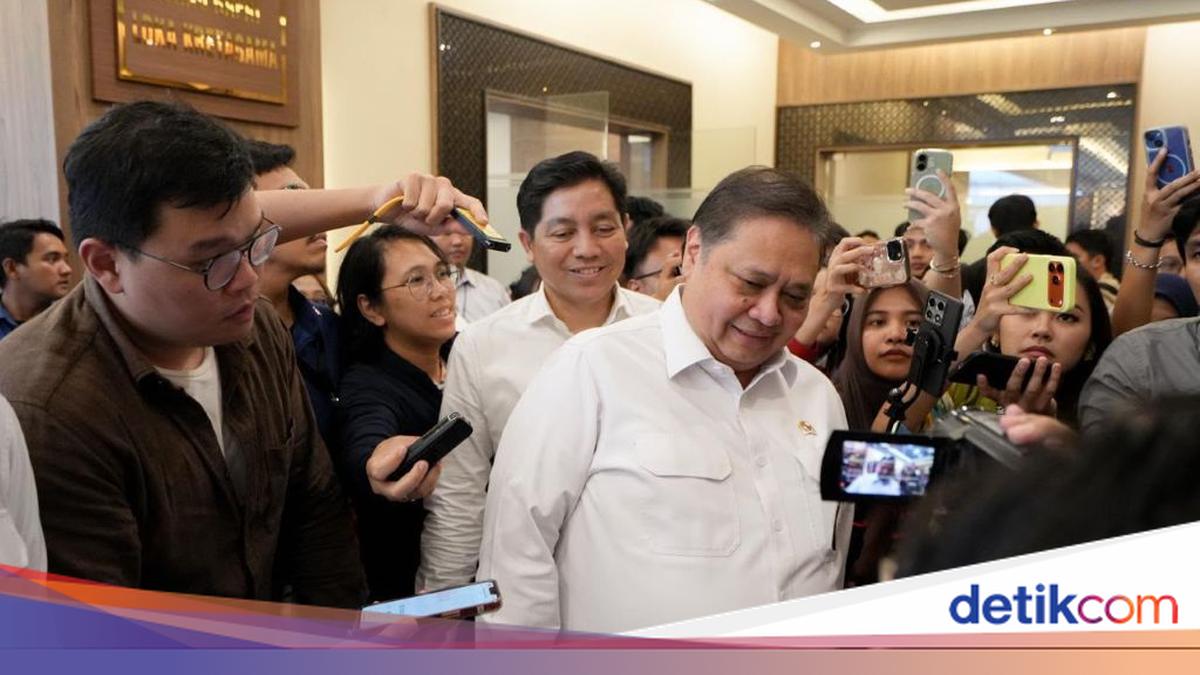
As President Prabowo Subianto’s administration enters its second year, the Indonesian Government is continuing to strengthen strategic measures amid global economic volatility and uncertainty, in order to secure and accelerate the country’s economic growth engines.
Through a responsive and forward-looking dual approach, Indonesia has strengthened its position on the global stage while laying a firm foundation for a resilient, inclusive and highly competitive national economy. Expanding international market access and advancing domestic digitalisation are central to the government’s efforts to boost national competitiveness and attract high-quality investment.
The Coordinating Ministry for Economic Affairs is actively overseeing a range of priority agendas to ensure that international agreements and digitalisation programmes deliver tangible benefits, particularly by expanding employment opportunities and improving public welfare.
Expanding global market access and investment appeal
On the international stage, Indonesia has achieved a historic milestone with the conclusion of negotiations on the ASEAN Digital Economy Framework Agreement (DEFA). The strategic agreement, initiated while Indonesia held the ASEAN chairmanship, has been substantively finalised and is ready to be signed at the ASEAN Summit.
The framework is expected to more than double the potential value of ASEAN’s digital economy to USD 2 trillion by 2030, with Indonesia accounting for the largest share in the region.
In addition to DEFA, the government is overseeing three strategic free trade agreements (FTAs) and comprehensive economic partnership agreements (CEPAs) that are expected to be implemented in the near future: the Indonesia-European Union Comprehensive Economic Partnership Agreement (IEU-CEPA), the Indonesia-Canada CEPA (I-CA CEPA), and the Indonesia-Eurasian Economic Union Free Trade Agreement (I-EAEU FTA).
Impact analyses project that the IEU-CEPA could increase Indonesia’s exports by USD 10.9 billion, the I-CA CEPA by USD 1.6 billion, and the I-EAEU FTA by between USD 2.2 billion and USD 2.89 billion.
After an intensive process, IEU-CEPA negotiations have entered the technical finalisation stage at the European Council, ahead of the signing and the target of full implementation. The agreement is expected to widen market access for Indonesian manufactured exports, remove tariff barriers and strengthen Indonesia’s global supply chains.
“Coordinating Minister Airlangga is targeting completion of the IEU-CEPA ratification process in the second half of 2026, so that implementation can begin in early 2027,” said Coordinating Ministry for Economic Affairs spokesperson Haryo Limanseto in a statement on Thursday (22 October 2026).
Another strategic step is Indonesia’s accession process to the Organisation for Economic Co-operation and Development (OECD). As the only country in Southeast Asia with official candidate status (an acceding country), Indonesia continues to receive full support from OECD member states to expedite completion of its Accession Roadmap, with the aim of becoming a full member by 2028.
AI ecosystem growth, data centre investment and future workforce readiness
Alongside stronger global diplomacy, the government is consistently promoting the use of advanced technology as a new engine of growth. Indonesia has strengthened its digital leadership globally by becoming a founding member of the World Artificial Intelligence Cooperation Organization (WAICO) at the WAIC Summit in Shanghai, alongside representatives from 30 countries.
The initiative underscores Indonesia’s active role in shaping global AI governance that is safe, ethical and centred on human sovereignty.
“For me, the outcomes of artificial intelligence, or AI, span many fields because its scope is so broad. For countries such as Indonesia, AI can certainly be applied in agriculture (modern farming), the energy transition and renewable energy, as well as in developing many digital sectors, including healthcare. Coordinating Minister Airlangga believes that Indonesia’s digital economy is currently worth USD 130 billion and is on its way to USD 300 billion; that figure will double with AI,” Haryo said.
The development of physical infrastructure is being matched by efforts to prepare a skilled workforce. The government is working towards its target of developing 9 million digital talents by 2030, or 600,000 a year, through various upskilling programmes in AI, data science and cybersecurity.
The government is optimistic that the combination of active international economic diplomacy and inclusive digital transformation will help safeguard national economic resilience, expand quality employment and move Indonesia towards high-income-country status.
The Coordinating Ministry for Economic Affairs is committed to continuing to oversee the implementation of all government priority agendas transparently, accountably and with the welfare of all Indonesians as its focus.
Source: jawawa.id (https://jawawa.id/newsitem/government-expands-global-market-access-and-digitalisation-to-boost-indonesias-economy-1792662804)
Originally published by detikcom (https://news.detik.com/berita/d-8719271/pemerintah-perkuat-akses-pasar-global-digitalisasi-untuk-dorong-ekonomi-ri), translated from Indonesian