
Government Ensures No PPPK Employees Will Be Laid Off
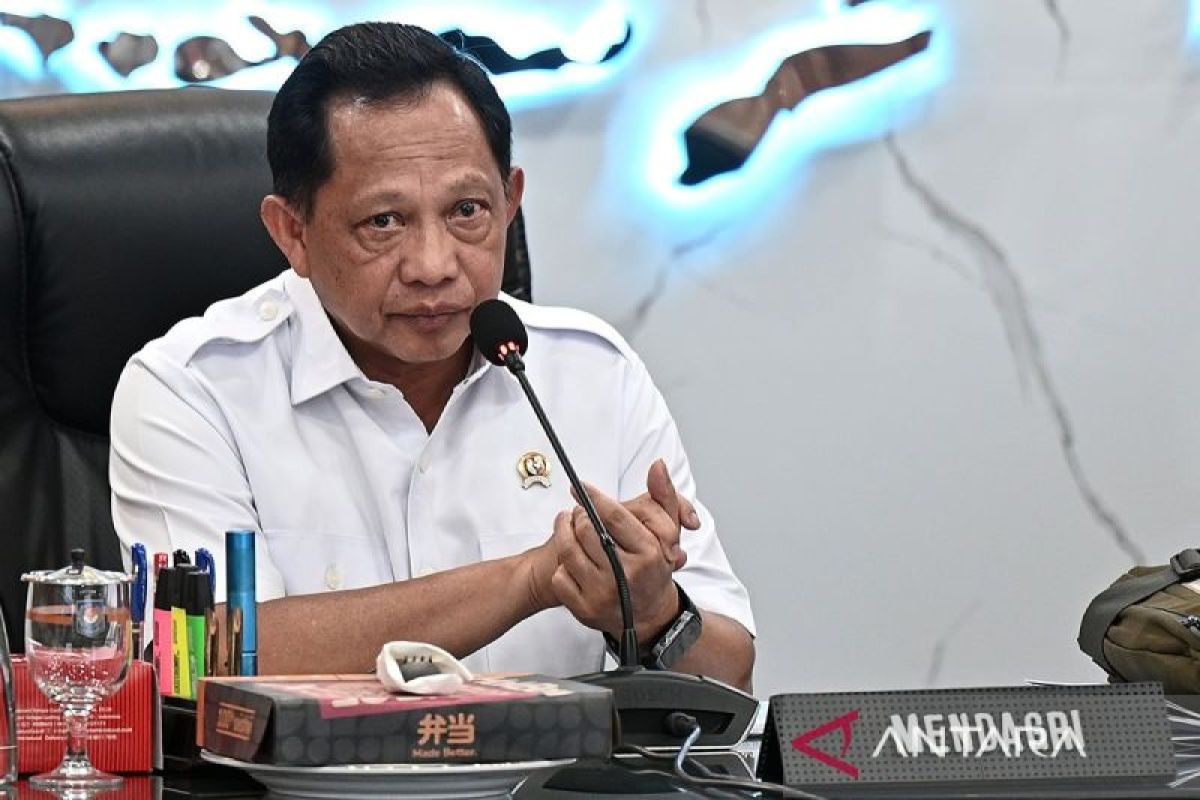
Home Affairs Minister Muhammad Tito Karnavian has stated that the government is preparing three schemes to support regional governments in meeting salary payments for Government Employees with Work Agreements (PPPK), ensuring that no employees are laid off.
“We have already exercised this in several regions. We have met with the Minister for Administrative and Bureaucratic Reform and also with the Minister of Finance. Our principle is that there must be no option for these PPPK employees to be laid off, let alone become unemployed. Their salaries must be paid,” said Tito Karnavian in his statement in Jakarta on Tuesday.
This was conveyed by the Home Affairs Minister following a Coordination Meeting on the Follow-up Status of PPPK and Civil Servant Teachers at the parliamentary complex in Senayan, Jakarta, on Monday (10/8).
Tito explained that the first scheme regional governments need to implement is budget efficiency through reductions in official travel, unnecessary meetings, and spending on food and beverages.
Second, if a regional government has profit-sharing funds (DBH) that have not yet been paid or have been underpaid by the central government, those funds will be disbursed to help cover personnel expenditure.
Third, if efficiency measures have been carried out but the regional government is still unable to meet personnel expenditure, while the DBH received is unavailable or relatively small, the central government will provide additional General Allocation Funds (DAU).
“I think this is a policy of the President, who is very attentive to fiscal problems in the regions, especially for paying obligatory expenditure, namely personnel expenditure,” he said.
This has become a concern because a number of regional governments have conveyed the potential for limited personnel expenditure budgets, particularly for meeting PPPK salary payments.
Tito continued that based on Finance Minister Decree Number 198 of 2026 concerning the Adjustment of Allocation Details and Distribution of DAU for 2026, the Distribution of DBH Underpayments up to 2024, and the Distribution of Treasury Deposit Facility Funds in 2026, the total additional support from the central government to the regions reaches Rp18.9 trillion.
Of that amount, around Rp10 trillion consists of DBH paid to the regions. Meanwhile, more than Rp8 trillion comes from additional DAU.
“So, the total is almost Rp19 trillion, Rp18.9-something, Rp19 trillion. With this addition, we all hope that this can resolve the problem of personnel expenditure, both for PPPK and part-time workers as well, which will be financed and paid by each regional government,” he explained.
Early Childhood Education (PAUD), Kindergarten (TK), Primary School (SD), and Junior High School (SMP) fall under the authority of regencies/cities. Senior High School (SMA)/Vocational High School (SMK) falls under the authority of provincial governments, while higher education falls under the authority of the central government.
Specifically regarding educators and teachers, the Home Affairs Minister explained that the central government can take steps to address the issue.
One of these is by transferring the status of teachers to become central government civil servants (ASN), who can then be placed in regions experiencing teacher shortages so that the distribution of educators is more even.
“This is currently being exercised. I also explained earlier that this will certainly ease the burden on regional governments, particularly in reducing personnel expenditure,” said the Home Affairs Minister.