
Government encourages universities to strengthen collaboration for regional development
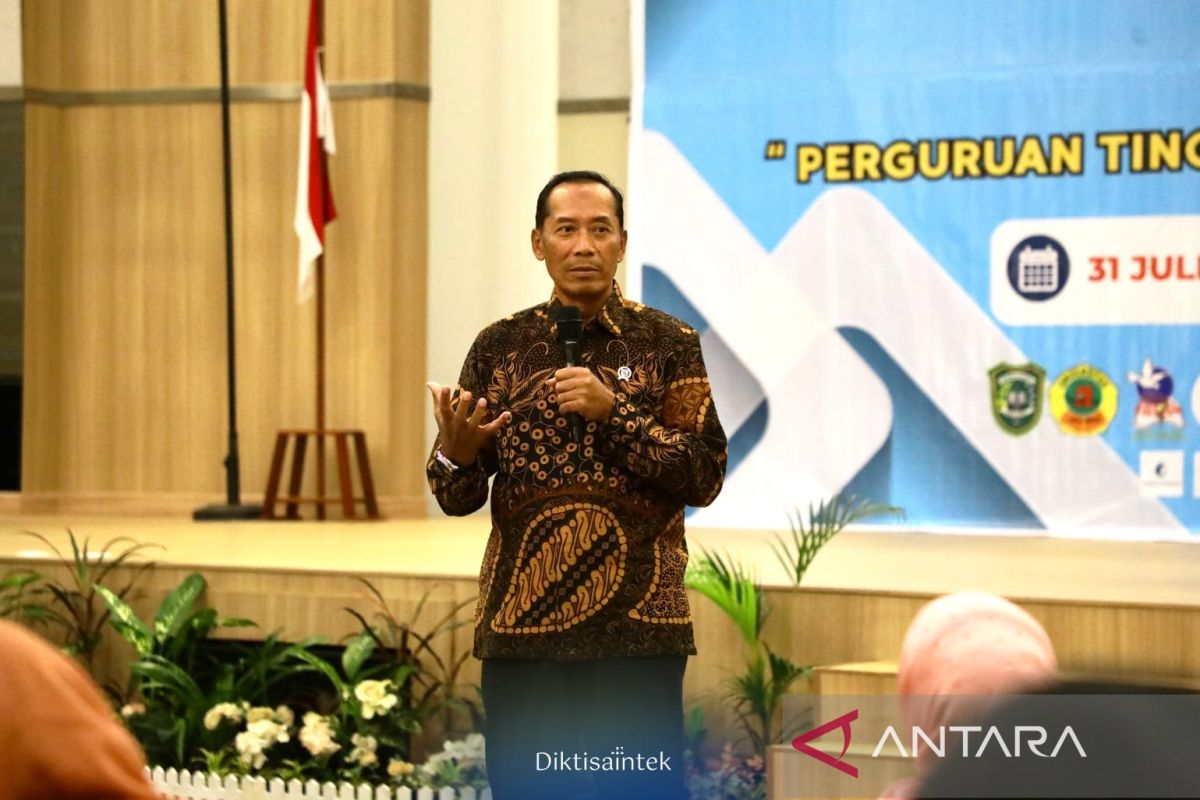
Jakarta (ANTARA) - The Deputy Minister of Higher Education, Science, and Technology, Fauzan, has encouraged Indonesian universities to establish consortiums as a collective platform to address regional development issues.
“Regarding the governance of higher education from year to year, I believe there has been positive dynamics. However, there is one matter that must be our shared consideration: whether our universities can strengthen their contribution to development?” said the Deputy Minister in a statement in Jakarta on Sunday.
Fauzan emphasised that universities need to continuously evaluate the extent to which their presence is felt by the community. He noted that higher education is a strategic asset, as campuses serve as the primary space for human resource development. Consequently, this capacity must be directed towards the real problems faced by various regions.
Specifically, Fauzan highlighted universities in the Riau and Riau Islands (Kepri) regions. According to him, both areas possess strong development capital alongside unique challenges. Riau’s economy is recorded as the sixth largest nationally, while the Riau Islands recorded the third-highest growth in Indonesia during the third quarter of 2025, with a Human Development Index of 80.53, ranking third highest in the country. However, the subsequent challenge is ensuring that this growth aligns with labour absorption.
Based on data from the Central Bureau of Statistics (BPS), the open unemployment rate in the Riau Islands stood at 6.94 per cent as of February 2025. Other challenges include regional disparities. In Riau, the poverty rate in the Meranti Islands was recorded at 23.15 per cent, compared to 3.14 per cent in Dumai City. In the Riau Islands, the highest poverty rate is in Natuna Regency at 8.06 per cent, while Batam City stands at 4.03 per cent.
In the health sector, the prevalence of stunting in Riau increased from 13.6 per cent in 2023 to 20.1 per cent in 2024, exceeding the World Health Organization (WHO) threshold.
The Deputy Minister assessed that such significant potential and challenges cannot be resolved by a single university acting alone. He suggested that various expertise, programmes, resources, and campus facilities could be gathered through university consortiums to work towards the same objectives.
“A consortium is essentially about building an ecosystem to advance higher education while simultaneously contributing to regional development,” explained Fauzan.
He cited the example of a university consortium in East Nusa Tenggara (NTT) that brings together 27 universities to tackle stunting and poverty. Through thematic community service programmes (KKN) focused on stunting family assistance, thousands of students are deployed to villages under the guidance of lecturers, while simultaneously producing research that can be utilised by local governments.
“The research addresses existing problems in the region. Thus, upon graduation, they submit their dissertations, which can serve as the basis for regional policy recommendations,” the Deputy Minister added.