
Government Drafts 2027 Hajj Cost Projections, Seeks to Keep Fees Affordable
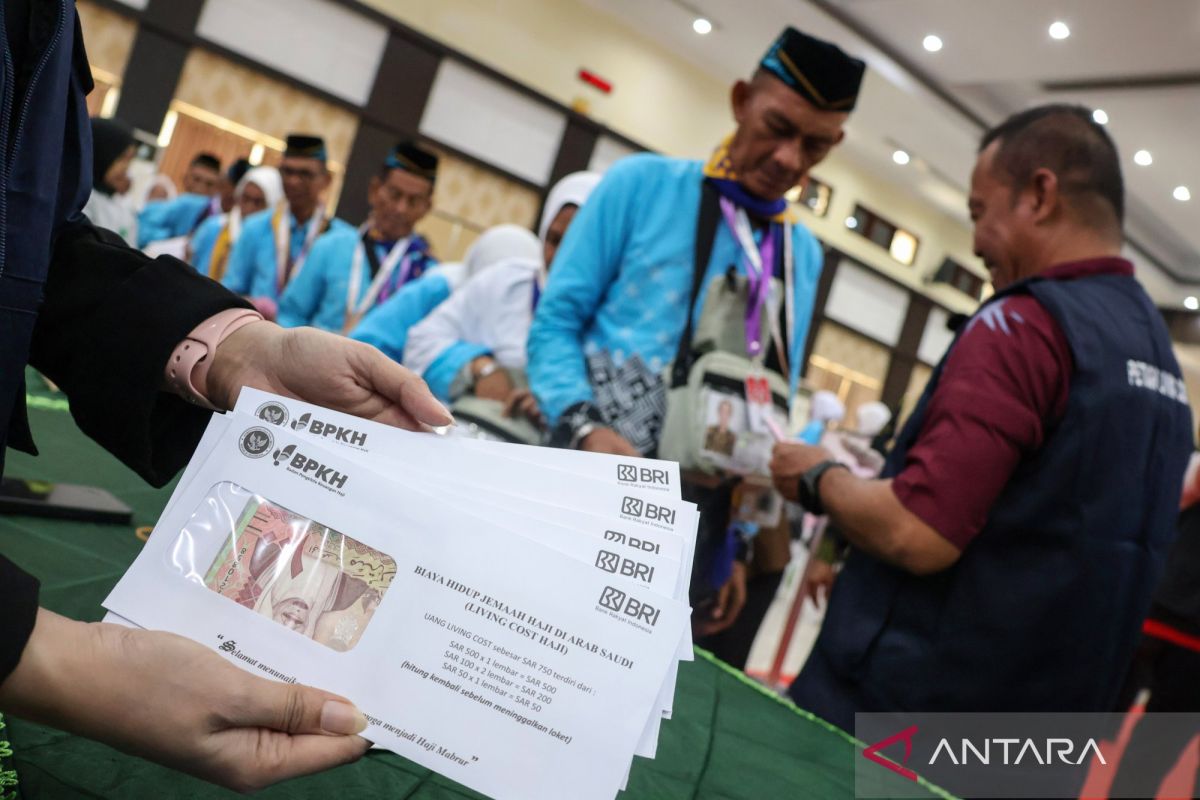
The government is currently drafting projections for the 1448 Hijri/2027 Masehi Hajj Pilgrimage Costs (BPIH) amidst a global economic landscape still fraught with challenges. Deputy Minister of Hajj and Umrah Dahnil Anzar Simanjuntak stated that although several cost components are expected to rise, the government is ensuring the financial burden on pilgrims will be kept lighter in accordance with the President’s directive. “The government has been ordered to find the best scheme so that the public can still easily perform the Hajj pilgrimage even though global economic conditions are difficult,” Dahnil said in a statement in Jakarta on Tuesday. Dahnil explained that the increase in BPIH is influenced by various external factors, ranging from global economic uncertainty due to geopolitical conflicts and international inflation, to policies of the Saudi Arabian government that directly impact Hajj service costs. Additionally, several cost components have risen, including flight costs due to increased avtur prices, accommodation and service costs in Saudi Arabia, and changes to service standards. “The Saudi Arabian government has also eliminated category D services, so all services have been upgraded to category C, which automatically increases Hajj service costs,” Dahnil said. Besides the rise in avtur prices affecting flight tariffs, the increase in the price of goods and services in Saudi Arabia is also an important factor in drafting next year’s Hajj cost projections. The government is currently conducting comprehensive discussions on all cost components with relevant stakeholders regarding the BPIH amount for 1448 H/2027 M. “The principle is that services improve, but the burden on the public must still be eased,” he said. Under the scheme being reviewed, the Hajj financing proportion is projected to change. If in the 2026 Hajj operation the benefit value derived from the management of Hajj funds contributed around 39 per cent, while approximately 61 per cent was borne by pilgrims, then for the 2027 Hajj operation the government is striving to reverse this composition. This means around 60 per cent of the operational costs are projected to be supported through the benefit value of Hajj fund management by the Hajj Financial Management Agency (BPKH), while the portion paid directly by pilgrims is projected at around 40 per cent. With this scheme, the quality of service to pilgrims can still be improved even though overall operational costs have increased. This optimisation of benefit value is also considered to have a strong basis. During the COVID-19 pandemic in 2020 and 2021, the Hajj pilgrimage from Indonesia was not conducted, while in 2022 the number of pilgrims dispatched was only about 50 per cent of the normal quota. This condition provided room for the accumulation of managed funds that can be utilised optimally while still observing the principle of sustainability in Hajj fund management. The government emphasised that all financing schemes will be discussed carefully and determined by the Indonesian House of Representatives, prioritising the principles of prudence, Hajj fund sustainability, service quality improvement, and partiality towards pilgrims. “The ultimate goal is to deliver a Hajj pilgrimage operation that is increasingly high-quality, equitable, and affordable for the Indonesian people, even amidst ongoing global economic challenges,” Dahnil said.