
Government decision to hold subsidised fuel prices deemed correct
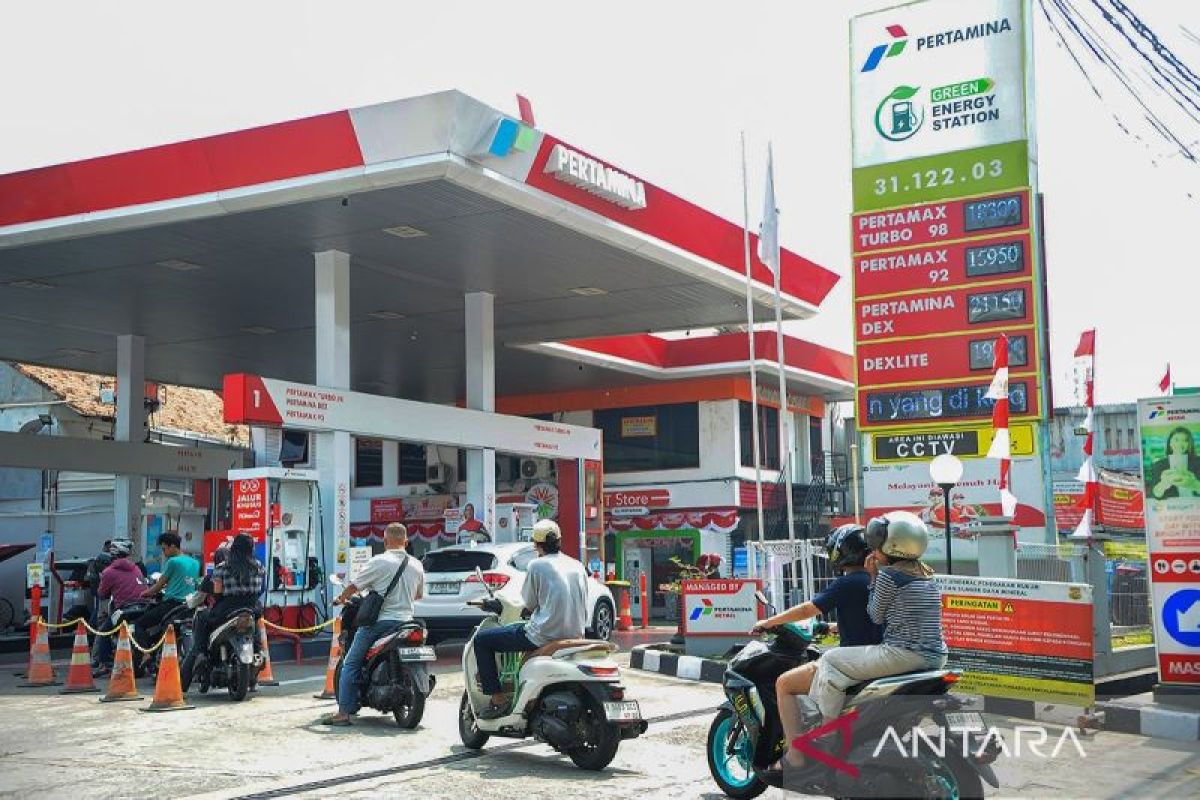
Jakarta (ANTARA) - Robert R Winerungan, an economist at Manado State University (Unima), has assessed the government’s decision to hold the prices of subsidised fuels, namely Pertalite and Biosolar, as highly appropriate for protecting the public’s purchasing power.
“I think it is a very wise decision by the government. Because if the government also raised the price of Pertalite, inflation could spiral out of control,” Robert said in a statement received in Jakarta on Tuesday.
Robert explained that a rise in fuel prices would have a chain effect on transport costs and the prices of various essential goods.
This situation means the government cannot simply release the price of Pertalite to follow market mechanisms.
Intervention through pricing policy is necessary because Pertalite is widely consumed by the public, so any change in its price could affect a wide range of economic activities.
“Prices are already rising even without fuel going up, let alone if fuel rises. In other words, the government really cannot simply throw the price of Pertalite to the market because that could potentially burden the public,” Robert said.
He acknowledged that maintaining Pertalite at Rp10,000 per litre when the world oil price has reached US$107 per barrel would have consequences for the state budget (APBN).
The gap between the economic price and the price paid by the public ultimately increases the burden that must be borne by the government.
“The subsidy may indeed swell. But the benefit is that our inflation is not too high and the public’s purchasing power can, to some extent, be maintained,” he said.
According to Robert, current economic pressure has even begun to change fuel consumption patterns among certain groups of the population.
He has observed that consumers who previously used Pertamax Turbo and RON 92 fuel have started switching to Pertalite to reduce their spending.
“If Pertalite rises, the middle class will be squeezed even further. Even worse off would be the lower class, because transport costs would rise and so on. There are many knock-on effects if the price of Pertalite goes up,” Robert said.
Previously, Minister of Energy and Mineral Resources (ESDM) Bahlil Lahadalia noted that the average national oil price for the January-September 2026 period stood at around US$85-90 per barrel, higher than the 2026 budget assumption of US$70 per barrel.
Nevertheless, the government decided to keep the price of subsidised fuel from rising as a step to protect the purchasing power of lower- and middle-income communities.