
Government: Data centre capacity could rise to 11 GW
One source of new growth that can be encouraged is the digital economy.
Jakarta (ANTARA) - The government says national data centre capacity could increase to 11 gigawatts (GW) by 2030, from its current level of around 0.45–0.58 GW.
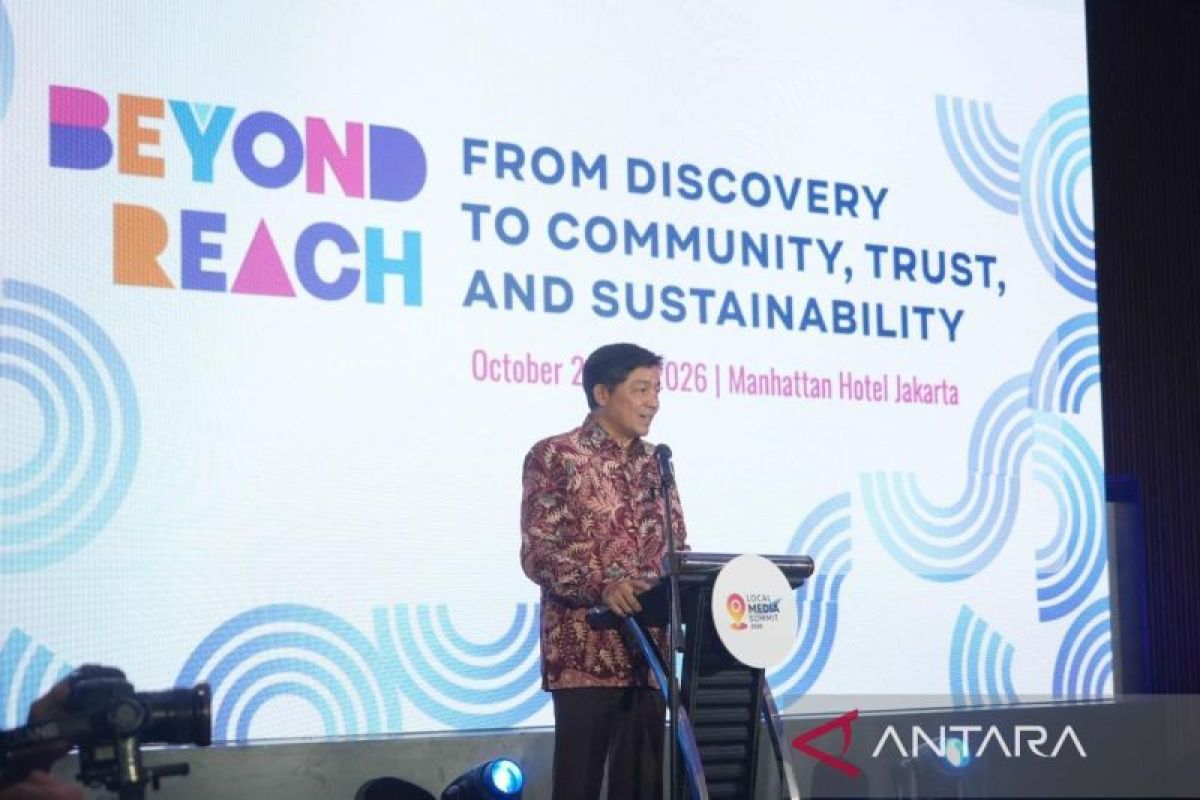
Haryo Limanseto, an Expert Staff member for Regional Development at the Coordinating Ministry for Economic Affairs, said strengthening digital infrastructure was one way to support digital transformation while maintaining economic growth momentum amid global uncertainty.
“One source of new growth that can be encouraged is the digital economy. According to the e-Conomy SEA 2025 report, Indonesia’s digital economy gross transaction value is approaching US$100 billion, growing by around 14 per cent year on year and making it the largest in South-east Asia,” Haryo said in an official statement in Jakarta on Tuesday.
To support the development of the digital economy, the government is also planning to add 69.5 GW of power capacity under state utility PLN’s 2025–2034 Electricity Supply Business Plan (RUPTL).
The plan is also supported by a 100 gigawatt-peak (GWp) solar power programme.
Alongside digital infrastructure and energy supplies, the government considers the availability of skilled human resources an important factor in supporting digital transformation.
Indonesia is estimated to need around nine million digital talents by 2030.
To meet this need, the government is strengthening education and training through the Digital Talent Scholarship programme and co-operation with technology providers and other countries, including through WAICO.
The government is also offering a Super Tax Deduction of up to 200 per cent for vocational training activities to encourage workforce skills development.
Haryo said the government continued to promote regional economic development by accelerating investment and optimising Special Economic Zones (KEK) and Industrial Estates (KI) to develop regions’ leading sectors.
Indonesia currently has 25 KEKs and 181 KIs, covering a total area of 125,000 hectares.
Investment in KEKs has reached a cumulative Rp368 trillion and generated nearly 250,000 jobs.
As the digital economy develops, the government is also encouraging the use of technology to expand business opportunities, including for micro, small and medium-sized enterprises (MSMEs) and local media.
Local media are expected to make use of digital marketing, creative content production and community management to promote MSME products, tourism and the regions’ strengths.
The government is also encouraging local media businesses to diversify their revenue sources by developing creative services and holding commercial events, while maintaining editorial independence and the credibility of their information.
“Expanding business opportunities must of course be balanced with editorial independence and the credibility of information, because public trust is the main asset for the sustainability of the media industry,” Haryo said.