
Government-CSO Collaboration to Develop Roadmap for Solarisation of Mosques and Pesantrens in Indonesia
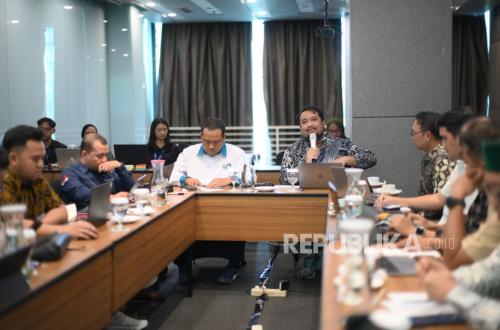
Muslims for Shared Action on Climate Impact (MOSAIC) organised a Coordination Meeting on Waqf and Energy Charity in Jakarta. The forum brought together representatives from the Ministry of Religious Affairs, the Ministry of Energy and Mineral Resources (ESDM), various civil society organisations (CSOs), as well as Islamic associations and philanthropic institutions to discuss joint strategies for promoting the solarisation of mosques and pesantrens in Indonesia.
The mosque solarisation initiative aligns with the recent target set by President Prabowo Subianto to develop 100 GW of Solar Power Plants (PLTS) in the coming years. With more than 800,000 mosques scattered throughout Indonesia, religious facilities are seen as having significant untapped potential as sites for rooftop solar panel installations.
MOSAIC Programme Director, Aldy Permana, stated that mosques and pesantrens hold a strategic position not only as centres of worship but also as effective educational spaces for the community. “When religious facilities adopt solar energy, the impact goes beyond operational cost savings. We have already implemented the Energy Charity programme in six mosques in Indonesia with a total capacity of 23,525 WP from installed solar panels,” he said.
MOSAIC has pioneered the Energy Charity programme in recent years. To date, more than 21,000 people have participated as donors, and solar panel installations have been successfully fitted in six locations: Sembalun, Yogyakarta, Tasikmalaya, Garut, Dharmasraya, and Sijunjung. This field experience provides a concrete foundation for the coordination agenda discussed at the forum.
In the meeting, Erick Tadung, Coordinator of the Directorate of Renewable Energy at the Ministry of ESDM, outlined the potential and utilisation of new and renewable energy in Indonesia. He emphasised that Indonesia possesses vast New Renewable Energy (EBT) potential as the main pillar of national energy resilience and the achievement of renewable energy mix targets. “Solar energy has the greatest potential, at 3,294 gigawatts, surpassing other sources such as wind, water, sea, and geothermal. However, overall EBT utilisation currently stands at just 0.4 per cent of installed capacity. For solar energy specifically, the utilised capacity is only 1.49 gigawatts,” he stated.
Meanwhile, the Deputy Director of Institutional Development and Cooperation for Zakat and Waqf at the Ministry of Religious Affairs presented the ministry’s ecotheology action plan, which prioritises mosque solarisation for 2026. The action plan encompasses four main concepts: Waqf Forest, Waqf City Park, Eco Mosque, and Eco Pesantren. “There are currently 10 waqf cities in Indonesia, and this number will continue to grow. This collaboration aligns closely with the Ministry of Religious Affairs’ 2026 Ecotheology Action Plan, which targets 50 mosques ready to adopt green technology,” said Muhibuddin.
Furthermore, Muhibuddin expressed support for the collaboration, stating, “We will encourage all mosques to become Zakat Collection Units (UPZ), so that funding for solarisation can come from the mosques themselves. Equally important is the aspect of literacy. At the Ministry of Religious Affairs, we have 50,000 religious instructors; we can collaborate to educate the public on why we must use renewable energy and shift from fossil fuels,” he added.
The forum agreed on several locations to serve as focal points for pilot projects this year, which are part of the Ministry of Religious Affairs’ Waqf City programme and the Ministry of ESDM’s PLTS development programme. Additionally, the forum agreed to collaborate through wakafenergi.id from the Al Azhar Islamic Foundation as a joint platform, thereby creating a stronger ecosystem between government institutions and CSOs, represented here by MOSAIC, Wakaf Al Azhar, Wakaf Energi, Enter Nusantara, Al Washliyah Kota Medan, Green Justice Indonesia, Forum Wakaf Produktif, Forum Zakat, Ruang Eskalasi, and ActionLab, supported by the Ministry of Religious Affairs and the Ministry of ESDM.