
Government Continues to Align Energy Needs with Industrial Demand
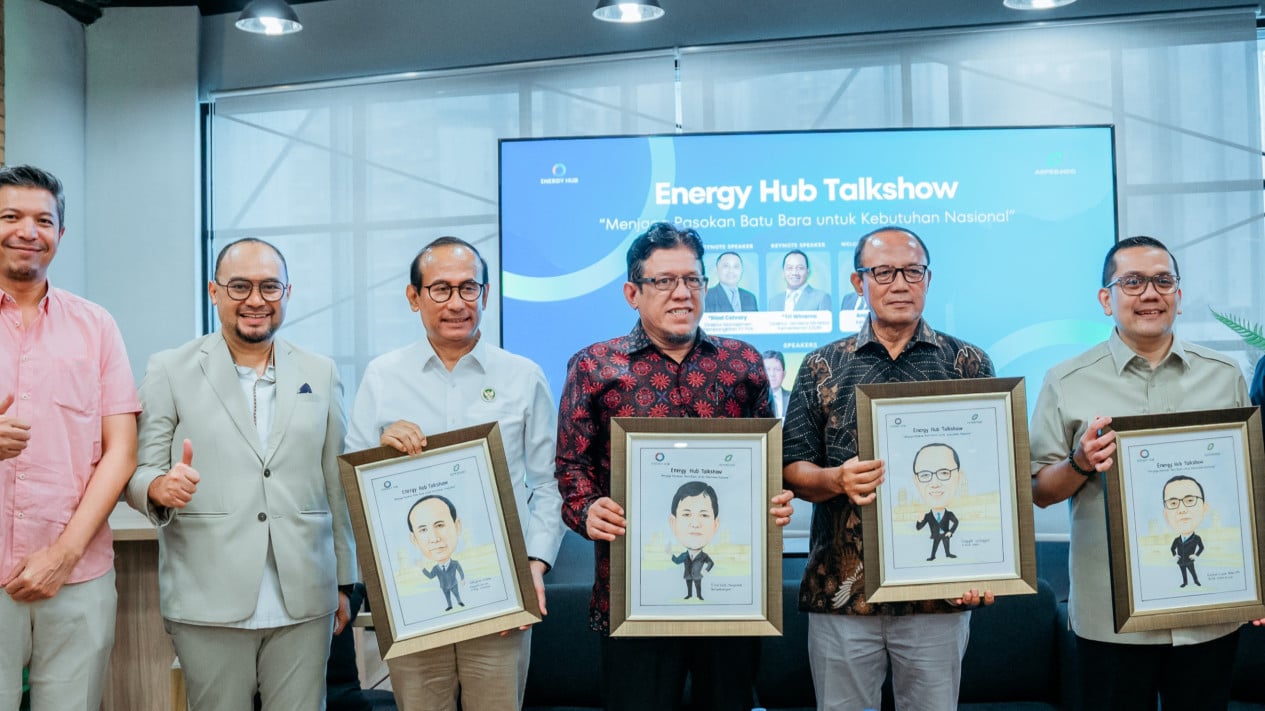
Jakarta, VIVA – The issue of coal supply security for national needs, particularly in the electricity sector, took centre stage at the Energy Hub Talkshow 2026, themed “Safeguarding Coal Supply for National Needs”.
The forum brought together industry associations, the National Energy Council, mining observers, industry players and academics to discuss the direction of coal policy amid national energy needs and the energy transition agenda.
Anggawira, Chairman of the Indonesian Energy, Mineral and Coal Suppliers Association (ASPEBINDO), judged that adjusting the Domestic Market Obligation (DMO) coal price is no simple matter. According to him, an increase in the coal price for power plants could push up the cost of electricity supply, whilst the government has already stated it will not raise electricity tariffs for the public.
At present, the DMO coal price for the national electricity sector is set at USD70 per tonne, whilst the DMO for the smelter, cement and fertiliser industries stands at USD90 per tonne. Anggawira argued that DMO pricing policy needs to be handled carefully so as not to create a new burden on the national electricity system.
“If the DMO price is raised, the selling price of electricity will inevitably be affected. Moreover, the government has already stated it will not adjust electricity tariffs,” said Anggawira in a written statement on Thursday, 9 July 2026.
Satya Widya Yudha, a member of the National Energy Council, explained that the government continues to formulate a national energy governance strategy to align with industrial needs and the direction of energy transition policy. He touched on the importance of implementing Government Regulation No. 40 of 2025 so that its enforcement can be in line with industry expectations without neglecting national energy security interests.
Satya explained that under the National Energy Policy (KEN), coal’s share of the energy mix in 2025 stands at around 41.5 per cent, projected to remain stable until 2030 and begin declining in 2040. The decline relates to the assumption that large-scale coal-fired power plants will still be operating until around 2035, meaning emissions from the energy sector will remain fairly high before gradually falling.
“In the view of the National Energy Council, we choose decarbonisation. The aim is to safeguard energy security whilst still paying attention to coal supply availability, so that an energy crisis does not materialise,” said Satya.