
Government Continues to Accelerate National Salt Self-Sufficiency
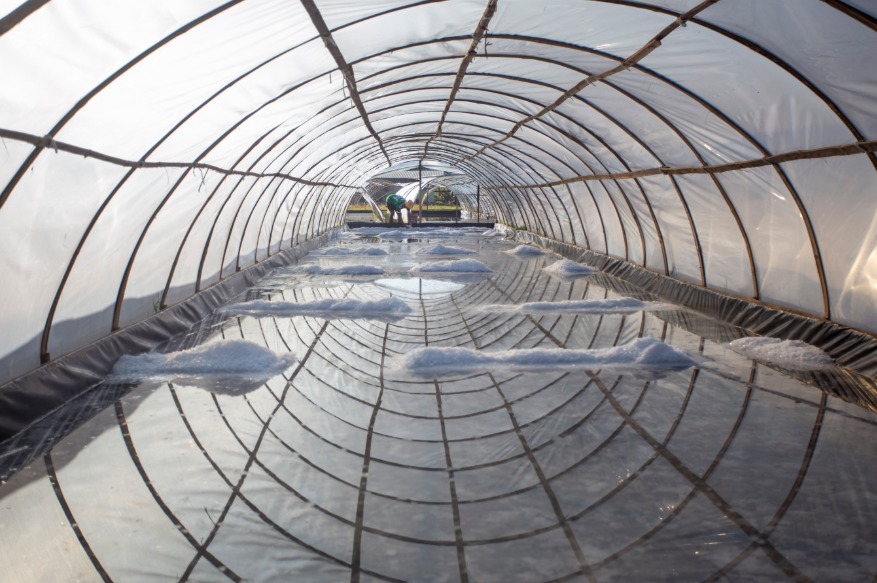
The Ministry of Marine Affairs and Fisheries (KKP) is accelerating efforts to achieve national salt self-sufficiency through the development of the National Salt Industry Centre (K-SIGN) in Rote Ndao Regency, East Nusa Tenggara (NTT). This strategic programme is expected to serve as a solution to Indonesia’s high dependency on industrial salt imports, which currently dominate national supply.
The development of K-SIGN is part of a national policy to strengthen salt security and support the target of salt self-sufficiency by 2027, as mandated by Presidential Regulation No. 17/2025 regarding the Acceleration of National Salt Development. KKP explained that national salt demand continues to increase annually. In 2024, national demand reached approximately 4.8 million tonnes, yet more than 55% of this requirement is still met through imports, particularly for industrial needs requiring high-quality specifications.
Over the last five years, Indonesia has imported an average of more than 2.6 million tonnes of salt annually. Despite being an archipelagic nation with the second-longest coastline in the world after Canada and possessing vast coastal potential, Indonesia remains reliant on foreign supply. “The development of K-SIGN in Rote Ndao is the answer to the nation’s strategic needs. This programme is not merely a salt production centre, but also a symbol of independence, sustainability, and social justice for Indonesia’s coastal communities,” stated a KKP press release.
KKP emphasised that salt is not just a household necessity but a strategic commodity and essential raw material for various industrial sectors. In the food sector, salt is used for processed foods, soy sauce, sauces, canned goods, and electrolyte drinks. In the chemical and manufacturing sectors, it is a primary raw material for the production of caustic soda, chlorine, glass, soap, detergents, textiles, as well as metal and leather processing. Furthermore, salt plays a vital role in the health and pharmaceutical sectors for the production of intravenous fluids, oral rehydration salts, antiseptics, and iodised salt to prevent goitre.
Addressing environmental concerns, KKP asserted that the development of K-SIGN focuses not only on increasing production but also on maintaining the sustainability of the coastal ecosystem. All development stages are conducted in accordance with prevailing laws and regulations, including environmental requirements, technical studies, and necessary permits. KKP views coastal areas as living spaces that possess ecological, social, cultural, and economic functions that must be managed in a balanced manner.
As a commitment to environmental protection, KKP conducted mangrove planting across 24 hectares around the K-SIGN area during 2025. This programme will continue in 2026, with a target of planting 100 hectares of mangroves in Rote Ndao Regency. “Mangrove planting serves not only to protect the coastal ecosystem but also acts as a natural bulwark to reduce coastal abrasion, dampen waves, and maintain coastal environmental balance,” noted KKP.
KKP also ensured the involvement of local communities and regional governments in all stages of K-SIGN development through socialisation, public consultation, technical coordination, and various discussion forums. The development of this salt industrial zone is expected to create new jobs, increase local labour participation, encourage the growth of MSMEs, and stimulate various supporting economic activities in the Rote Ndao region. Through a sustainable development approach, KKP is optimistic that K-SIGN will become the driving force for national salt self-sufficiency and improve the welfare of coastal communities.