
Government Consumption Leads Expenditure Growth in Q2 2026: BPS
The expenditure component that recorded high growth was government consumption, driven by increased realisation of personnel spending as well as goods and services spending during this quarter.
Jakarta (ANTARA) — The Central Statistics Agency (BPS) recorded government consumption as the expenditure component with the highest growth among all expenditure components, at 15.97 per cent year on year (yoy) in the second quarter of 2026.
This component contributed 1.07 percentage points to total economic growth and accounted for 7.57 per cent of GDP in the second quarter of 2026.
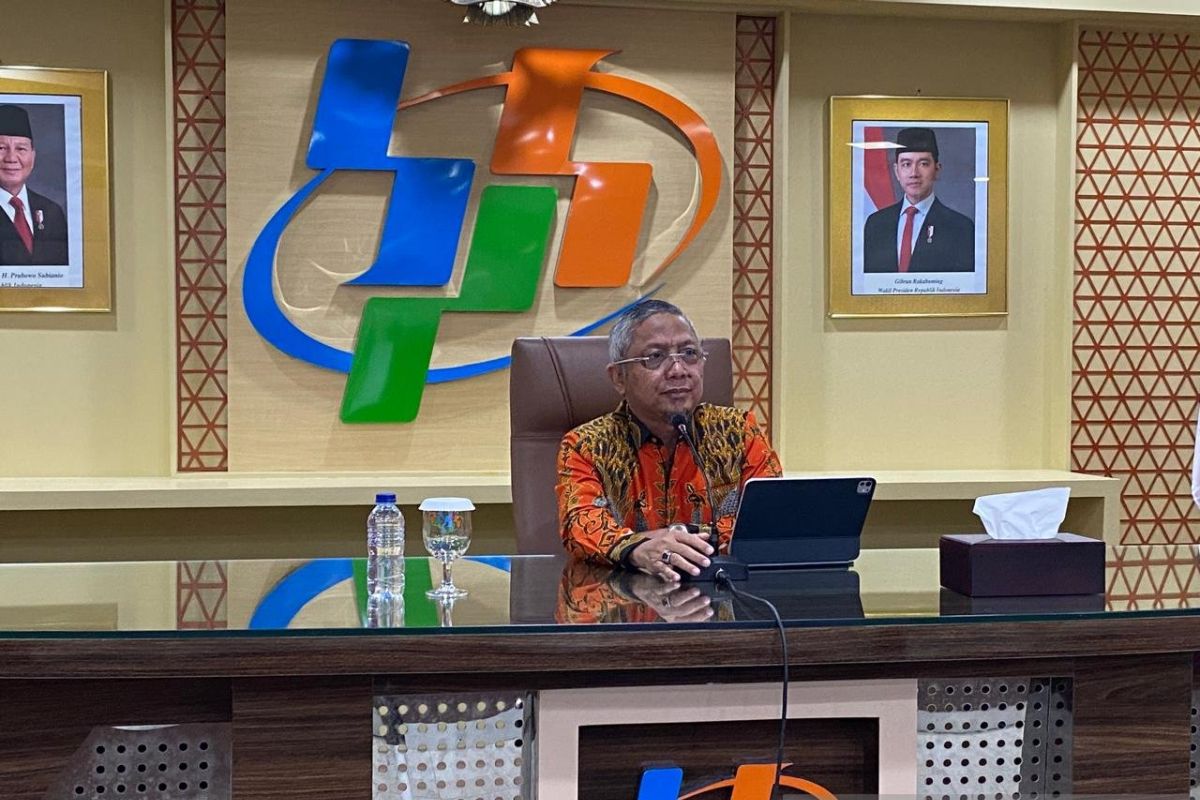
“The expenditure component that grew strongly was government consumption, driven by increased realisation of personnel spending as well as goods and services spending this quarter,” said M. Edy Mahmud, Deputy for Statistical Balance and Analysis at BPS, at a press conference in Jakarta on Wednesday.
For context, government consumption contracted by 0.33 per cent (yoy) in the second quarter of 2025. Growth in the second quarter of this year therefore reflects an improvement.
Edy explained that the growth in government consumption in the second quarter of 2026 was also influenced by the low base effect resulting from the contraction in the same period last year.
In addition, the growth was supported by rising realisation of personnel spending, particularly the payment of thirteenth-month salaries for civil servants (ASN), the Indonesian National Armed Forces (TNI) and the Indonesian National Police (Polri), the accelerated payment of allowances for non-civil-servant teaching staff, and an increase in the number of civil servants.
Edy added that increased government spending on goods and services also helped sustain the growth of government consumption.
“So, in this second quarter there was indeed the realisation of thirteenth-month salary payments. In addition, the number of civil servants also increased, so the value of personnel spending rose as well,” he said.
On the goods spending side, realisation of government spending channelled through the Free Nutritious Meals (MBG) programme in the second quarter of 2026 also increased compared with the same period last year.
Based on data from the Ministry of Finance, cumulative MBG budget realisation through June 2026 reached Rp98.8 trillion over the first and second quarters of 2026. Of that amount, realisation in the first quarter reached Rp54.1 trillion, whilst in the second quarter it stood at Rp44.7 trillion.
Although realisation in the second quarter of 2026 was lower than in the first quarter of 2026, the figure surged compared with the second quarter of 2025, when it had reached only Rp2.9 trillion.
Edy views the increased realisation of government spending as also driving economic growth, because every rupiah spent by the government flows into the business world and circulates within the economy.
“If realisation increases, this government spending will certainly affect economic growth itself. The greater the realisation, the greater the impact. Because every rupiah the government spends enters the business world, circulates, and will have a positive impact on economic growth,” Edy said.
It is worth noting that gross domestic product (GDP) at constant prices rose from Rp3,396.6 trillion in the second quarter of 2025 to Rp3,576.2 trillion in the second quarter of 2026, meaning the Indonesian economy grew 5.29 per cent (yoy).
On the expenditure side, besides government consumption, the largest source of economic growth came from household consumption at 2.67 percentage points, with growth of 5.06 per cent (yoy) and a contribution of 53.32 per cent to GDP.
Next, gross fixed capital formation (PMTB) contributed 2.06 percentage points to economic growth, with growth of 6.87 per cent (yoy) and a contribution of 29.36 per cent to GDP.
Consumption by non-profit institutions serving households (LNPRT) grew 6.93 per cent (yoy), contributing 1.35 per cent to GDP.
Exports grew 4.13 per cent (yoy), contributing 23.13 per cent to GDP. Meanwhile, imports rose 8.82 per cent (yoy). As imports act as a deduction in the calculation of GDP, net exports recorded a negative contribution of 0.78 percentage points to economic growth.
Source: jawawa.id (https://jawawa.id/newsitem/government-consumption-leads-expenditure-growth-in-q2-2026-bps-1785920128)
Originally published by Antara (Indonesian) (https://www.antaranews.com/berita/5680849/bps-konsumsi-pemerintah-pimpin-pertumbuhan-komponen-pengeluaran-tw-ii), translated from Indonesian