
Government Considers Tax Exemptions for Textile Industry
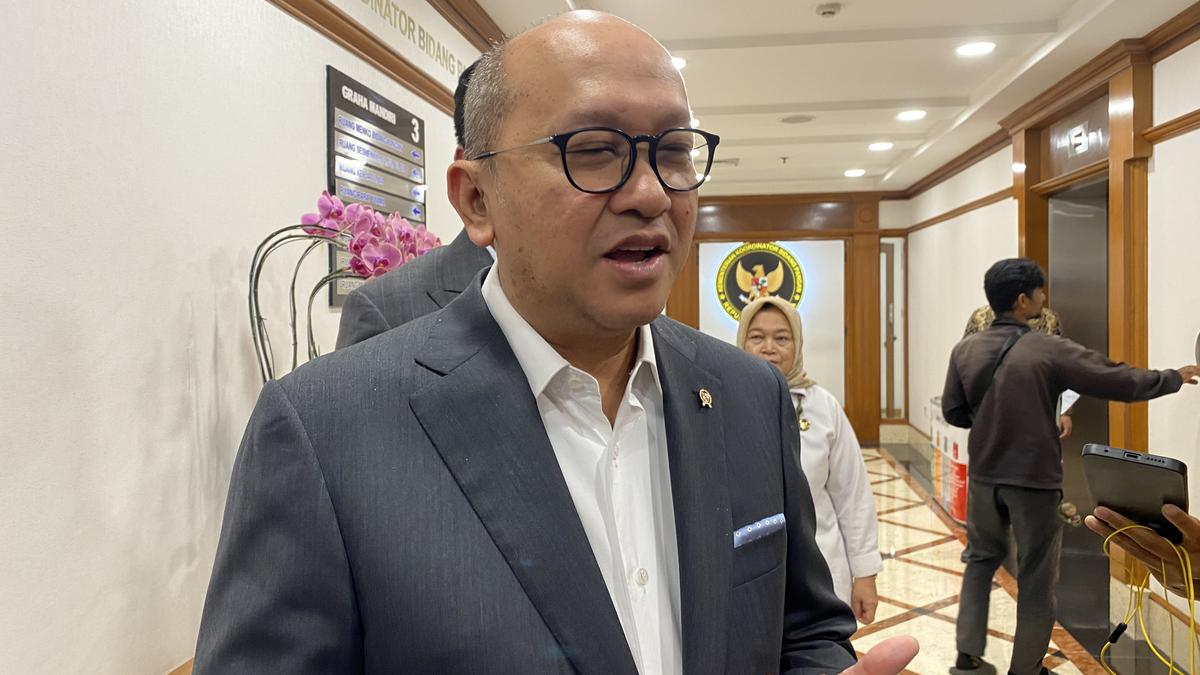
The Minister of Investment and Downstreaming/Head of the Investment Coordinating Board (BKPM), Rosan Roeslag, stated that the government is considering tax incentives for the textile industry, including tax holidays.
He confirmed that while tax holidays are typically granted to new investments as a form of tax incentive, the government will consider similar policies for existing textile entrepreneurs.
“In terms of incentives that can be provided, for example, as discussed, tax holidays and tax allowances are usually given to new types of investment. For textiles, we will consider reintroducing the tax holiday as one of the options,” Rosan stated at the Presidential Palace Complex in Jakarta, as reported on Wednesday (23/09/2026).
Reductions in Value Added Tax (VAT) and other aspects are also being discussed by the government. In the context of developing the textile industry, the CEO of Danantara also plans to prepare integrated textile zones.
“We at Danantara will also prepare a special area for development, ensuring integration from upstream to downstream to increase efficiency through proper technology, so that our products can achieve better competitiveness,” he added.
“As we all know, the textile industry is one of the sectors with the highest labour absorption,” Rosan added.
Review of Textile Raw Material Requirements
Previously, President Prabowo Subianto requested measures to protect Indonesia’s textile industry, including ensuring the availability of raw materials and taking action against illegal imported goods.
The Coordinating Minister for Economic Affairs, Airlangga Hartarto, revealed that these aspects are a major concern for domestic textile players, and the Head of State has requested improvements.
“There were several notes regarding obstacles. First, regarding the ease of raw material entry. The President has requested us to review the Technical Considerations (Pertek) and other related matters,” Airlante spoke at the Presidential Palace Complex in Jakarta on Tuesday, 22 September 2026.
Action Against Imported Goods
Airlangga noted that leather-based raw materials are also under scrutiny regarding Halal certification. “This is essential not only for the textile industry but also for the footwear industry,” he said.
In line with this, the circulation of imported goods at the downstream level must be tightened, particularly products from ‘kiloan’ or ‘balpres’ (baled) imports. These products are often found in the form of second-hand clothing.
“The Director General of Customs and Excise has been instructed to immediately regulate this, as it significantly disrupts domestic garment producers,” he said.
Removal of VAT for Contract Workers
Airlangga explained that there is a proposal to relax the imposition of VAT on additional labour under Fixed-Term Employment Agreements (PKWT), particularly for workers needed during specific production seasons where demand fluctuates.
“We conveyed that when outsourcing to companies to assist with this, it is not taxed abroad. Therefore, the President stated that we will find the appropriate regulation regarding VAT for PKWT,” he explained.
Furthermore, Airlangga mentioned a proposal to evaluate VAT rates for textile and garment companies oriented towards exports. “We also communicated that regarding export-oriented garments and textiles, the VAT should be evaluated for implementation by the Ministry of Finance,” he clarified.
Source: jawawa.id (https://jawawa.id/newsitem/government-considers-tax-exemptions-for-textile-industry-1790157167)
Originally published by liputan6.com (https://www.liputan6.com/bisnis/read/8297630/pemerintah-pertimbangkan-pembebasan-pajak-buat-industri-tekstil), translated from Indonesian