
Government Considers Closing SPPG Kitchens as Free Nutritious Meal Programme Wastes Rp 1 Trillion Monthly
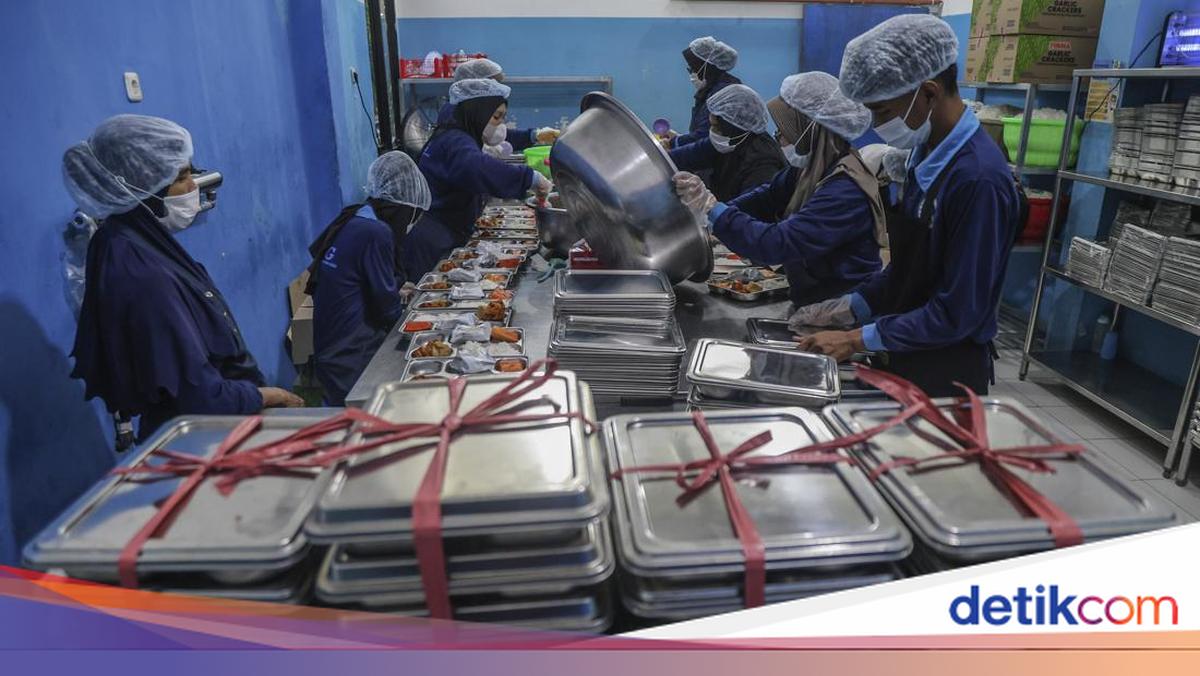
The government is exploring the option of closing several Nutrition Service Units (SPPG). Currently, the National Nutrition Agency (BGN) plans to restructure the implementation of the Free Nutritious Meal (MBG) programme.
The Coordinating Minister for Food Affairs, Zulkifli Hasan, revealed that the number of SPPGs has expanded beyond the original plan. As a result, the government is experiencing a budget waste of approximately Rp 1 trillion per month.
“There has been a buying and selling of points (SPPG); the initial plan was for 21,000 points, but there are now 27,877 points. This means there is an excess of 6,877 points,” said Zulhas during a press conference at his office in Central Jakarta on Thursday (11/06/2026).
The number of MBG kitchens far exceeding the target has made the programme’s expenditure increasingly wasteful. For instance, providing an incentive of Rp 6 million per day for each MBG kitchen results in a budget waste of around Rp 1 trillion per month.
“If there is an addition of 6,877 points, at Rp 6 million per day, there is an extra expenditure of more than Rp 1 trillion per month, which is wasteful. This means in one year, that amounts to Rp 12 trillion. This needs to be restructured to be improved and resolved,” added Zulhas.
Zulhas noted that this expansion of SPPG points is also occurring in 3T regions (underdeveloped, frontier, and outermost). From an initial target of approximately 2,000 points, the number has swelled to 8,617 points. He stated that it would take about one month to restructure the implementation of the MBG programme.
“In the 3T data, there were 2,000 points, but it then expanded to 8,617 points, and 6,138 of those points already have decrees from the BGN,” said Zulhas.
Exploring Options to Close SPPGs
Minister of State Secretary Prasetyo Hadi stated that the expansion of SPPG numbers will be resolved through a restructuring process. He acknowledged that the high number of operating MBG kitchens makes the programme’s implementation inefficient, particularly regarding the Rp 6 million incentive for each SPPG.
“Yes, one of the directions is towards that (closing excess SPPGs), but we cannot say today whether they will be closed or not. It is currently being restructured and the conditions are being inventoried,” said Prasetyo.
Nevertheless, the option to close excess SPPGs will likely be avoided or minimised as much as possible. The aim is to ensure that the distribution of MBG to beneficiaries does not stop during the restructuring period.
“Our initial target is that this must be completed within this month. But of course, there are dynamics involved. Therefore, our first emphasis is that what is already running must continue without disruption, and improvements must continue to be implemented,” said Prasetyo.
“Even what is already good must be supervised to ensure quality is maintained. We do not want any decline,” he added.