
Government Confirms E-Commerce Regulation Does Not Dictate Marketplace Algorithms
Jakarta (ANTARA) - The Government Communication Agency (Bakom) has affirmed that Trade Ministerial Regulation (Permendag) Number 19 of 2026 concerning the Operation of Trade Business through Electronic Systems (PMSE) does not regulate the algorithms or technology used by marketplaces.
Bakom Deputy III Kurnia Ramadhana said the regulation only sets out the obligation of platforms to prioritise the visibility of domestic products in product search, recommendation and ranking systems.
“Permendag 19/2026 does not regulate the algorithms or technology used by PMSE platforms, but rather regulates the obligations that must be fulfilled, namely ensuring that product search, recommendation and ranking systems prioritise the display of domestic products in the upper positions on the main page,” Kurnia said at a press conference on the Quick Best Results Programme (PHTC) at the Bakom office in Jakarta on Wednesday.
He said every PMSE operator retains the freedom to determine the technical mechanisms of implementation according to the characteristics of their respective systems.
According to him, this flexibility is given so that each platform can adjust the implementation of the policy without disrupting the systems they already have, as long as they continue to fulfil the obligations set out in the Permendag.
To ensure compliance, the Ministry of Trade, through its Directorate General of Consumer Protection and Domestic Trade Order (PKTN), will supervise the implementation of the regulation.
Supervision will be carried out through requests for clarification, information gathering and follow-up on public complaints if suspected violations are found.
Kurnia explained that the rules on local product visibility form part of the government’s efforts to strengthen the competitiveness of micro, small and medium enterprises (UMKM) amid the rapid growth of digital trade.
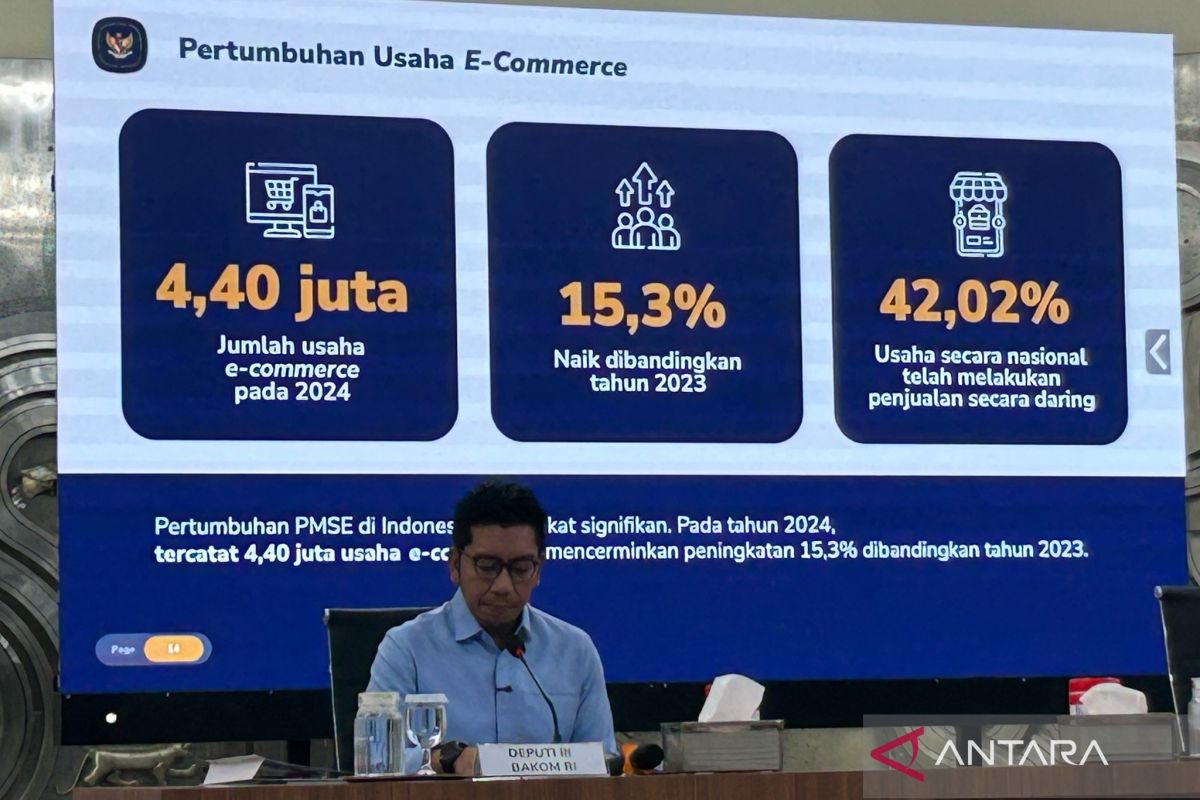
According to data from Statistics Indonesia (BPS), the number of digital merchants in 2024 reached 4.4 million businesses, an increase of 15.3 per cent compared to 2023.
Some 42.02 per cent of national businesses have conducted online sales, with 97.38 per cent of business actors being micro and small enterprises.
Meanwhile, online single submission (OSS) data as of 25 February 2026 recorded that 15.4 million business identification numbers (NIB) had been issued, with around 14.9 million, or more than 96 per cent, being micro enterprises.
According to Kurnia, this situation is one of the bases for the issuance of Permendag 19/2026 to create a more orderly, healthy and fair digital trade ecosystem, while strengthening consumer protection, the legality of business actors, and providing greater room to grow for UMKM and domestic products.