
Government Commits to Protecting Domestic Workers in the Domestic Workers Protection Bill
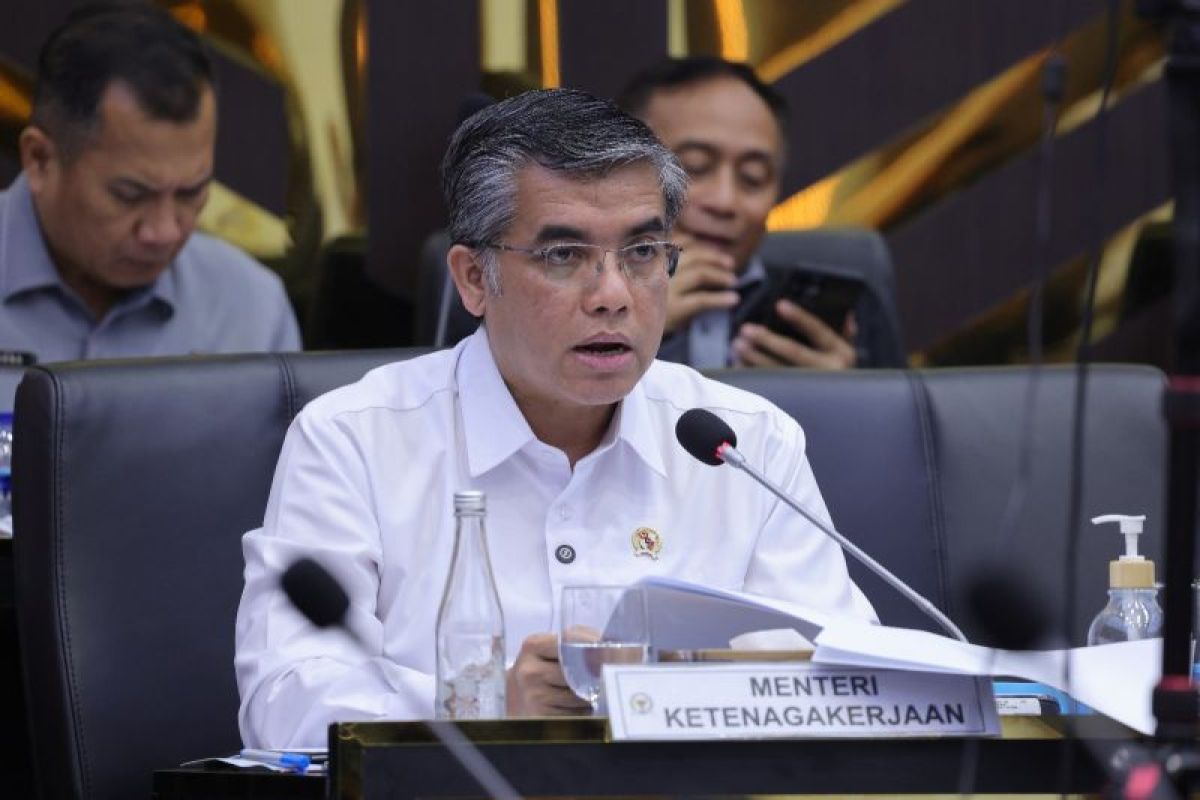
The government strongly agrees to include domestic workers as having the status of general workers who receive rights in accordance with their dignity and honour as human beings. Jakarta (ANTARA) - Minister of Manpower (Menaker) Yassierli stated that the government is committed to protecting domestic workers through the Domestic Workers Protection Bill (RUU PPRT). “The government is committed to positioning domestic workers as workers with fundamental rights just like general workers. This protection covers all stages, from before working, during work, to after the employment relationship ends, including dispute resolution mechanisms,” said the Minister in his statement in Jakarta on Tuesday. The Ministry of Manpower has submitted the Inventory of Problems List (DIM) for the RUU PPRT to the House of Representatives (DPR RI). Furthermore, the Minister stated that “Decent Work for Domestic Workers” is a necessity in providing protection for domestic workers. “The government strongly agrees to include domestic workers as having the status of general workers who receive rights in accordance with their dignity and honour as human beings,” he said. According to the Minister, domestic workers have their own characteristics, so their employment relationship considers socio-cultural factors. Users of domestic workers are also diverse, ranging from lower, middle to upper economic statuses, so through this Bill, comprehensive protection can be provided for the protection of human rights. Furthermore, this Bill also regulates Domestic Workers Placement Companies (P3RT), vocational training for prospective domestic workers and domestic workers, social security for domestic workers. Additionally, regulations regarding employment relationships, guidance and supervision, as well as dispute resolution that prioritises the principle of deliberation to reach consensus involving the role of the neighbourhood unit head (RT/RW) as a mediator.