
Government cites three indicators as signals of Indonesian economic strengthening
Jakarta (ANTARA) - The government assesses that the Indonesian economy is showing positive development entering the fourth quarter of 2026, reflected by the strengthening of three economic indicators.
These three indicators include September 2026 inflation, the August 2026 trade balance, and the September 2026 Manufacturing Purchasing Managers’ Index (PMI) released on Thursday (1/10).
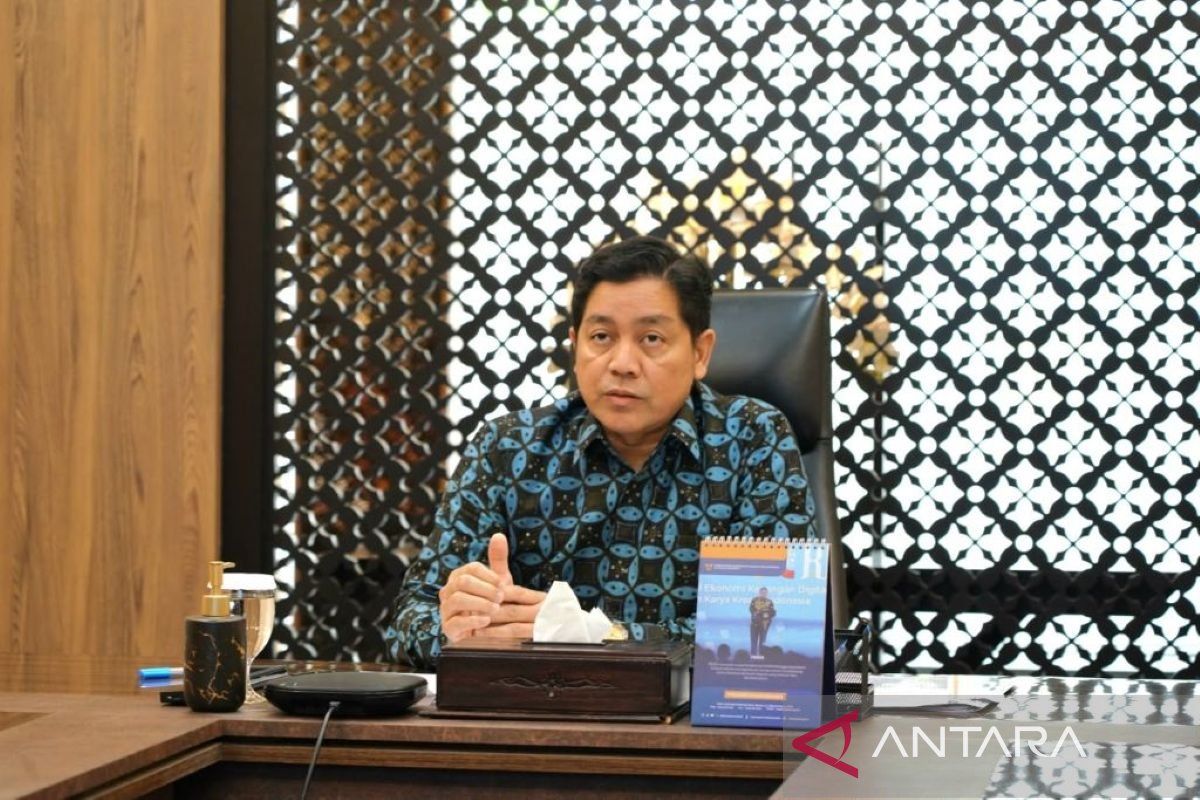
In a statement in Jakarta on Monday, the Spokesperson for the Coordinating Ministry for Economic Affairs, Haryo Limanseto, stated that September 2026 inflation was recorded at 3.28 per cent (yoy), remaining within the national target of 2.5±1 per cent, or 1.5–3.5 per cent.
Core inflation slowed to 2.84 per cent (yoy), while government-regulated inflation (AP) fell to 3.25 per cent (yoy), influenced by the normalisation of mobility following the school holidays and the relatively limited impact of non-subsidised fuel price adjustments.
“The Volatile Food component remains a concern with inflation at 5.03 per cent (yoy), influenced by demand dynamics and a decrease in the production of several horticultural commodities due to extreme weather, El Niño, and natural disasters. The government continues to strengthen central and regional coordination to maintain supply, smooth distribution, and price affordability, especially towards the end of the year,” said Haryo.
To maintain purchasing power, the government is strengthening the distribution of the third phase of the Family Hope Program (PKH), the 10 kg monthly Rice Food Assistance for October–December 2026, and the acceleration of medium-grade rice distribution through Perum Bulog.
These efforts are complemented by cheap food movements (GPM), the optimisation of government rice reserves (CBP), and inter-regional cooperation (KAD), as well as strengthening production through water and irrigation network management, crop pattern regulation, the use of productive land, area vulnerability mapping, and Early Warning Systems.
From an external perspective, Indonesia’s trade balance recorded a cumulative surplus of 7.25 billion USD throughout January–August 20cap6.
Export performance from January–August 2026 was supported by iron and steel at 19.18 billion USD or a growth of 4.88 per cent, palm oil (CPO) and its derivatives at 17.75 billion USD or a growth of 6.57 per cent, and coal at 16.58 billion USD or a growth of 4.31 per cent.
Processing industry exports also grew by 6.62 per cent, reflecting the contribution of downstreaming to export performance.
On the import side, raw materials, auxiliaries, and capital goods dominated, at 133.38 billion USD and 6.74 billion USD respectively, totalling 91.3 per cent of imports.
A 15.26 per cent increase in the import of machinery or mechanical equipment and a 22.94 per cent increase in electrical machinery/equipment indicate rising needs for production inputs and capital goods, in line with domestic production and investment activities.
Furthermore, the third economic indicator—the strengthening of manufacturing activity—is reflected in the September 2026 Manufacturing PMI, which increased to 52.4 from 49.8 in August. This signifies the return of the Manufacturing PMI to the expansion zone.
Haryo explained that this improvement was supported by an increase in new orders and production, growth in export orders, the entry of new projects, and improved purchasing power.
In September 2026, new orders grew at the fastest rate since February 2026, while export orders recorded the fastest growth since May 2022.
Additionally, labour absorption, purchases, and input inventories have increased again. Regarding costs, input and output price inflation slowed to its lowest level in six months, while business confidence regarding the production outlook for the next 12 months remains high.
“Moving forward, government policy will remain directed towards maintaining purchasing power, encouraging investment and production, and increasing the competitiveness of national industry. With a foundation of maintained stability and strengthening economic activity, we want to ensure this momentum continues and provides broader benefits for the community,” Haryo concluded.
Source: jawawa.id (https://jawawa.id/newsitem/government-cites-three-indicators-as-signals-of-indonesian-economic-strengthening-1791180222)
Originally published by Antara (Indonesian) (https://www.antaranews.com/berita/5771433/pemerintah-sebut-tiga-indikator-jadi-sinyal-penguatan-ekonomi-ri), translated from Indonesian