
Government, BSSN, and Telkom Strengthen Collaboration to Face Quantum Computing Threats
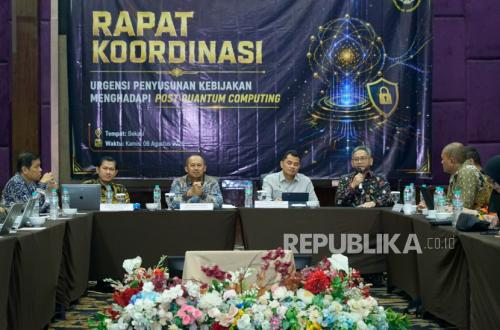
The government has begun accelerating anticipatory measures to address potential cyber security threats arising from the development of quantum computing technology. Through a Coordination Meeting on the Urgency of Policy Formulation for Post-Quantum Computing (PQC) on Thursday, the Coordinating Ministry for Political and Security Affairs (Kemenko Polkam), together with the National Cyber and Crypto Agency (BSSN), PT Telkom Indonesia (Persero) Tbk (Telkom), academics, industry players, and the cyber security community, strengthened synergy to prepare Indonesia for the post-quantum era. The meeting was chaired by Kemenko Polkam’s Deputy for Communication and Information Coordination, Air Vice Marshal Eko Dono Indarto, and attended by BSSN’s Deputy for Cyber and Crypto Security Strategy and Policy, Air Vice Marshal R Tjahjo Kurniawan. Also present were the Chairman of the Communication and Information System Security Research Center (CISSReC), Dr Pratama Persadha, and Telkom’s Director of Strategic Business Development & Portfolio, Seno Soemadji. The forum gathered input from various stakeholders as a basis for formulating a national policy to address the development of quantum computing technology. Quantum computers are expected to deliver a massive leap in computing capabilities, opening various opportunities for innovation and digital transformation. However, this technology also has the potential to weaken the cryptographic systems that currently protect digital transactions, communications, and strategic data. Therefore, anticipatory measures need to be prepared early to maintain the security of the national digital ecosystem. Kemenko Polkam’s Deputy for Communication and Information Coordination, Air Vice Marshal Eko Dono Indarto, stressed that readiness to face the quantum computing era must become a national strategic agenda. As a follow-up, the forum formulated several priority steps, including the drafting of a National Roadmap for Post-Quantum Cryptography Migration, determining priorities for protecting highly confidential data, strengthening cross-ministerial and institutional coordination forums, and proposing the establishment of a National Quantum Center as a hub for national collaboration in research, standardisation, talent development, and quantum technology implementation. BSSN’s Deputy for Cyber and Crypto Security Strategy and Policy, Air Vice Marshal R Tjahjo Kurniawan, stated that cyber security is the main foundation for the success of digital transformation and that all stakeholders must increase awareness of quantum attack risks and immediately prepare for a gradual and measured cryptographic migration. He also noted that BSSN has formed a National Task Force for Post-Quantum Cryptography Migration Preparation. From the industry side, Telkom affirmed its commitment to being a strategic partner for the government. The company is conducting studies to prepare for the quantum-safe era by providing quantum-safe networks and data centres, while Telkom University is developing research on PQC, including quantum error correction and digital talent development. Telkom’s Director of Strategic Business Development & Portfolio, Seno Soemadji, said the quantum computing challenge requires building comprehensive national capability, not just technology adoption. CISSReC Chairman Dr Pratama Persadha added that organisations should not wait for quantum computers to break current cryptographic systems and should begin by inventorying digital assets and identifying the most critical data.