
Government Boosts Salt Self-Sufficiency and Shrimp Farming to Spur Economic Growth
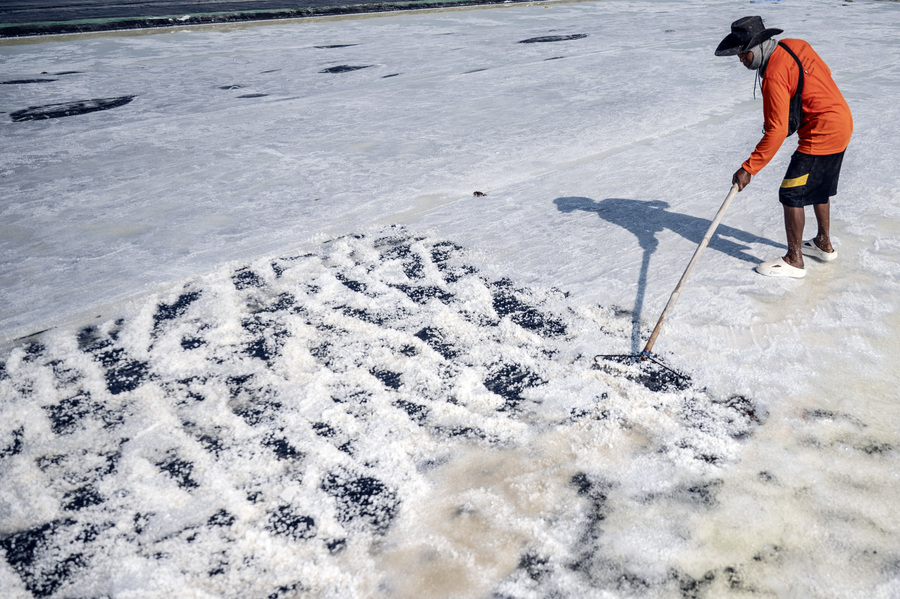
Maritime Affairs and Fisheries Minister Sakti Wahyu Trenggono is pushing to strengthen the marine and fisheries sector through a number of priority programmes, ranging from national salt self-sufficiency and the development of integrated shrimp pond areas to the revitalisation of Pantura ponds.
According to him, salt self-sufficiency is important because Indonesia is an archipelagic country with substantial marine resources, yet it still depends heavily on salt imports. Each year, national salt demand reaches around 5 million tonnes, while domestic production is only around 2 million tonnes.
“Indonesia must be able to meet its own salt needs,” Trenggono said in an interview with Media Indonesia at the Ministry of Maritime Affairs and Fisheries office in Jakarta on Wednesday (12/8).
So far, Indonesia still imports around 2 million to 3 million tonnes of salt to meet national demand. The government wants to reduce that dependence by increasing domestic production capacity.
One of the steps being taken is the construction of the National Salt Industry Centre (K-SIGN) in Rote Ndao, East Nusa Tenggara. Trenggono said the area has water characteristics considered similar to the salt production area in Broome, Australia, which has long been able to produce salt in large quantities.
In the first phase, the government is developing around 2,000 hectares of land in Rote Ndao with a production potential of around 400,000 tonnes of salt per year. Overall, the area has development potential of up to around 12,000 hectares, which is estimated to be capable of producing around 2 million tonnes of salt. The development of the area also involves the local community.
However, the government recognises that community salt production is not yet fully able to meet industrial needs. Salt for the food, pharmaceutical and other industries requires certain quality standards and treatment. For this reason, the production model in Rote is directed towards producing salt that meets industrial needs.
Previously, the President Director of PT Garam, Abraham Mose, expressed appreciation for the trust placed by the Ministry of Maritime Affairs and Fisheries in PT Garam as a strategic partner in managing K-SIGN. According to him, synergy between the government and state-owned enterprises is key to delivering a national salt industry that is increasingly competitive and resilient.
In addition to salt, the government is promoting the development of integrated shrimp ponds to improve Indonesia’s competitiveness in the global market. Indonesia is currently the world’s fourth-largest shrimp exporter, with an export value of nearly US$2 billion per year.
To that end, the ministry is first building a modern shrimp pond model in Kebumen, Central Java, covering around 60 hectares. The area uses more modern technology, supported by adequate water input sources and in line with industry standards.
The productivity targeted through the model reaches around 40 tonnes per hectare. Meanwhile, the ponds in Kebumen have already been able to move towards production of around 30 tonnes per hectare.
Source: jawawa.id (https://jawawa.id/newsitem/government-boosts-salt-self-sufficiency-and-shrimp-farming-to-spur-economic-growth-1786643471)
Originally published by Media Indonesia (https://mediaindonesia.com/ekonomi/921418/swasembada-garam-dan-produksi-tambak-udang-digenjot-ekonomi-makin-tumbuh), translated from Indonesian