
Government Boosts Investment Climate, Q1 2026 Realisation Exceeds Target
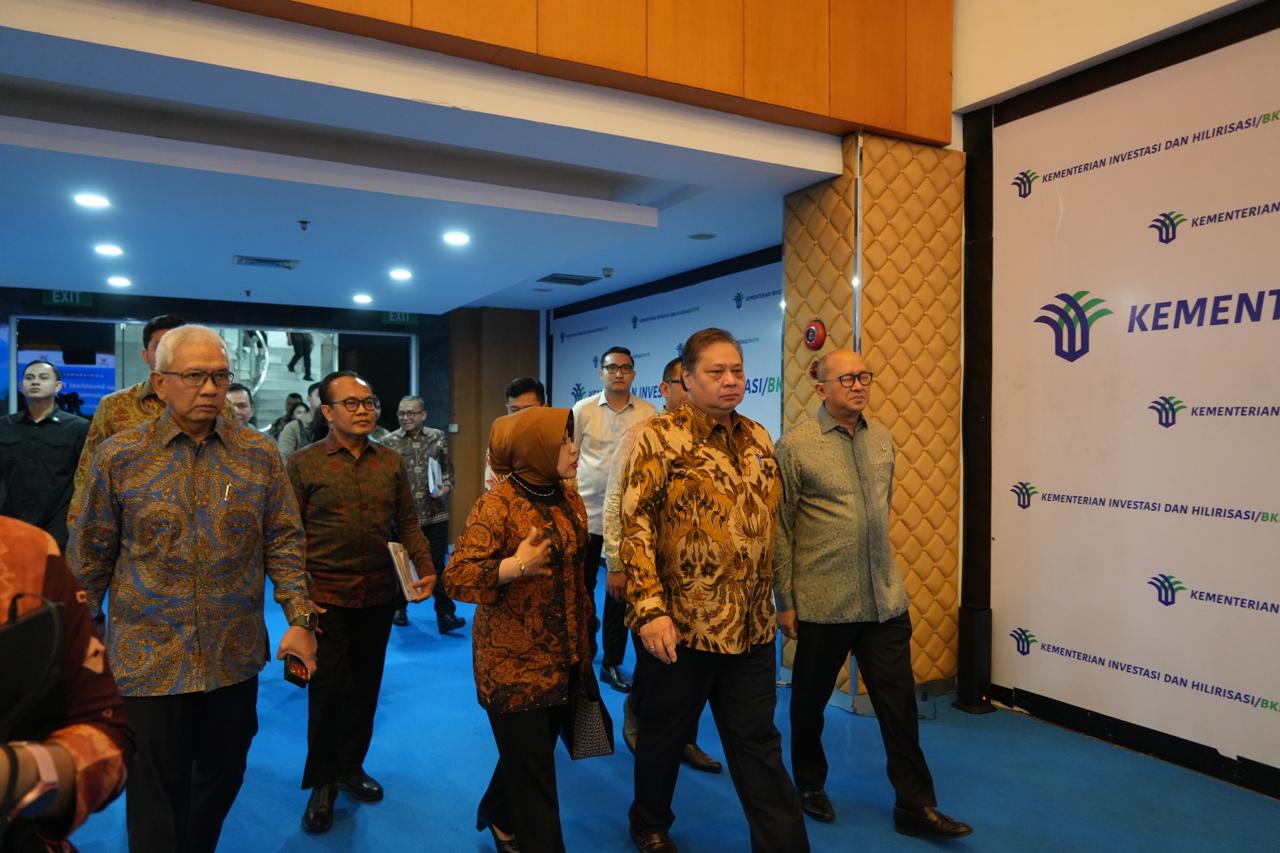
The government continues to strengthen structural reforms to create an increasingly conducive, adaptive, and responsive investment climate to global economic dynamics. This is realised through the refinement of policies and business licensing systems capable of following developments in new business models, technological advancements, and cross-sector business needs.
“In the midst of ongoing global uncertainties, Indonesia’s economic fundamentals remain solid. Economic growth in the first quarter of 2026 is driven by household consumption, THR disbursements, and accelerated state spending through the realisation of stimulus amounting to Rp809 trillion,” stated Airlangga Hartarto during a press conference on the First Quarter 2026 Investment Realisation and Implementation of KBLI 2025 in Jakarta, Thursday (23/04).
Investment performance shows encouraging results. Investment realisation in the first quarter of 2026 reached Rp498.79 trillion, exceeding the target with 7.22% growth (year-on-year). Labour absorption also increased significantly to 706,569 people, or up 18.93% (yoy). This reflects the contribution of investment to job creation and economic equity, including increased investment outside Java Island.
On the monetary side, Bank Indonesia maintains the BI Rate at 4.75% to safeguard exchange rate stability amid external pressures. Meanwhile, the March 2026 Manufacturing PMI stood at 50.1, still indicating expansion, with the first-quarter average remaining above 50 and competitive in the ASEAN region.
From the external sector, the trade balance recorded a surplus for 70 consecutive months with foreign exchange reserves of USD148.2 billion. On the fiscal side, the state budget deficit as of March 2026 remains controlled at 0.93% of GDP, reflecting fiscal discipline amid measured expansionary policies.
In line with these achievements, the Government affirms that Indonesia remains a prospective investment destination. Through the Task Force for Accelerating Government Programmes to Support Economic Growth Enhancement (P3M-PPE) established via Presidential Decree Number 4 of 2026, the Government seeks to ensure that every policy has a real impact on ease of doing business, including efforts to resolve investment bottlenecks (debottlenecking).
In addition, the implementation of adjustments to the Indonesian Standard Business Field Classification (KBLI) 2025 becomes an important part in strengthening risk-based licensing systems. This policy is expected to provide legal certainty, improve licensing efficiency, and strengthen national investment competitiveness.
The KBLI 2025 adjustment set by the Central Statistics Agency is an update to accommodate new economic developments, including the digital sector and artificial intelligence, climate change mitigation, innovative business models, and strengthening the financial services sector such as bullion banks.
“To provide certainty to business actors, today we announce a Joint Circular Letter between the Minister of Investment and Downstreaming/Head of BKPM, the Minister of Law, and the Head of BPS. This JCL serves as a technical guide in implementing KBLI code adjustments without harming business actors,” explained Airlangga Hartarto.
The adjustment is carried out through two main mechanisms, namely automatic adjustment through the integration of the Directorate General of AHU and OSS systems, and independent adjustment by business actors if there are changes in the company’s articles of association.
Also present at the press conference were, among others, Rosan Perkasa Roeslani, Amalia Adininggar Widyasanti, Susiwijono Moegiarso, Haryo Limanseto, as well as Elen Setiadi along with representatives from ministries and other institutions.