
Government Boosts Human Capital and MSME Financing to Drive Economic Growth
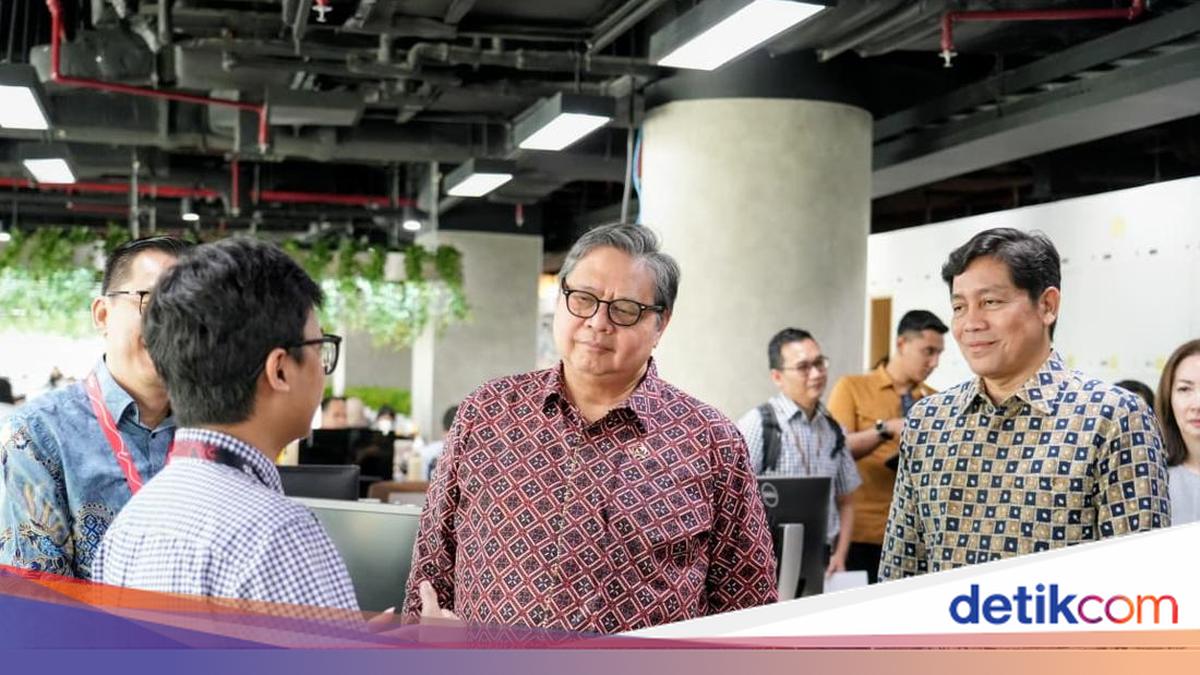
President Prabowo Subianto’s administration marked its second anniversary on 20 October 2026. During this period, efforts to improve the quality of human resources, develop tourism and expand financing for micro, small and medium-sized enterprises (MSMEs) have continued to grow as part of the government’s drive to strengthen economic productivity and broaden public participation in development.
A range of strategic programmes is being accelerated, from apprenticeships and vocational training to bridge the gap between industry needs and workers’ skills, to tourism development to stimulate growth, and the distribution of People’s Business Credit (KUR) to millions of MSMEs to help them expand.
Building a competitive workforce
In October 2025, the government launched the National Apprenticeship Programme for university graduates, initially targeting 100,000 participants. The programme is designed to bridge the gap between graduates’ skills and workplace requirements by giving them hands-on experience in businesses, industry, state-owned enterprises (SOEs) and government agencies. Participants also receive an allowance equivalent to the minimum wage and employment social security coverage.
The programme addresses one of the challenges new graduates face when entering the labour market: the need for professional experience. Through apprenticeships, university graduates are expected to develop technical skills, a strong work ethic and the ability to adapt to industry needs.
“Usually, vacancies are filled by graduates who are not new to the workforce, or secondary graduates. For primary graduates, or those who have just graduated, the first question when they apply for a job is about their work experience. That is the gap this apprenticeship programme is intended to bridge,” said Haryo Limanseto, spokesperson for the Coordinating Ministry for Economic Affairs, in a statement on Thursday (22 October 2026).
Workforce readiness efforts will continue in 2026 with expanded apprenticeship and vocational training programmes. Phase II of the National Apprenticeship Programme aims to reach 150,000 new graduates, backed by a budget of Rp4.14 trillion. Vocational training has been allocated Rp2.12 trillion, with priority targets of 220,000 vocational high school (SMK) graduates and 50,000 workers affected by layoffs.
Overall, the 2026 National Vocational Training Programme targets around 340,000 participants: 70,000 in the main programme and a further 270,000 through the second-half 2026 economic stimulus. By August 2026, 89,337 people had taken part in vocational training.
“Going forward, we must make use of all the facilities available, not only those of the central and regional governments, but also those of industry,” Haryo said.
Tourism as a growth driver
Alongside improving workforce readiness, tourism development is an important part of expanding economic activity and creating business opportunities across the regions. Tourism is linked to a range of sectors, including transport, accommodation, food and drink, the creative economy, and micro and small businesses that operate around tourist destinations.
In 2025, Indonesia recorded 15.39 million international tourist visits and around 1.2 billion domestic tourist trips. Tourism generated US$18.28 billion in foreign exchange, supported 25.91 million jobs and contributed 3.97% directly to gross domestic product (GDP). Investment in the tourism sector reached Rp73.55 trillion that year.
The positive momentum continued in 2026. From January to August, international tourist visits totalled 10.58 million, up 5.38% on the same period a year earlier. Domestic tourist trips reached 842.15 million, a rise of 4.29%. Tourism foreign-exchange earnings stood at US$8.43 billion in the first half of 2026, while investment in the sector grew by 16.64%.
“We need to pursue tourism as a low-hanging fruit. It is also a major source of foreign exchange. So, as we encourage domestic purchases, let us also promote tourism,” Haryo said.
To make the most of this potential, tourism development is being accompanied by efforts to improve destination quality, connectivity, workforce skills and local community participation. The aim is for rising visitor numbers to translate not only into more travel activity and foreign-exchange earnings, but also into opportunities for local businesses to grow and a wider distribution of economic benefits across the regions.
Empowering communities through KUR
As part of efforts to expand employment and business opportunities, the government is also strengthening MSMEs’ access to financing through KUR. The programme helps businesses obtain capital through a government-supported credit scheme while directing financing towards productive sectors.
“KUR does not merely provide access to financing; it genuinely encourages productive businesses to grow and move up to the next level,” Haryo said.
In 2026, the government continued to strengthen KUR disbursement, directing financing towards production sectors. By 23 September, KUR disbursement had reached Rp232.66 trillion and covered 3.61 million borrowers, while supporting around 10.83 million workers. The figures reflect continuing efforts to widen MSMEs’ access to capital and strengthen their capacity, competitiveness and contribution to the national economy.
Stronger human capital through apprenticeships and vocational training, tourism development and expanded MSME financing are interconnected efforts to improve skills, generate economic activity and develop community businesses.
In the first two years of President Prabowo Subianto’s administration, programmes to strengthen human capital, develop tourism and empower MSMEs through KUR have recorded positive progress and provide grounds for optimism about more inclusive and productive economic growth.
In the period ahead, sustaining and strengthening these programmes is expected to expand employment opportunities, raise productivity and business competitiveness, and ensure that the benefits of economic growth are felt by more people.
Source: jawawa.id (https://jawawa.id/newsitem/government-boosts-human-capital-and-msme-financing-to-drive-economic-growth-1792662805)
Originally published by detikcom (https://news.detik.com/berita/d-8719260/genjot-pertumbuhan-ekonomi-pemerintah-perkuat-sdm-hingga-pembiayaan-umkm), translated from Indonesian