
Government Bolsters Rice Reserves to Anticipate Geopolitical Tensions and El Niño
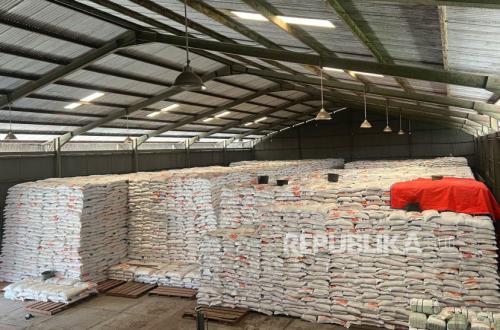
The National Food Agency (Bapanas) is preparing the Government Rice Reserves (CBP) to face global geopolitical turbulence and the threat of El Niño in the coming months. This readiness is backed by CBP stocks that have now exceeded 4.5 million tonnes.
The government is strengthening these measures through Presidential Instruction (Inpres) No. 4 of 2026 on the Procurement and Management of Domestic Paddy/Rice as well as the Distribution of Government Rice Reserves for 2026–2029. Through this policy, the state targets the procurement of 4 million tonnes of paddy or rice equivalent in 2026 to thicken the national food buffer.
“Now, insya Allah, our rice is safe amid escalating geopolitics. Our CBP stock is 4.5 million tonnes. This is the first time in history,” said Bapanas Head Andi Amran Sulaiman in Jakarta, quoted on Tuesday (7/4/2026).
According to him, the thick stock position provides greater room for the government to maintain the stability of food supply and prices. In the new policy structure, CBP is also prepared to support national needs when external pressures or climate disruptions increase.
The distribution of CBP under Inpres No. 4 of 2026 can be used for the Food Supply and Price Stabilisation Programme (SPHP), general markets, food assistance, and disaster emergency response. The reserves can also be directed towards the needs of civil servants (ASN), national nutrition fulfilment, Merah Putih Village/Urban Ward Cooperatives, international cooperation, and foreign food aid.
Amran stated that the current strengthening of rice stocks is an unprecedented achievement. According to him, the stock position in April is usually around 2 million tonnes, but now it has surged far above that figure.
“Our CBP stock is the highest since independence. 4.5 million tonnes across Indonesia. Usually in April, the stock in warehouses is 2 million tonnes, now it’s 4.5 million tonnes,” said the figure who also serves as Minister of Agriculture.
In Bapanas records, the strengthening of CBP stocks over the past three years has progressed very rapidly. The 4.5 million tonne position at the beginning of April 2026 has surged 507.5 percent compared to the beginning of April 2024, which was only 740.7 thousand tonnes.
Compared to the beginning of April 2025, this year’s CBP stock has also grown by 85.6 percent. In the first week of April last year, CBP stock was recorded at 2.42 million tonnes. The government views the thick stock buffer as essential to face global uncertainties, including if the global food supply chain is disrupted again. In the domestic context, the reserves also serve as an instrument to anticipate if the dry season begins to pressure production in several regions.
Amran assessed that the El Niño phenomenon does not always have a negative impact on production. In certain conditions, he said the dry season can actually suppress pest attacks and support harvest quality. “El Niño later will actually be a blessing because usually there are fewer pests, usually the harvest quality is extraordinary due to full photosynthesis. The paddy quality is good, so farmers are happy,” he said.
To maintain production enthusiasm at the farmer level, the government is still maintaining the Government Purchase Price (HPP) for dry harvested paddy at Rp 6,500 per kilogram. This instrument is used so that paddy prices do not fall during the peak harvest season.
The HPP policy also becomes part of efforts to maintain a balance between strengthening national stocks and farmer welfare. The government wants the thickening of CBP not to be paid for with a plunge in paddy prices at the producer level. “Then, HPP is maintained. The Government Purchase Price for paddy is Rp 6,500,” said Amran.
Data from the Central Statistics Agency (BPS) shows that farmer paddy prices throughout 2025 never fell below that HPP. The lowest average price was recorded in April 2025, namely Rp 6,712 per kilogram. Throughout 2025, the average paddy purchase price was recorded at Rp 7,081 per kilogram based on the continuous Producer Price Survey for Rice at Milling conducted by BPS.