
Government Blocks 307,000 QR Codes for Subsidised Fuel Users, Here's Why
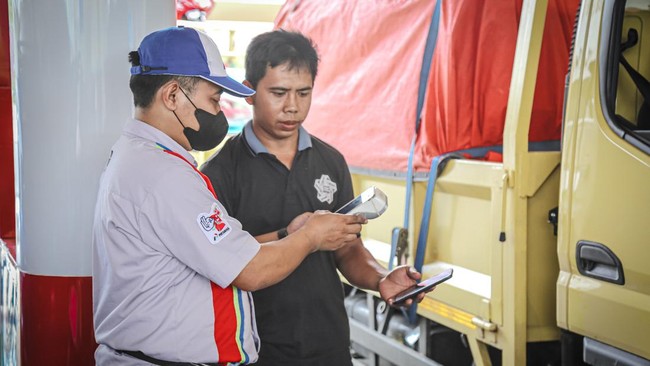
The Downstream Oil and Gas Regulatory Agency (BPH Migas) has blocked 307,107 QR codes belonging to subsidised fuel customers and imposed sanctions on 2,694 petrol stations across Indonesia. The enforcement action aims to ensure the distribution of subsidised fuel is precisely targeted.
BPH Migas Head Wahyudi Anas explained the crackdown was based on findings from digital transaction data and physical field inspections. The agency is continuously cleansing data to prevent the use of illegal digital identities duplicated by irresponsible parties.
“We are also continuing to optimise the targeted distribution of subsidised fuel, which has led us to block nearly 307,107 QR codes. This number continues to rise due to illegally produced QR codes and other factors,” he stated during a hearing with Commission XII of the House of Representatives in Jakarta.
Beyond the QR code blocks, the agency has issued coaching sanctions to 2,694 petrol stations found violating regulations or serving non-consumer users. The agency noted indications of collusion between station operators and individuals to facilitate illegal fuel purchases using fake documents.
“We have also imposed coaching sanctions on nearly 2,694 distributors. This is ongoing due to compliance issues with regulations and services provided to non-consumer users, which is the focus of the guidance for these distributors,” he added.
According to BPH Migas records, the state has the potential to save subsidised fuel and compensation distribution volumes amounting to 24,711.17 kilolitres across 449 petrol stations. The value saved from potential budget misuse reaches nearly Rp 470 billion.
“We have also made corrections to the distribution of subsidised fuel and state compensation totalling around 24,711.17 KL across 449 distribution outlets. The value of this amount is approximately nearly Rp 470 billion,” he elaborated.
“We also found vehicles that were physically unfit for fuelling, with expired registration documents, predominantly along the Trans-Sumatra route. This presents very significant obstacles, including vehicles whose tank positions have been modified to hold more fuel,” he continued.
One of the most frequently discovered schemes is the “helicopter” method, where a single vehicle refuels repeatedly using multiple different digital identities. During enforcement actions, the agency found one perpetrator possessing 16 QR codes with 16 different licence plate numbers to fill a single 1,000-litre storage tank.
“Through digitalisation, we can extract data on daily distributions involving the same vehicle with different QR codes, at a frequency of more than once a day,” he revealed.
As a follow-up, the agency is preparing a roadmap for developing an artificial intelligence-based IT system integrated nationally this year. The system is expected to identify every abnormal transaction in real-time to close loopholes in subsidised fuel misuse across all regions of Indonesia.
“This is important to create a deterrent effect and ensure that subsidised fuel distribution is more selective and subject to review so that distribution continues to run properly,” he concluded.