
Government Awaits DPR Draft on Manpower Law Revision, Minister Says
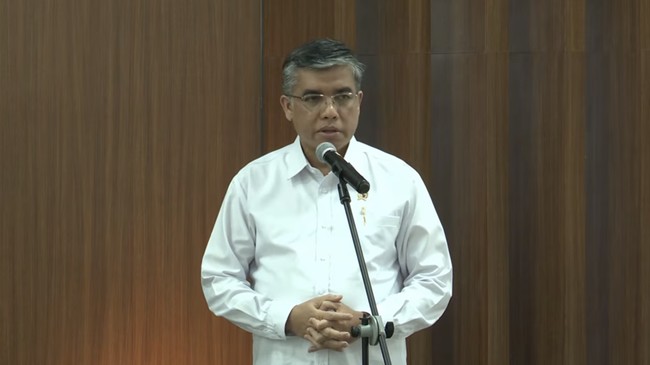
Jakarta, CNBC Indonesia — Minister of Manpower Yassierli has affirmed that the government is still awaiting the deliberation process for the Employment Law Bill (RUU Ketenagakerjaan), which is currently progressing through the House of Representatives (DPR).
According to him, the revision of Law Number 13 of 2003 on Employment is a DPR initiative, and the government has therefore chosen to respect the ongoing legislative process before becoming formally involved in deliberations.
“And this process is still with the DPR. Yes, we on the government side, in due course when deliberations begin, will naturally prepare our own concept as well,” Yassierli said at the DPR building in Jakarta on Monday (20/7/2026).
He again stressed that the government’s current position is to await the outcome of the DPR’s drafting process, whilst monitoring developments in the legislative process.
“It is still in motion. We shall wait. Naturally we respect it — after all, this was first and foremost an initiative of the DPR. So we will wait,” Yassierli said.
Separately, the Ministry of Manpower continues to gather aspirations from various groups as part of the government’s preparations ahead of deliberations on the bill. Input has come from workers, employers and other stakeholders, to be used later as material in formulating the government’s position.
“That is the phase the government is currently undertaking,” Yassierli said.
The aspiration-gathering process also covers a range of developing employment issues, including wage regulation and ride-hailing drivers’ demands regarding health insurance. However, the government will not adopt a position before the DPR’s draft bill is finalised.
Whilst declining to comment on the substance of the proposed legislation, Yassierli responded positively to the idea of strengthening bipartite dialogue between employers and trade unions from the outset of resolving industrial relations disputes. In his view, such a mechanism could open the way for more effective communication.
“So that later, when bipartite agreements are about to be reached, it will certainly be easier,” he said.